

Commentary
It should address the shortcomings of previous crisis communication efforts and adapt to the demands of frontier AI.
Lucy Luo
{
  "authors": [
    "Stephen Tankel",
    "Dafna H Rand"
  ],
  "type": "legacyinthemedia",
  "centerAffiliationAll": "dc",
  "centers": [
    "Carnegie Endowment for International Peace"
  ],
  "collections": [],
  "englishNewsletterAll": "ctw",
  "nonEnglishNewsletterAll": "",
  "primaryCenter": "Carnegie Endowment for International Peace",
  "programAffiliation": "SAP",
  "programs": [
    "South Asia"
  ],
  "projects": [],
  "regions": [
    "United States",
    "Middle East",
    "North Africa",
    "Syria",
    "South Asia"
  ],
  "topics": [
    "Political Reform",
    "Security",
    "Foreign Policy"
  ]
}
Source: Getty
Policymakers must act now in order to improve the efficacy of security assistance and cooperation in order to advance American interests.
Source: Hill
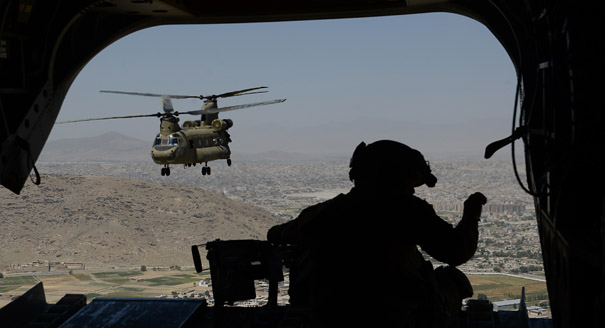
Building partner capacity, or BPC, has become all the rage. But the recent capture of U.S.-trained rebels in Syria by the al Qaeda-affiliated al-Nusra front is the latest in a long list of developments that raises the question: Does BPC work? The answer: It depends.
As we argue in a report recently released by the Center for a New American Security, Security Cooperation and Assistance: Rethinking the Return on Investment, part of the problem is that BPC has become a catchall for wide array of security assistance and cooperation programs, only some of which actually pertain to enhancing the capabilities and capacity of a partner’s military and civilian institutions. There are myriad challenges to deploying assistance and cooperation effectively. Recent events in Syria only scratch the surface.Security assistance and cooperation has been a critical pillar of U.S. statecraft for decades. The post-9/11 interest in using assistance and cooperation to incentivize and enable local partners contributed to the creation of a slew of new authorities and programs. Yet, despite its strategic centrality and large price tag, our report argues that many security assistance and cooperation programs fail to achieve U.S. objectives because of strategic and structural deficiencies.
Strategically, U.S. policymakers are often not clear about the specific outcomes they intend to achieve with security assistance and cooperation. Even when objectives are clear, there may be too many of them for a single program, which results in conflicting objectives. This is especially troublesome when pressing, short-term objectives subvert long-term U.S. goals. Also, there is currently no system in place to adequately assess outcomes. This not only risks wasting taxpayers’ dollars. Failure to assess progress and adjust programs accordingly can actually reduce U.S. influence with recipient states, which may believe they can free-ride or begin to view assistance as an entitlement. The practice of using security assistance to build relationships sometimes contributes to this problem. So does the fact that policymakers too often look to security assistance as a quick fix or way to address demands to “do something.”
Yet, security assistance and cooperation remains vitally important and is appealing, especially when options like large-scale U.S. military operations do not make strategic sense. This helps to explain the numerous new authorities that consecutive administrations have requested and Congress has created. The increase in new authorities has contributed to confusion about the purposes of different programs. Moreover, programs are sometimes chosen based on which authorities are available or most flexible rather than on the authority best suited to the task at hand. Finally, most of the new programs are housed at the Pentagon and not the State Department. As a result, programs are deployed to meet Defense requirements as opposed to implemented in a way that furthers broader foreign policy objectives.
The bottom line is that more is not necessarily better. That goes for the number of authorities and the level of assistance or cooperation provided to U.S. partners.
The spate of new authorities has exacerbated both imbalances between the Pentagon and the State Department and conflicts among the objectives that assistance and cooperation are used to achieve.
So what is to be done? While there is no singular solution to the challenges we identify in our report, we offer a few recommendations to members of Congress and the executive branch who want to reform this effort.
First, the executive and legislative branches must work together to consolidate and rationalize existing authorities. The Department of Defense (DoD) and State should develop coordinated reform proposals that consolidate DoD authorities and transfer the appropriate ones to State. Congress is the ultimate arbiter when it comes to passing legislation to consolidate authorities, but it also could play an important role by holding hearings to help inform the coordination process between DoD and State.
Second, it is incumbent on policymakers to candidly prioritize goals, delineate where they are willing to accept risks, and plan ahead to mitigate anticipated consequences associated with these risks. This is best done through a regional framework. The National Security Council (NSC) should direct representatives from State and DoD to produce joint reviews of U.S. security assistance and cooperation in their respective regions.
Third, Congress can help to improve interagency coordination and enhance State’s capacity to manage security assistance programs. To improve awareness and coordination, a new mechanism should be created to allow the relevant personnel from State and DoD to serve in six- to 12-month rotations at the other’s agency. To augment its capacity to oversee security assistance, the State Department will also need to hire more people and reform its personnel management practices. Foreign service officers should be trained to manage security assistance programs and incentivized to choose this as a career track. State would also benefit from a larger civil service cadre with the requisite financial, legal, legislative, and programmatic skills.
Fourth, when undertaking military capacity building, it is critical to invest early and focus more on “headware” than “hardware.” Identifying willing or potentially necessary partners and investing early – i.e., before a crisis – provides military trainers with space to take a firmer line with partner forces and provide what these forces need as opposed to the sexy items they may want. This approach requires clarity that the objective is to build capacity, not garner influence or access. In such cases, civilian and military leaders must clearly communicate this objective to the men and women charged with executing the mission to ensure they administer security assistance and cooperation accordingly.
Fifth, where appropriate, U.S. policymakers should conceive of upfront, positive conditionality that creates a road map with partners receiving security assistance and cooperation. For instance, recipient countries could write out memorandums of understanding in conjunction with U.S. officials in order to explain and articulate the shared goals of U.S. assistance and training in their countries. U.S. policymakers could also consider a grant-like program, perhaps modeled on the Millennium Challenge Corp., where partner nations identify what they want, make a case for it, and discuss what they would do with a certain type of security assistance or cooperation package.
Sixth, it is high time that policymakers and practitioners developed a mechanism for after-action reporting to assess the efficacy of security assistance. Regional reviews provide a mechanism for tracking intended goals and final outcomes of security assistance and cooperation efforts, but these must be informed by a general set of metrics. The NSC should oversee an interagency effort to develop these metrics that draws upon other methods currently used to measure U.S. foreign assistance, such as metrics used by U.S. Agency for International Development for economic support funds and by the Millennium Challenge Corp.
Future administrations – like the current and past administration – will rely heavily on security assistance and cooperation. Policymakers must act now in order to improve the efficacy of this instrument in order to advance American interests.

Former Nonresident Scholar, South Asia Program
Tankel was a nonresident scholar at the Carnegie Endowment, where his research focuses on insurgency, terrorism, and the evolution of nonstate armed groups.
Dafna H Rand
Center for a New American Security
Dr. Dafna Hochman Rand is a Senior Fellow at the Center for a New American Security. Her research focuses on Middle East security and U.S. foreign policy.
Carnegie does not take institutional positions on public policy issues; the views represented herein are those of the author(s) and do not necessarily reflect the views of Carnegie, its staff, or its trustees.

It should address the shortcomings of previous crisis communication efforts and adapt to the demands of frontier AI.

Lucy Luo

If the Russian-speaking community in Latvia cannot articulate their interests without being seen as disloyal, they could end up embracing a pro-Kremlin agenda.

Sergejs Potapkins
Washington’s decision to support some UN functions while letting others wither is pulling the organization apart at the seams.

Stewart Patrick, Theodore Zaritsky

While there are notable demographic, economic, and geographic divides over AI, there is also substantial alignment between Republicans and Democrats.



Ian Klaus, Mark Baldassare, Rachel George, …

Are Germany’s economic, industrial, and political struggles becoming a liability for the EU’s ability to rise to the geopolitical moment?

Rym Momtaz, ed.