

Commentary
Two divergent trends—Putin’s hardline vision of how to prosecute the war in Ukraine, and a growing desire for change in Russia—could tear the regime apart.
Tatiana Stanovaya
{
  "authors": [
    "Alexey Arbatov"
  ],
  "type": "commentary",
  "centerAffiliationAll": "",
  "centers": [
    "Carnegie Endowment for International Peace",
    "Carnegie Russia Eurasia Center"
  ],
  "collections": [],
  "englishNewsletterAll": "",
  "nonEnglishNewsletterAll": "",
  "primaryCenter": "Carnegie Russia Eurasia Center",
  "programAffiliation": "",
  "programs": [],
  "projects": [],
  "regions": [
    "North America",
    "United States",
    "Russia"
  ],
  "topics": [
    "Security",
    "Military",
    "Foreign Policy"
  ]
}
Source: Getty
A first strike with nuclear weapons in a conflict between the great powers is bound to be catastrophic. At a time when speculation on nuclear weapons use has increased Russia and the United States should restate their commitment to the nuclear war prevention on which they had agreed in the Cold War era.
President Vladimir Putin uttered a memorable phrase last month at the Valdai Forum, saying, “I learned one rule on the streets of Leningrad fifty years ago—if a fight is inevitable, strike first.”
Putin was making a point about the war against terrorism, where the “strike first” principle can certainly be justified. Many states, including Russia and the United States, have hit at terrorists preemptively, both on their own territory and overseas. A first strike may sometimes make sense in conventional conflicts: in 1967 Israel won a brilliant victory over its three Arab neighbors by striking them first, even though they had a clear advantage in weapons and manpower and planned an attack on Israel.
But a “first strike” is not an absolute principle, and it is completely unacceptable when it comes to the use of nuclear weapons in conflicts between nuclear-armed states, foremost Russia and the United States—even though their military doctrines do allow for this option under some rare circumstances.
The nuclear war issues came back on people’s minds in the context of the Ukraine crisis, as references to the possible use of nuclear weapons have returned to Russia–NATO relations and become part of the discourse of officials and analysts for the first time since the Cold War ended a quarter of a century ago.
Since then and up until the Ukrainian crisis it seemed to be commonly accepted that any first use of nuclear weapons carried a tremendous risk of escalation resulting in an exchange of massive nuclear strikes, which would be a catastrophe for both sides and for the whole world. Even if they recognize the suicidal implications of a deliberate nuclear attack, political leaders may fall in a trap of believing that a first strike is a lesser evil if war is inevitable. However, in actual fact it is the first strike that makes nuclear war absolutely inevitable. Any information the leaders may receive on what the adversary is doing could be incorrect. For instance, it is almost impossible to differentiate as to whether an adversary is deploying nuclear forces in preparation of a first or a retaliatory strike. Even satellite and radar data on an incoming missile attack may be a false alarm, as has happened several times in the past. This kind of mistake could be fatal if the big powers’ nuclear forces are put on a hair-trigger alert in a crisis.
An understanding of this danger is the basis on which the leaders of the United States and the USSR have concluded many special agreements and joint statements since 1972. They declare that the parties “will do everything possible to avoid military confrontations and prevent a nuclear war” (1972), that “nuclear war would have devastating consequences for mankind” (1973), and that “a nuclear war cannot be won and must never be fought” (1985). Moreover, Washington and Moscow signed seven strategic arms limitation and reduction treaties between 1972 and 2010. At their core is the concept of “strategic stability” reflected in the Soviet-American Joint Statement of 1990, which stipulates that the desired stable strategic relationship must guarantee the removal of incentives for a first strike.
All of a sudden, Putin has touched on the nuclear theme and referred to this history of agreements at the Valdai Forum, in remarks which strangely enough did not attract much attention from either the Russian or foreign media. In particular, the Russian president said, “With the appearance of nuclear weapons, it became clear that there can be no winner in a global conflict. There can be only one outcome—guaranteed mutual destruction… By the way, for the world leaders of the 1950s, 1960s, 1970s and even the 1980s, the use of armed force was an exceptional measure. They behaved responsibly, weighing up all the circumstances and possible consequences.”
Talking about the present day, Putin said that the notion that “the victory of one party in a world conflict is again possible without irreversible, unacceptable…consequences for the winner” is an “illusion” that dangerously devalues the concept of nuclear deterrence.
Not for the first time, he named as potential threats the latest “high-precision long-range non-nuclear weapons” and the deployment of missile defense systems by the United States and its allies.
Most probably, the reason for Putin’s addressing this subject at the recent Valdai Forum was a growing concern specialists and public in Russia and abroad that whether these fundamental realities are no longer being remembered. Do the high-ranking government officials, who engaged in nuclear bravado during the Ukrainian crisis, still have the same understanding of the terrible consequences of any use of nuclear weapons? Do they still adhere to the notion that such a step can only be justified as a last resort in response to a nuclear attack or large-scale conventional aggression that threatens the very existence of a state (such as the German invasion of the Soviet Union in 1941)?
Of course, it would be helpful if the Kremlin articulated a clear and unequivocal position on this issue, instead of referring to the virtues of past leaders and blaming their current successors abroad for their alleged intentions. Likewise, the threat of new long-range conventional weapon systems and ballistic missile defenses to the robustness of nuclear deterrence seems largely exaggerated. Still even indirect messages from Putin are quite timely. They are a reminder that, despite large cuts in nuclear arsenals during the last quarter century, the underlying nuclear realities have remained unchanged since the Cold War and still require world leaders to display the same high level of responsibility.
This is even more relevant when, in contrast to the Cold War era, Moscow and Washington have shared security interests and common enemies, in the form of international terrorism and religious extremism. The world has been once again reminded of these threats by the tragedies of the Russian airplane crash in Sinai and terrorist attacks in Paris. Now more than ever, Russia and the West need to genuinely cooperate in a fight against such foes—however serious their political controversies are at the global and regional levels.
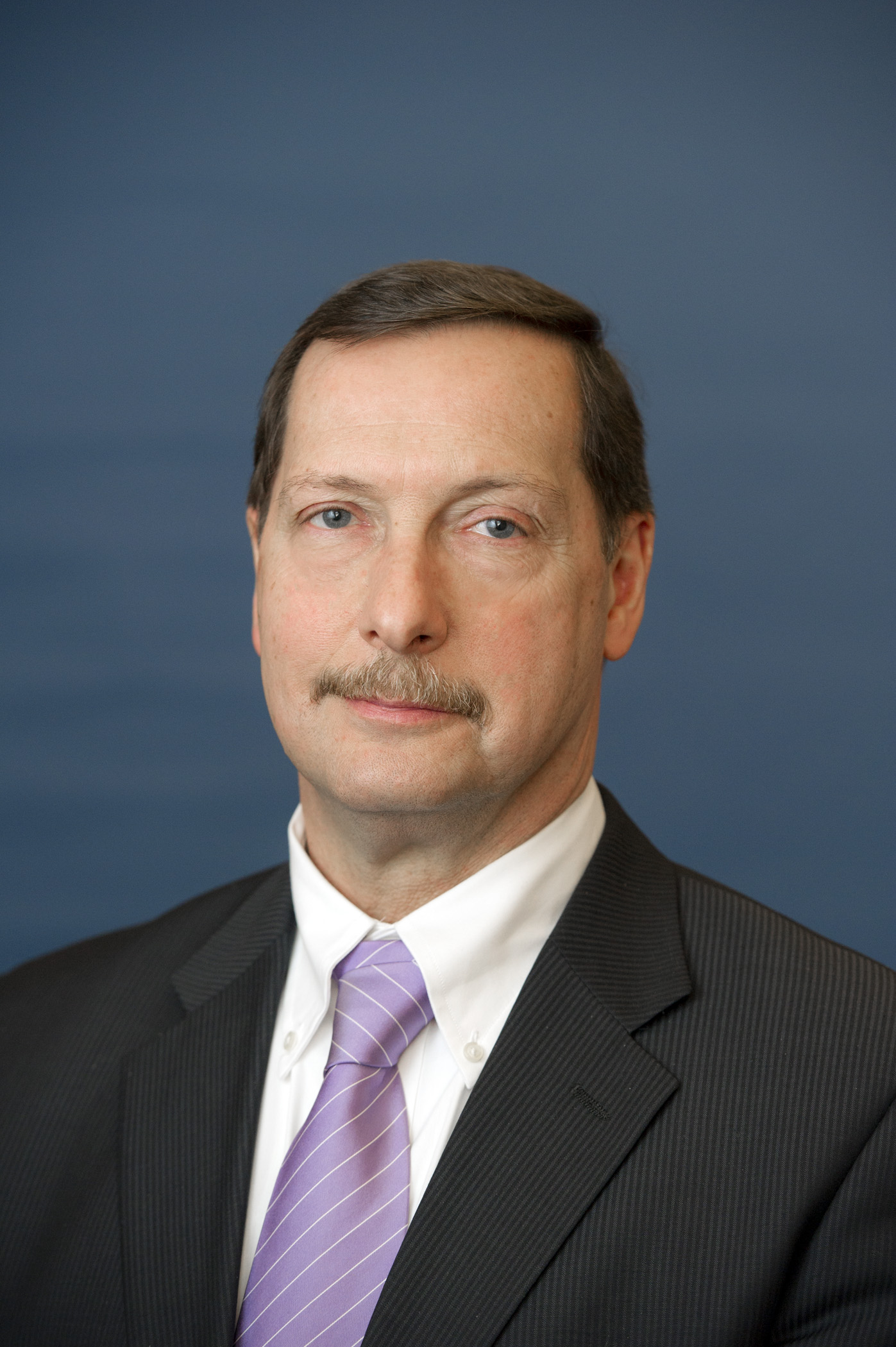
Alexey Arbatov
Alexey Arbatov is the head of the Center for International Security at the Primakov National Research Institute of World Economy and International Relations.
Carnegie does not take institutional positions on public policy issues; the views represented herein are those of the author(s) and do not necessarily reflect the views of Carnegie, its staff, or its trustees.
Two divergent trends—Putin’s hardline vision of how to prosecute the war in Ukraine, and a growing desire for change in Russia—could tear the regime apart.

Tatiana Stanovaya
Despite the agreement’s uncertainty, it’s still a significant development in regional and nuclear policy.


Andrew Leber, Jane Darby Menton
“AI safety in parallel” is modest and pragmatic but vital.

Matt Sheehan

Trump is distracted and Ukraine wants Europe to step up. The continent’s leaders must find their voice and assert it in talks with Russia.

Alissa de Carbonnel
Unresolved tensions within the AfD may ultimately constrain the its potential as a leader among European and global populist forces.
Jeremy Cliffe