

Research
- +10
Jarrett Blanc, Thomas de Waal, Karim Sadjadpour, …
{
  "authors": [
    "Jarrett Blanc"
  ],
  "type": "legacyinthemedia",
  "centerAffiliationAll": "dc",
  "centers": [
    "Carnegie Endowment for International Peace",
    "Malcolm H. Kerr Carnegie Middle East Center"
  ],
  "collections": [
    "Iranian Proliferation"
  ],
  "englishNewsletterAll": "americanStatecraft",
  "nonEnglishNewsletterAll": "",
  "primaryCenter": "Carnegie Endowment for International Peace",
  "programAffiliation": "ASP",
  "programs": [
    "American Statecraft"
  ],
  "projects": [],
  "regions": [
    "Middle East",
    "Iran"
  ],
  "topics": [
    "Political Reform",
    "Foreign Policy",
    "Nuclear Policy"
  ]
}
Source: Getty
The United States will be worse off from leaving the Iran deal. Either Iran will succeed in exploiting a wedge between America and its allies, leaving Washington isolated and unable to lead a coalition to address other provocations, or Iran will return to an unconstrained nuclear program.
Source: Hill
The Iran deal, formally the Joint Comprehensive Plan of Action, is dead. This is a dangerous new reality because the deal was working. Iran is complying with its commitments, meaning that it is not threatening the United States and Europe or further destabilizing the region by restarting its historical nuclear weapons program.
At its heart, the JCPOA was really a deal between the United States and Iran, although there are six other participants: the European Union, Britain, France, Germany, Russia and China. Most of the benefits Iran got come from the United States lifting sanctions that targeted its nuclear program. Without America, the deal is too one sided to survive, at least as is.
What comes next? President Rouhani and European leaders signaled one possible direction, suggesting that they will try to negotiate a rump JCPOA. The Europeans, along with Russia and China, could offer new benefits to Iran to make up for what the United States has pulled off the table. America plays a central role in the international financial system, so our sanctions carry a lot of weight around the world.
To counter resumed U.S. sanctions, Europe will need to make major concessions to accommodate Iran. These concessions cannot coexist with forceful new European sanctions addressing non-nuclear issues. If Europe moves in this direction, it would give up leverage it might otherwise use to address the concerns President Trump claims to care about, like Iran’s ballistic missiles and regional proxies.
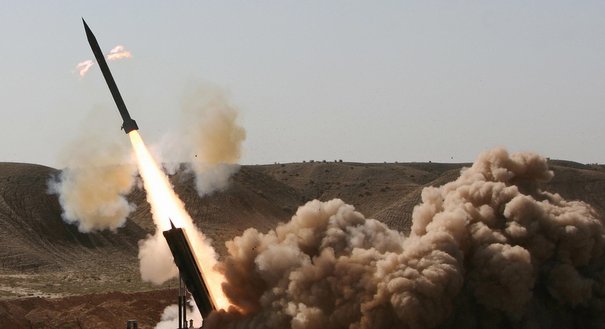
If this effort fails, Iran will inevitably stop abiding by restrictions on their nuclear program and allowing the invasive international inspections demanded by the deal. That does not mean that Iran will rush to build a nuclear bomb, as it froze its weapons program a decade before the JCPOA, but it will return to industrial scale uranium enrichment, creating fear and doubt in the region about whether it could have a bomb at any moment. This uncertainty is precisely why we needed the Iran deal to begin with. Leaving the deal will deepen the region’s conflicts and encourage more countries to develop their own nuclear capabilities.
What about Trump’s promise that Iran will come back to the United States looking to offer a “better deal?” His fantasy is a reminder that he is such a great dealmaker that he managed to lose a lot of money running casinos. Reinstituting U.S. sanctions will result in less pressure on Tehran than before the Iran deal, when the international community was united in identifying its nuclear program as a security threat. Even America’s adversaries like Russia and China joined with its closest allies in sanctioning Iran. This wasn’t free for them, but they accepted economic sacrifices of reduced oil purchases from Iran to achieve this agreement.
Russia and China will not join the United States this time around. Key U.S. allies in Europe and Asia are likely to defy or, at most, pay lip service to Trump’s sanctions threats. Trump has no capability to forge a coalition of allies, let alone get Russia and China to be real partners in enforcing Iranian isolation. At the same time, Trump has now demonstrated that the United States cannot be relied upon to take “yes” for an answer. A less trustworthy America negotiating from a position of less leverage is not going to win magical new concessions from Iran.
The United States will be worse off from leaving the Iran deal. Either Iran will succeed in exploiting a wedge between America and its allies created by Trump, leaving Washington isolated and unable to lead a coalition to address other provocations, or Iran will return to an unconstrained and uninspected nuclear program. Worst of all, there is little the United States can do to choose between these outcomes. Iran can decide its minimum price from Europe in order to stay in the deal. After decades of America driving the international agenda on Iran, Trump has succeeded only in handing the initiative to Tehran.

Former Senior Fellow, Geoeconomics and Strategy Program
Jarrett Blanc was a senior fellow in the Geoeconomics and Strategy Program at the Carnegie Endowment for International Peace.
Recent Work


Jarrett Blanc, Thomas de Waal, Karim Sadjadpour, …

Dan Baer, Rosa Balfour, Jarrett Blanc, …
Carnegie does not take institutional positions on public policy issues; the views represented herein are those of the author(s) and do not necessarily reflect the views of Carnegie, its staff, or its trustees.

Ahead of a tough winter for Ukraine, Donald Trump’s swing back toward Russia bodes ill. But instead of panicking, Kyiv’s European allies are focusing on action.

Rym Momtaz

Without a ceasefire with Ukraine on attacking each other’s energy infrastructure—to which the Kremlin is unlikely to agree—the diesel agreement between Putin and Trump is largely for show, rather than representing a genuine increase in the volumes of Russian diesel on the global market.

Sergey Vakulenko

Funding Ukraine remains a priority for European leaders. As Russia’s war of aggression heads into another winter, two feasible options to mobilize support for Kyiv should be fast-tracked.


Vladyslav Rashkovan, Gregory P. Wilson

While the EU and European governments are embracing the much-lauded middle-power moment, this entails three difficult conundrums.

Richard Youngs
The middle power moment will not be defined by sovereign states alone, and California stands out for its potential contributions to international cooperation.


Ian Klaus, Stewart Patrick