

Commentary
- +11
Cornelius Adebahr, Dan Baer, Rosa Balfour, …
{
  "authors": [
    "Erik Brattberg"
  ],
  "type": "commentary",
  "centerAffiliationAll": "dc",
  "centers": [
    "Carnegie Endowment for International Peace"
  ],
  "collections": [
    "European Foreign Policy in a New Transatlantic Context"
  ],
  "englishNewsletterAll": "ctw",
  "nonEnglishNewsletterAll": "",
  "primaryCenter": "Carnegie Endowment for International Peace",
  "programAffiliation": "EP",
  "programs": [
    "Europe"
  ],
  "projects": [],
  "regions": [
    "North America",
    "United States",
    "East Asia",
    "China",
    "Western Europe",
    "Iran"
  ],
  "topics": [
    "Economy",
    "Trade",
    "Foreign Policy"
  ]
}
Source: Getty
The United States and the EU would make more headway in trade talks if they worked together to combat China’s unscrupulous economic practices.
Ever since European Commission President Jean-Claude Juncker reached a limited agreement with U.S. President Donald Trump last July, trade tensions between Washington and Brussels have eased. The two sides have even talked up the possibility of concluding a trade agreement under the Trump administration. This would go a long way in helping to stabilize the battered transatlantic relationship and allow the two sides to focus on something they agree upon: addressing China’s unfair global trading practices.
Yet, the EU and the United States still disagree about the scope and scale of a new trade pact. After a recent meeting in Washington, the U.S. and EU trade negotiators, Robert Lighthizer and Cecilia Malmström, both presented their separate plans. The United States wants a far-reaching trade agreement that includes the agriculture sector and public procurement. The EU favors a more narrow one that would only slash trade tariffs on industrial goods such as cars and reduce regulatory differences. The EU’s approach is in part intended to avoid a repeat of the dragged-out and controversial Transatlantic Trade and Investment Partnership, or TTIP, negotiations during President Barack Obama’s tenure.
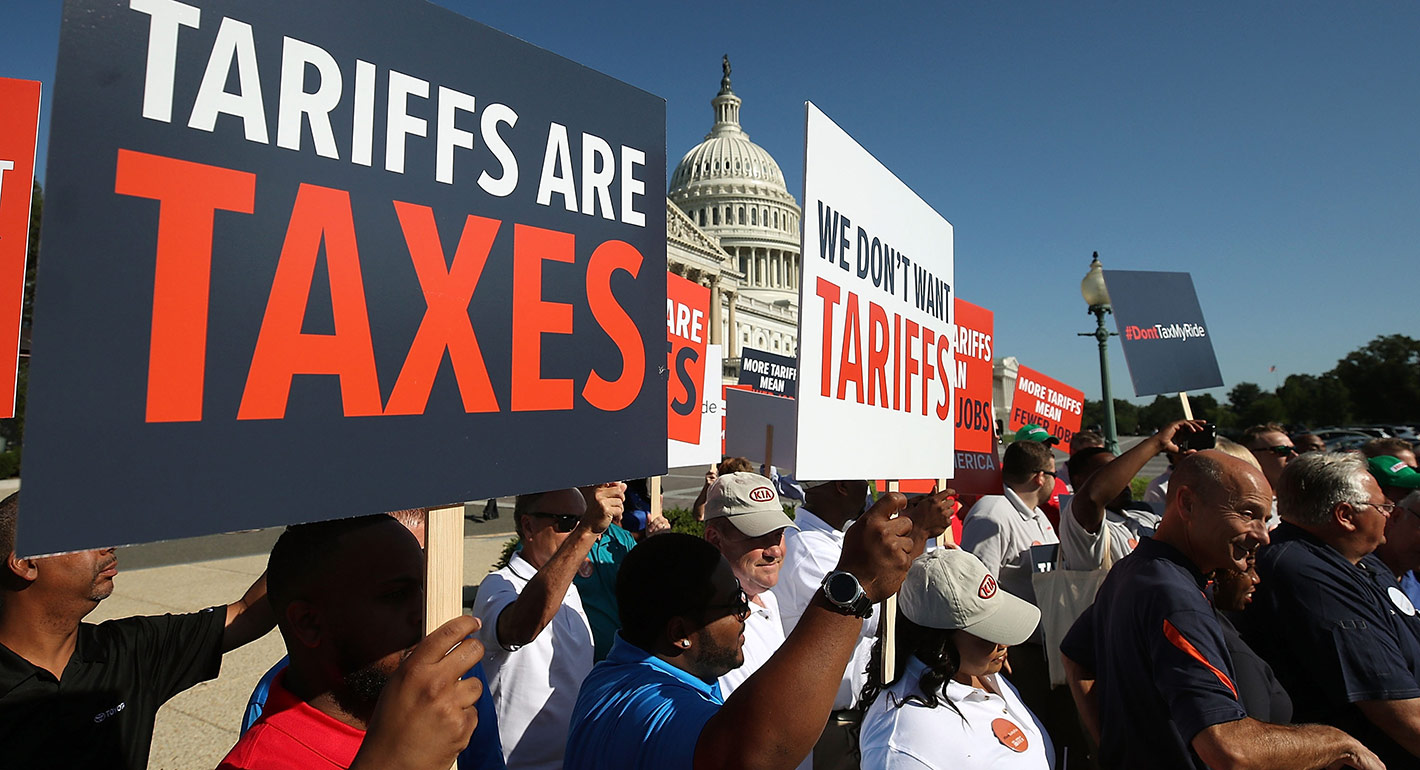
For now, the two sides appear to be at an impasse. And looming around the corner is the specter of new U.S. tariffs against European car manufacturers. The U.S. Commerce Department is expected to release the findings of its Section 232 investigation into auto imports and national security in February. Depending on the report’s conclusions, Trump may use Section 232 as a justification for imposing car tariffs against the EU—something he has repeatedly threatened to do—or at least as leverage in the negotiations. The EU has made clear it would strongly oppose such tariffs, possibly by imposing counter-tariffs on U.S.-made cars.
A return to transatlantic trade tensions—or even an all-out trade war—would negatively impact the U.S. and EU economies at a time of slowing growth rates on both sides. It would also be detrimental to Western geopolitical interests in a world marked by a rising and increasingly assertive China. In reality, the United States and the EU increasingly share a common agenda: the need to confront unfair Chinese trade and economic practices, including intellectual property theft, forced technology transfers, cybercrime, excessive use of state subsidies, and lack of reciprocal market access for Western companies.
While the Trump administration is busy carrying out its own bilateral trade negotiations with Beijing, it should also recognize and seek to leverage the fact that Europe is already taking its own steps to scrutinize China more. These steps include new investment screening legislation in the EU, efforts to curtail Chinese technology giant Huawei’s efforts to build out 5G networks in Europe, and a new connectivity strategy to provide alternatives to China’s Belt and Road Initiative. Illustrating this sudden shift in European policy is a recent report from an influential trade association calling for a tougher EU line on China.
The bilateral U.S.-EU trade talks are unlikely to yield any substantial breakthroughs soon. But a separate trilateral track, between the United States, the EU, and Japan, is continuing to discuss a shared agenda for reforming the World Trade Organization (WTO). During her recent trip to Washington, European trade negotiator Malmström chaired the fifth trilateral meeting with her U.S. and Japanese counterparts. If these three players can agree on necessary reforms, it would help pressure China to change its behavior, while preserving and updating the multilateral trading system.
Although some members of the Trump administration apparently recognize the importance of working closely with global partners to address issues related to a rising China, the president and some of his closest associates disagree. On several occasions, Trump has referred to the EU as a “foe” and suggested the bloc is a worse trade offender than China. He also harbors deep resentment for multilateral institutions, including the WTO, and has taken steps to actively undermine them.
This unilateral approach is both counterproductive and a missed opportunity. As Beijing increasingly asserts itself on the international stage, a joint transatlantic agenda toward China offers the best chance to address an issue that is a top priority for the Trump administration. Trump’s own National Security Strategy calls for stronger transatlantic cooperation to address shared concerns about China’s economic practices.
Such an agenda begins with bringing a limited trade deal with the EU quickly to a close, scrapping the ridiculous idea of tariffs against European car producers, and giving greater priority to working with the EU and Japan on commonsense WTO reform. This would go a long way to reassure worried Europeans that the Trump administration does not view them with hostility, and is willing to make the challenges posed by China’s rise a unifying force for the transatlantic partnership.

Former Director, Europe Program, Fellow
Erik Brattberg was director of the Europe Program and a fellow at the Carnegie Endowment for International Peace in Washington. He is an expert on European politics and security and transatlantic relations.
Recent Work



Cornelius Adebahr, Dan Baer, Rosa Balfour, …

Erik Brattberg, Philippe Le Corre, Paul Stronski, …
Carnegie does not take institutional positions on public policy issues; the views represented herein are those of the author(s) and do not necessarily reflect the views of Carnegie, its staff, or its trustees.
A leak of Russian gas price data helps establish that China is paying Russia far less than Central Asian countries and Gazprom’s former European customers.

Sergey Vakulenko

China’s political future will be shaped between now and next October. As the Communist Party enters its intense “campaign season” to prepare for a major political transition in 2027, reading Beijing's actions and responses may become more difficult as domestic politics weigh on its behavior more than usual.

Damien Ma

The EU can impose sanctions but struggles to enforce them without the United States. With Washington increasingly disinterested in backing European interests, the bloc must now fend for itself.


Nicu Popescu, Tiago Antunes

Global and rising powers will need to engage with Africa’s priorities and agency in order to secure the continent’s increasingly attractive partnerships.

Fonteh Akum

Rubio’s recent visit brought welcome attention, but more capital requires governance changes that may be a hard sell for regional governments.

Jennifer B. Murtazashvili