

Commentary
Despite public disputes over trade and immigration, the strategic partnership’s foundations remain sturdy.
Sameer Lalwani
{
  "authors": [
    "Balázs Jarábik",
    "Gwendolyn Sasse",
    "Thomas de Waal",
    "Konstantin Skorkin",
    "Alexander Baunov"
  ],
  "type": "questionAnswer",
  "centerAffiliationAll": "dc",
  "centers": [
    "Carnegie Endowment for International Peace",
    "Carnegie Europe"
  ],
  "collections": [
    "Europe’s Eastern Neighborhood"
  ],
  "englishNewsletterAll": "ctw",
  "nonEnglishNewsletterAll": "",
  "primaryCenter": "Carnegie Endowment for International Peace",
  "programAffiliation": "russia",
  "programs": [
    "Russia and Eurasia",
    "Europe"
  ],
  "projects": [],
  "regions": [
    "Eastern Europe",
    "Ukraine",
    "Europe",
    "Iran"
  ],
  "topics": [
    "Political Reform",
    "Democracy",
    "Foreign Policy"
  ]
}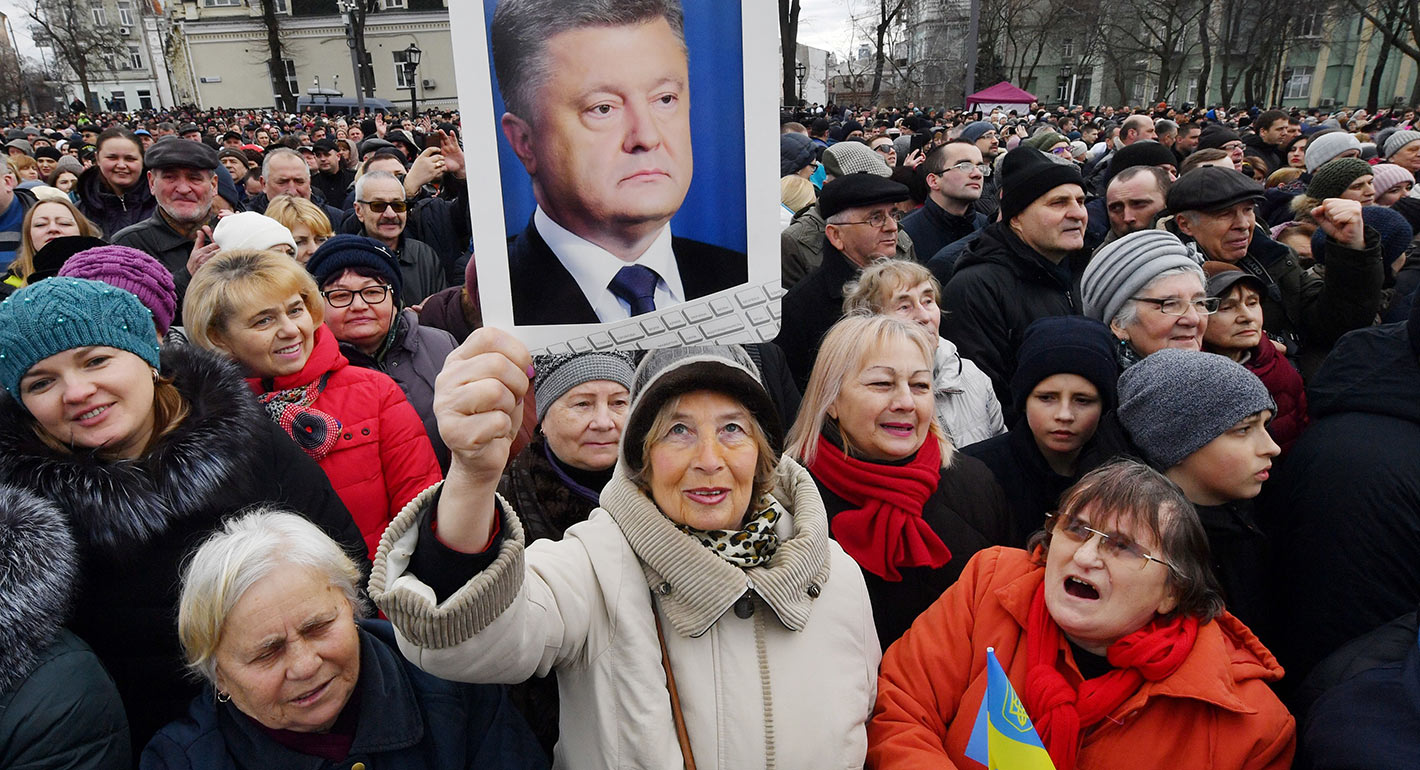
Source: Getty
Ukraine votes for a president on March 31. Will the pro-Western incumbent, Petro Poroshenko, win? Or will he lose to his old foe, Yulia Tymoshenko, or wild card Volodymyr Zelenskiy?
Jarábik: Out of thirty-nine candidates, four have a chance to enter the runoff, based on the latest polls.
Volodymyr Zelenskiy, a political novice running for president, is the country’s most famous comic actor. His unorthodox campaign stresses his hope to change politics as a newcomer, but it does not set out a clear program.
The incumbent president, Petro Poroshenko, emphasizes patriotic issues, nation building, and the conflict against Russia. He is also offering populist sweeteners such as extra pensions and gas subsidies.
Veteran populist politician Yulia Tymoshenko is a former prime minister, who served in office after the 2005 Orange Revolution and again from December 2007 to March 2010. She has also been jailed twice for political reasons. Dubbed the gas princess in the 1990s, when she ran a hugely successful business importing natural gas from Russia. Her opposition to high household gas prices makes her a formidable actor.
Last but not least, former defense minister Anatoliy Hrytsenko has a fighting chance since his competitor, Andriy Sadovyi, the mayor of the western city of Lviv, dropped out of the race in support of Hrystsenko’s candidacy. Attractive to pro-Western urban voters, one could describe Hrytsenko as a corruption-free version of Poroshenko.
Jarábik: The fact the Ukrainians are willing to vote for an actor who plays a president on television —Zelenskiy—is an indictment of Ukraine’s current politics. Ukrainians are tired of the old system that favored corrupt special interests, represented by former president Viktor Yanukovych before the Euromaidan protests in 2014 and by the current president, Poroshenko, after. For most Ukrainians, injustice and impunity continue, despite the post-revolution government’s many reforms and the march toward integration with the West.
Jarábik: None of the candidates can reliably address policy priorities such as corruption, economic growth, or unemployment. Nor can they credibly explain how they would end the war in eastern Ukraine. The original ideals of the Euromaidan revolution were not merely to move closer to the West, which has been undoubtedly happening under Poroshenko’s watch, but also to improve governance and reduce the influence of oligarchs. Instead of drawing a line under corruption and setting new rules, Poroshenko has proven to be a representative of the old system, using Russian aggression to whip up patriotism. Ukrainians are united when it comes to Russia. But the policy of so-called Ukrainianization (promoting Ukrainian language and culture in public life), combined with economic decline, has deepened distrust toward the central government particularly in the most affected southeast regions, as well as among young people across the country.
Against this backdrop, Zelenskiy’s unorthodox approach appears refreshing. Instead of making promises, he says he focuses on listening and crowdsourcing ideas. He also rules social media instead of relying on classic political advertisements. The dirty campaign, reports of massive vote buying, and corruption scandals connected to the current president may work in Zelenskiy’s favor.
Jarábik: As over 20 percent of voters are undecided, and turnout is expected to be over 80 percent, predictions are hard to make. But Zelenskiy’s supporters are the youngest and least likely to vote, and many of them live outside the country. Lower turnout would benefit Poroshenko or Tymoshenko.
Poroshenko’s level of mistrust is the highest, but his supporters are also the most motivated.
He can build on urban voters’ fear of upending the status quo and losing support from the West. If Poroshenko enters the runoff, he will paint his opponent as pro-Russian and challenge any potential protests by appealing to voters’ patriotism.
Sasse: Three topics regularly figure among the top concerns of the Ukrainian population: corruption, socioeconomic issues, and the war. All three issues are present in the election campaign, to varying degrees.
Overall, socioeconomic issues have been least prominent. For Tymoshenko and, in particular, for Zelenskiy, corruption has been the most useful way to position themselves vis-à-vis Poroshenko. The incumbent president’s personal record in this area has been very mixed. Nevertheless, he has emphasized his reform success and commitment to anticorruption measures.
But Poroshenko’s omnipresent slogan, “Army, Language, Faith,” has put the overall campaign emphasis on security and identity. This focus on the defense of Ukrainian state and nationhood against Russia has forced Poroshenko’s rivals to address these issues more than they might have wanted to.
Sasse: None of the presidential candidates openly supporting a pro-Russian agenda has a chance of getting elected. The experience of Euromaidan and the war in eastern Ukraine have made this impossible.
Therefore, Russia has three main interests. First, it wants to prevent the incumbent Poroshenko from winning. Second, it wishes to create a general atmosphere of uncertainty and instability. And third, it wants to push pro-Russian candidates and their parties into a better position ahead of the parliamentary elections in the fall.
Russia and actors aligned with the Kremlin’s views are pursuing these three goals through Russian or Russia-oriented media outlets; Ukrainian oligarchs with business interests in Russia; cyberattacks, including on the Central Election Commission; and by using leverage in Donbas and in the Azov Sea.
Sasse: The polarization between the presidential candidates, in particular between Poroshenko and Tymoshenko, is so extreme, and the distance between the political elites and the electorate is so great, that the election cannot possibly overcome these divisions.
These divisions have little to do with a Western-Russian divide. Poroshenko and Tymoshenko will probably question the overall legitimacy of the election if they lose. If Zelenskiy wins, it is unclear who will fill the political vacuum he currently represents. These uncertainties, and the reaction of society, are the real risks of the election.
De Waal: Independent Ukraine is an imperfect democracy, but it can be proud of a tradition of free elections in which opposition candidates are allowed to come to power. We genuinely don’t know who will win the election on March 31. Poroshenko has been a disappointment to many supporters and could lose the vote—he lacks the capacity to rig the election even if he wanted to. That is why he has wrapped himself in the flag and is appealing to voters in a manner familiar to voters in democracies around the world—by trumpeting his achievements and using patriotic slogans.
What is disappointing is that there is no candidate expressing the people power of the Euromaidan movement of 2014–2015. The main candidates are two well-worn establishment candidates and a maverick.
De Waal: Yes. The major story of the election is the meteoric rise in the polls of Zelenskiy, a showman, comic, and businessman with no political experience. Like Donald Trump, he is most famous for fronting a TV show.
Tymoshenko—for whom this will surely be her last shot at the presidency—has also gone full populist, aggressively attacking the reform agenda of the last two governments and promising cheap gas and higher wages.
And Poroshenko has apparently given up on being a reformer—he is running under the patriotic slogan of “Army, Language, Faith.”
De Waal: For years, the story of Ukrainian elections was of an orange-blue divide between the Ukrainian-speaking and nationalist west of the country, or orange voters, and the Russian-speaking south and east, or blue voters.
That changed in 2014 when Yanukovych discredited himself and fled, and Russia intervened militarily, first in Crimea and then in Donbas. That means that the blue voters no longer have a strong party to vote for—and upward of five million people in Crimea and eastern Ukraine, who voted in previous elections, won’t have a chance to cast their ballots in this one, as they are now under control of Russia.
There are undoubtedly voters who are unhappy about the post-Euromaidan, pro-Western political agenda of the past few years. But they don’t have a proper candidate, and many of them will probably just stay home.
Skorkin: It is hard for the Kremlin to influence the Ukrainian elections, since any support from Moscow is likely to harm the candidates. The tentatively pro-Russian candidates from the ranks of the former Party of Regions (Yuri Boyko and OleksandrVilkul) are unlikely to be successful. Their campaigns are geared more toward this fall’s parliamentary elections.
There is no question that the Kremlin might benefit from Poroshenko’s loss. Moscow hopes that the Ukrainian government could be destabilized or weakened during a transition of power. Moscow also likes the incumbent president’s main adversaries: Tymoshenko has a history of interactions with Vladimir Putin, and Zelenskiy is inexperienced. However, since Poroshenko can be easily labeled as a Western puppet and corrupt oligarch, the Kremlin could also use his victory to advance its own interests. The question is whether the Ukrainian politicians are willing to curb their ambitions if they lose and concede gracefully, because the Kremlin will like anything that might sow chaos in Ukraine.
Baunov: The Kremlin does not have a favorite among the serious candidates in the Ukrainian presidential election. Moscow is somewhat consoled by the fact that Poroshenko has run his campaign under the slogan “Army, Language, Faith,” thereby stealing votes from other candidates who have a nationalist or patriotic agenda. That is at least a guarantee that Ukraine’s next leader won’t advocate an even more radical split with Russia than the current one.
The hope in Moscow is not that a pro-Russian party will win (there is no such thing in Ukraine, not even when Viktor Yanukovych or Leonid Kuchma was president), or that a peace party will win, as this is impossible now. The hope in Moscow is that a party of pragmatists, who believe that you have to do business with Russia, if only because of its geographical proximity, will win. If Poroshenko loses the election, it will look like a victory for this sort of party.

Political analyst, former Slovak diplomat, and consultant specializing in Eastern Europe
Nonresident Senior Fellow, Carnegie Europe
Gwendolyn Sasse is a nonresident senior fellow at Carnegie Europe. Her research focuses on Eastern Europe, with a particular focus on Ukrainian politics and society, EU enlargement, and comparative democratization.

Senior Fellow, Carnegie Europe
Thomas de Waal is a senior fellow at Carnegie Europe, specializing in Eastern Europe and the Caucasus.

An independent journalist.

Senior Fellow, Editor-in-Chief, Carnegie Russia Eurasia Center
Baunov is a senior fellow and editor-in-chief at the Carnegie Russia Eurasia Center.
Carnegie does not take institutional positions on public policy issues; the views represented herein are those of the author(s) and do not necessarily reflect the views of Carnegie, its staff, or its trustees.
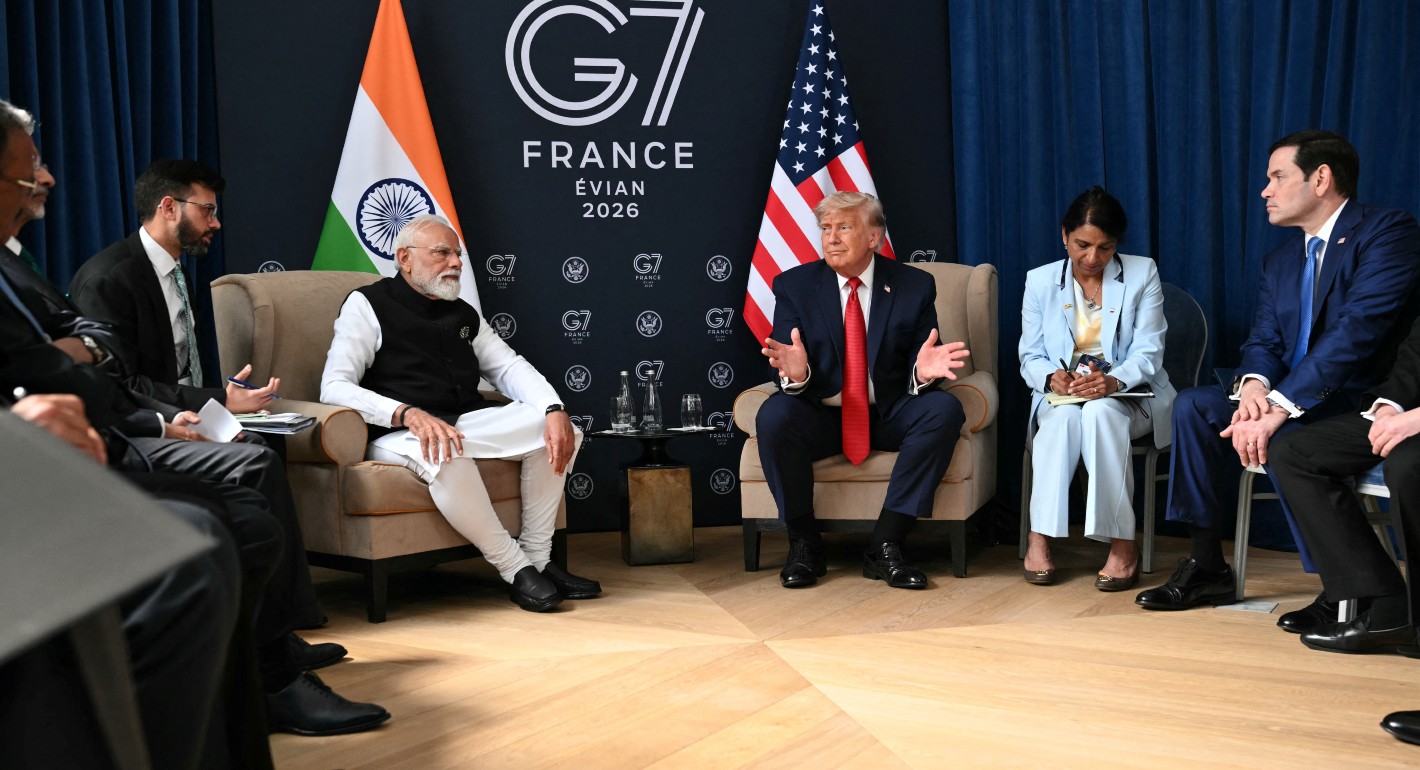
Despite public disputes over trade and immigration, the strategic partnership’s foundations remain sturdy.
Sameer Lalwani
It signals a new era of tech diffusion and warfare.

Steve Feldstein

With its public finances in shambles, the far right polling at 35 percent ahead of the 2027 presidential election, and a growing protest movement, is France’s crisis a threat to the EU’s geopolitical awakening?

Rym Momtaz, ed.

Putin’s conservative staffing policies and search for ever greater control have cemented parliament’s transformation into a bureaucratic appendage of the executive branch.

Andrey Pertsev

Ahead of a tough winter for Ukraine, Donald Trump’s swing back toward Russia bodes ill. But instead of panicking, Kyiv’s European allies are focusing on action.
Rym Momtaz