

Article
Steve Feldstein, Jodi Vittori
{
  "authors": [
    "Jodi Vittori"
  ],
  "type": "legacyinthemedia",
  "centerAffiliationAll": "dc",
  "centers": [
    "Carnegie Endowment for International Peace"
  ],
  "collections": [],
  "englishNewsletterAll": "democracy",
  "nonEnglishNewsletterAll": "",
  "primaryCenter": "Carnegie Endowment for International Peace",
  "programAffiliation": "DCG",
  "programs": [
    "Democracy, Conflict, and Governance"
  ],
  "projects": [],
  "regions": [
    "North America",
    "United States",
    "South Asia",
    "Afghanistan"
  ],
  "topics": [
    "Political Reform",
    "Security",
    "Military",
    "Foreign Policy"
  ]
}
Source: Getty
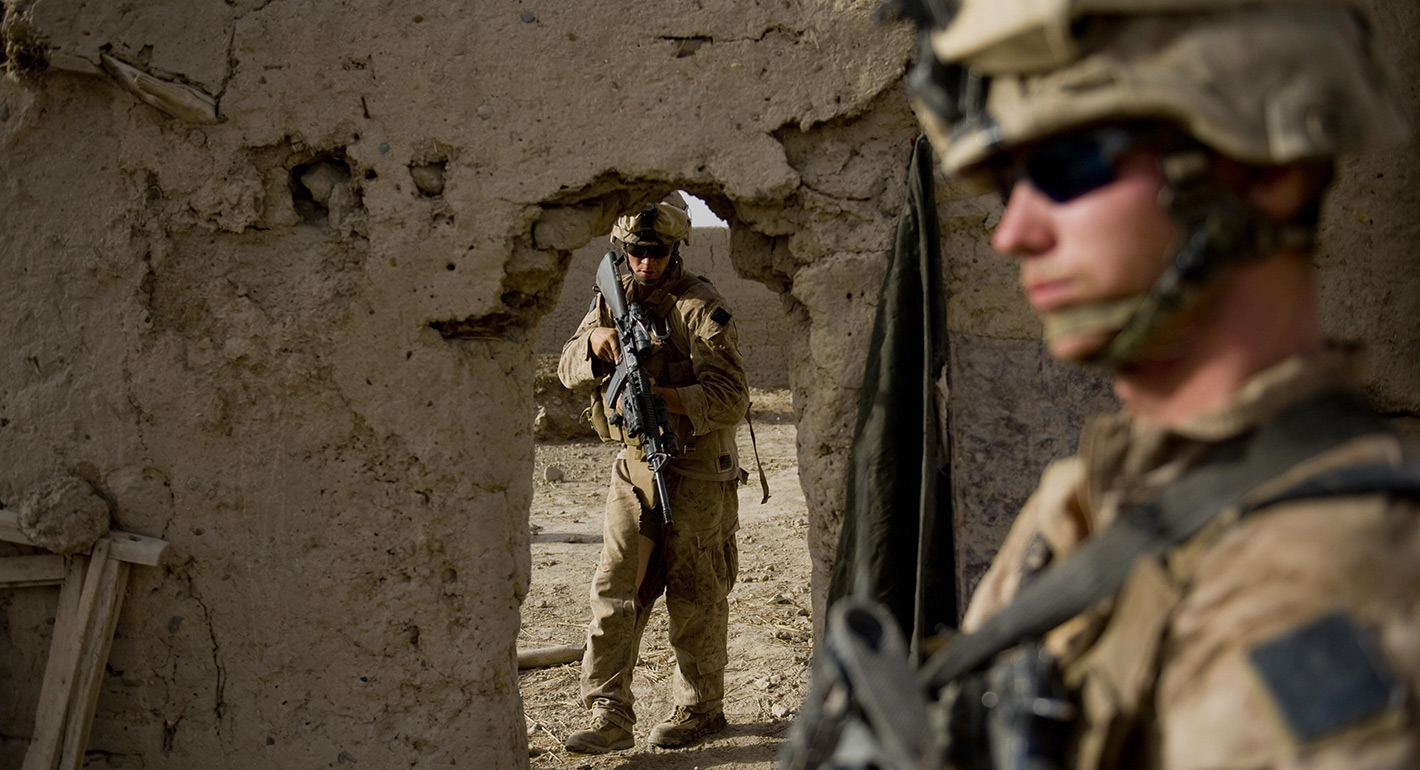
The goal of the United States should be to create conditions that leave the possibility for Afghans to build a more legitimate government and security sector in future decades.
Source: The Hill
The question of United States withdrawal from Afghanistan is no longer if but when. With the Afghan government, the Taliban, and the warlords and other mafia type outfits recognizing this, they have shifted to positioning themselves for the aftermath of America’s longest war. In the “survival of the fittest” environment of Afghanistan, corruption and crime is both a major cause of the conflict and a terrible form of conflict resolution.
All actors realize that political arrangements and economic motives are inherently linked. Political positions enable control of economic rents, while those same rents offer stability and status within new uncertain political arrangements. These personal and pecuniary motives have led to an influx of both formal and informal negotiations.
The formal negotiations, the ones in fancy hotels, offer up superficial promises of democratization, rule of law, or women’s empowerment. While actors may agree to these well intentioned conditions in a peace treaty, it is the agreements made in the proverbial “back room” that promise the most sought after rewards of money, power, and control of territory. These shadowy negotiations carve up Afghanistan and its resources into fiefdoms and alliances as various actors balance and bandwagon against one another.
While they are necessary to the peace process, these negotiations will ultimately keep the Afghan people in a state of poverty, violence, and lawlessness. Corruption and predation will continue to increase, as the resulting Afghan government doles out various economic goodies in exchange for semblances of loyalty and alliances. While some actors may fall in line with a formal negotiated agreement, many powerful actors will defect from it, maintaining sovereignty and immunity within their own fiefdoms through a combination of economic incentives and violence.
While it still has some leverage, what should the United States do? The United States has wielded its leverage by becoming one of the biggest providers of patronage to warlords over the years, usually unintentionally, by supplying them with money, arms, training, and criminal and business opportunities. In doing so, it helped create winners and losers amongst the various mafia groups.
Now the United States should deliberately pick winners and losers. Its support should only go to loyal government actors and security force units willing to rein in the worst predatory behavior. Those too disloyal and predatory should be cut off from American resources. To ensure that resources only go to actors willing to maintain the political settlement, the United States must employ significant granular oversight while also reinvigorating citizen oversight efforts, such as community based monitoring and civil society organizations.
The choice must be clear. If government leaders or security units want to receive American support, they have to remain in the settlement and meet minimum standards of behavior, namely by limiting human rights abuses and predation. If they do not, then they are on their own.
This will be especially important for the Afghan security forces. These forces cannot survive and protect a future Afghan regime without American support. In particular, some special forces units have demonstrated a willingness to fight and professional behavior. They should form the core of a smaller and more effective security force that only seeks to hold the territory it can. So long as the United States and its allies can effectively track their assistance and ensure minimal standards of behavior, the United States should keep funding those units.
There is a very real risk that American or other allied assistance may not incentivize a critical mass of the warlords or security forces to remain loyal to any political settlement, especially since there are many other options for external patrons. The special forces might prove to be a less coherent force than currently assumed, or they could be overwhelmed by the variety of warlord forces against them. But then again, that is the likely outcome in the negotiations anyway.
The United States has already tried the approach of giving large sums of money and equipment to warlords aligned with the Afghan government with insufficient oversight and few efforts to cut off the worst predatory behavior. The United States can continue this and pretend the warlords in the political settlement will become democratically minded, but the result so far has been America’s longest war, an absolute tragedy for the Afghan people, and a new round of “great game” politics in the region.
It is better for the United States to try a new approach that accepts that the eventual negotiated government will not be interested in good governance or the rule of law anytime soon, regardless of what is agreed to in a peace treaty. Instead, the country will be controlled by a variety of government and Taliban mafias interested in their own personal power, survival, and wealth.
The goal of the United States should be to create conditions that leave the possibility for Afghans to build a more legitimate government and security sector in future decades. Only giving aid to the responsible and loyal government and security actors, ensuring that resources can be tracked, and cutting off support in situations where the conditions are not met is a new and intimidating strategy.
It will often lead to some tough calls because rarely will such decisions be black or white. No matter what, the odds of the political settlement surviving and enough Afghan security forces remaining loyal to the state are slim under the best of conditions. But at this point, what do the United States and the Afghan people have to lose?
Former Nonresident Scholar, Democracy, Conflict, and Governance Program
Jodi Vittori was a nonresident scholar in the Democracy, Conflict, and Governance Program. She is an expert on the linkages of corruption, state fragility, illicit finance, and U.S. national security.
Recent Work

Steve Feldstein, Jodi Vittori
Lakshmi Kumar, David Szakonyi, Clare Rewcastle Brown, …
Carnegie does not take institutional positions on public policy issues; the views represented herein are those of the author(s) and do not necessarily reflect the views of Carnegie, its staff, or its trustees.

Despite public disputes over trade and immigration, the strategic partnership’s foundations remain sturdy.

Sameer Lalwani
It signals a new era of tech diffusion and warfare.
Steve Feldstein

With its public finances in shambles, the far right polling at 35 percent ahead of the 2027 presidential election, and a growing protest movement, is France’s crisis a threat to the EU’s geopolitical awakening?

Rym Momtaz, ed.

Putin’s conservative staffing policies and search for ever greater control have cemented parliament’s transformation into a bureaucratic appendage of the executive branch.

Andrey Pertsev

Russia’s AI-driven propaganda campaigns operate in a fragmented, chaotic, and often illogical manner. That’s not necessarily a problem for the Kremlin, though: It’s much easier to mimic genuine public debate that way.

Ilya Klishin