

Q&A
Darshana M. Baruah, Satyendra Prasad, Denghua Zhang
{
  "authors": [
    "Darshana M. Baruah"
  ],
  "type": "legacyinthemedia",
  "centerAffiliationAll": "dc",
  "centers": [
    "Carnegie Endowment for International Peace",
    "Carnegie India"
  ],
  "collections": [],
  "englishNewsletterAll": "ctw",
  "nonEnglishNewsletterAll": "",
  "primaryCenter": "Carnegie India",
  "programAffiliation": "SAP",
  "programs": [
    "South Asia"
  ],
  "projects": [
    "Indian Ocean Initiative"
  ],
  "regions": [
    "Indo-Pacific"
  ],
  "topics": [
    "Foreign Policy",
    "Security"
  ]
}
Source: Getty
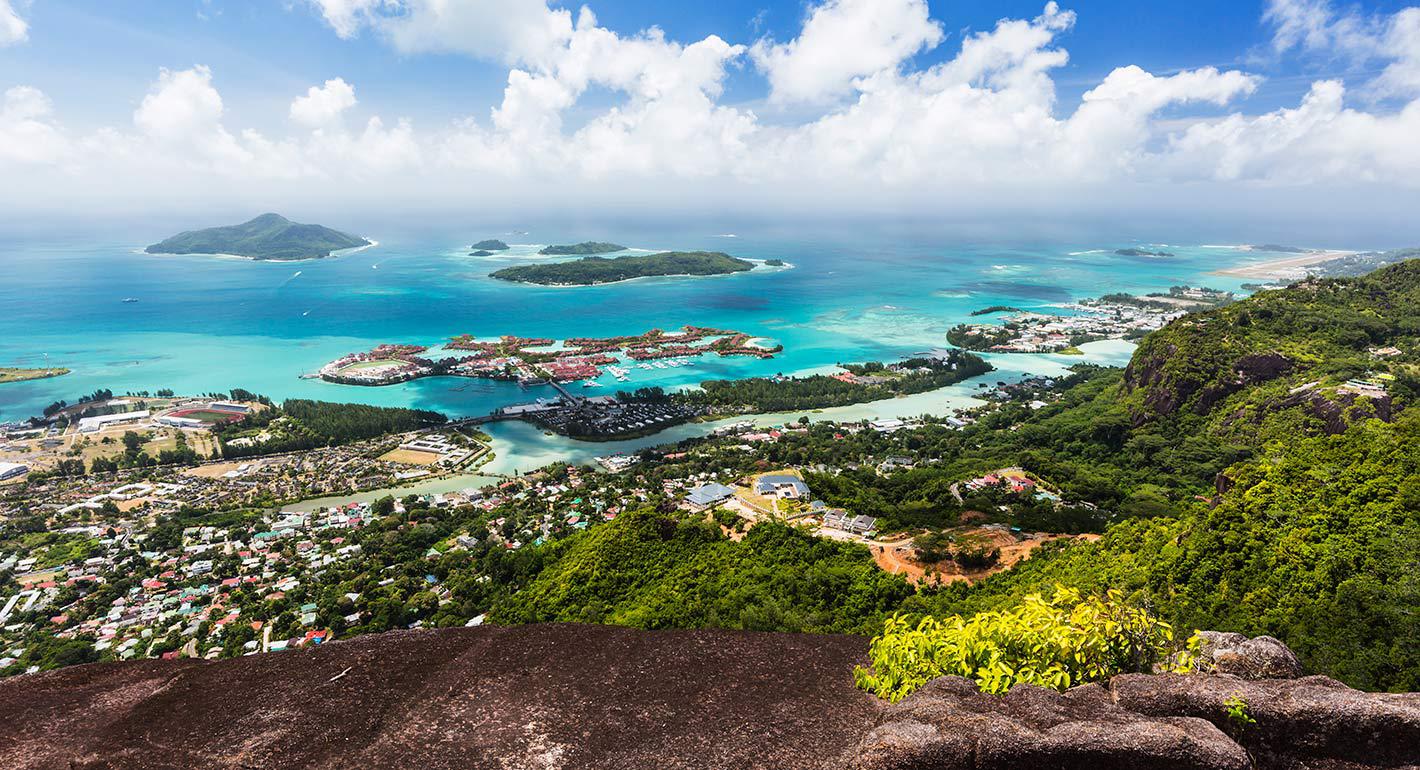
While the traditional powers of the Indian Ocean continue to work together across the maritime domain to maintain a balance of power, the role of islands in shaping a new security architecture is often overlooked.
Source: South Asian Voices
China’s rapidly expanding presence in the Indian Ocean in recent years underlines the emergence of Beijing as a new player in the region. Increasing Sino-Indian competition as a result of this has brought the Indian Ocean back into geopolitical focus – a theater that otherwise remained outside great power dynamics post the Cold War. China’s increasing economic and military collaborations and activities across this ocean have extended the geopolitical competition beyond India to other traditional powers in these waters such as the United States, France, and Australia. While the traditional powers of the Indian Ocean continue to work together across the maritime domain to maintain a balance of power, the role of islands in shaping a new security architecture is often overlooked.
Islands in the Indian Ocean are located near key transit routes providing access and influence over important chokepoints and waterways, and thus, their key geographies have the potential to impact geopolitical competition. Developments in 2019 indicate that traditional powers are increasingly taking this under consideration and have made a determined effort to highlight the strategic value of these islands, be it those generally discussed such as Sri Lanka, Maldives, and Mauritius or the little-known Vanilla islands and other territories in the Western Indian Ocean. Recognizing their own significance, the island nations have been vocal in highlighting their priorities and challenges, pushing back against traditional players and actors in the region to carve out their national and strategic interests.
While events in 2019 on each island in the Indian Ocean are significant to recount individually, two broad trends across the islands deserve particular attention—nations rediscovering their island identity and new players other than China developing partnerships with the islands. Both trends are likely to have a significant impact on the way traditional powers approach the region.
Of the six Indian Ocean island nations (Sri Lanka, Maldives, Mauritius, Seychelles, Madagascar and Comoros), all except Seychelles saw elections in 2019. Almost all the leaders of these newly elected or re-elected governments have underlined the importance of their geography and their identity as islands against the backdrop of great power competition in the Indian Ocean. These nations see the potential of linking their security needs, economic growth, and their role in the world to their geography, at a time of significant focus on maritime partnerships in the Indo-Pacific by traditional powers such as France, India, and the United States as well as new powers such as China. For instance, during this author’s post-election visits to Madagascar and Comoros in 2019, officials on both islands acknowledged that they had been given a greater mandate from their governments to focus on maritime security.
In fact, most islands are choosing to identify as maritime nations in the Indian Ocean, since that brings far more foreign policy options, than simply being a South Asian or African nation. Emphasis on their maritime identity rather than on a subregion allows island nations to break out of subregional political dynamics and engage with countries across the globe on different issues. For instance, Sri Lanka as a South Asian country may be perceived to be within the Indian sphere of influence but Sri Lanka as an Indian Ocean island highlights Colombo’s strategic importance, expanding its geographical sphere of engagements. To be sure, interviews with officials across these nations make it clear that the islands of the Indian Ocean are aware of the risks and challenges of great power competition and that subregional politics will always be a concern for them. However, they also understand the opportunities and space for collaboration that come from an Indian Ocean identity.
For the Indian Ocean’s traditional powers, it is important to understand that island nations emphasizing their maritime identity underlines their willingness to break out of subregional spheres of influence and invite new actors to balance existing power dynamics in the region. Thus, historical and diaspora ties may no longer be enough to engage with island nations and traditional powers would have to take more cognizance of the interests and concerns of these islands and be creative and equitable in these partnerships.
Another important theme in Indian Ocean geopolitics in 2019 has been the emergence of Russia and Saudi Arabia as important players. While there is no doubt that Beijing has increased its engagements with Mauritius, Seychelles, Madagascar and Comoros, the increasing role of Russia and Saudi Arabia in the Western Indian Ocean has gone fairly unnoticed. As a member of the Arab league, Comoros has increasingly looked toward its co-members for support and development. In 2018, Saudi Arabia pledged USD 22 million for a water project in Comoros, and the relationship has continued to grow with Moroni seeking USD 4.6 billion in investments from Riyadh in sectors such as tourism, agriculture, and energy. Beyond investments, in a fairly new trend, Saudi Arabia is also promoting tourism to the island nations of the Indian Ocean. In the first half of 2019, tourists to Mauritius from Saudi Arabia almost doubled from the previous year, a destination otherwise dominated by European tourists. Port Louis and Riyadh also launched “Mauritius Week” to increase Saudi tourism to the island.
Russia too is looking to strengthen its relationship with these island nations. In 2019, Moscow held the first ever Russia-Africa summit and invested in its relations with Mauritius, Comoros, and Madagascar. Moscow and Port Louis are in conversation to boost trade and collaboration in sectors such as agriculture and energy. Russia and Madagascar have a close relationship as the island nation continues to push back against France, and Moscow reportedly played a key role in the 2019 Madagascar elections.
Island nations are welcoming these engagements because they are keen to move beyond traditional partners (such as India, France, and the United States) who became complacent in their relationships with the islands and even ignored them in the past three to four decades. The new geopolitical competition in the Indian Ocean provides these islands an opportunity to attract other players into the region to balance a dominant France or India.
The reemergence of Russia and Saudi Arabia in the Western Indian Ocean means that if so far their focus was on balancing an assertive China, traditional powers will now have to manage the rise of Moscow and Riyadh, whether bilaterally, trilaterally, or multilaterally, to secure their own strategic interests. Thus, these developments require Delhi, Washington, Paris, Canberra, and Tokyo to take a fresh look at their policies towards strategic islands in the Indian Ocean.
As the geopolitical salience of the Indian Ocean increases, the island nations in these waters will come to assume a critical role. However, taking into account the trends in the region in 2019, Delhi, Washington, Paris, Canberra, and Tokyo must remember and acknowledge the priorities of the islands nations for meaningful engagement. The primary concerns of island nations are non-traditional threats such as illegal fishing, natural disasters, drug smuggling, and more. Thus, countries looking to engage islands in the Indian Ocean to secure their own strategic interests should be able to offer assistance that mitigate the islands’ concerns too.
There is also an urgent need to engage with the island nations of the Western Indian Ocean. These islands can play a critical role in bridging the Indian Ocean with continental Africa. Chokepoints and strategic waterways such as the Mozambique Channel, Cape of Good Hope, and South Madagascar are key transit routes for trade between Africa, Europe, the Middle East, and Australia. However, except France, which has deep historical and colonial baggage vis-à-vis the region, the Western Indian Ocean has remained at the periphery of most traditional players including India, Australia, and the United States.
Traditional powers may also be better placed to maximize the utility of their own island territories in the Indian Ocean. Territories such as Cocos Keeling (Australia), Andaman and Nicobar Islands (India), Diego Garcia (United States/United Kingdom in dispute with Mauritius) and La Réunion (France) offer strategic advantages and key geographic access across all chokepoints in the Indian Ocean. Acknowledging its limited presence in the Western Indian Ocean, recent speeches and statements by Indian government officials have underlined the need to focus on and partner with like-minded countries in the subregion. India and France appear to be realizing the strategic potential of La Réunion, which expands Delhi’s presence into the Western Indian Ocean and allows Paris to bring in a friendly partner in a changing security environment. The two countries are reportedly considering the deployment of Indian P-8i, the maritime reconnaissance and surveillance aircraft, to La Réunion. Since India operates its P-8i aircraft out of the Andaman and Nicobar Islands, this deployment could also be extended to Cocos Keeling and Diego Garcia, expanding maritime cooperation among traditional powers in the Indian Ocean aimed at maintaining a favorable strategic environment in a changing geopolitical landscape.
This article was originally published in South Asian Voices.

Former Nonresident Scholar, South Asia Program
Darshana M. Baruah was a nonresident scholar with the South Asia Program at the Carnegie Endowment for International Peace where she directs the Indian Ocean Initiative.
Recent Work

Darshana M. Baruah, Satyendra Prasad, Denghua Zhang
Darshana M. Baruah
Carnegie does not take institutional positions on public policy issues; the views represented herein are those of the author(s) and do not necessarily reflect the views of Carnegie, its staff, or its trustees.
Washington needs to recognize that influence in the Western Hemisphere comes from presence, delivery, and reliability. It also must recognize that while the United States remains the key external actor, it no longer operates in a permissive environment and cannot presume deference from regional players who have other options, namely China.
Juan S. Gonzalez

Minsk clearly expected the dialogue with Washington to yield more results, in particular the lifting of EU sanctions and permission to export potash.

Artyom Shraibman

A summer of escalation in the Black Sea has hurt Ukraine economically and is exacerbating world food security. A truce is needed—as is a broader reframing of Europe’s Ukraine strategy.

Thomas de Waal

Why governance of rapidly evolving technology will be distributed and complex.


Stewart Patrick, Scott Singer

It should address the shortcomings of previous crisis communication efforts and adapt to the demands of frontier AI.

Lucy Luo