

Q&A
- +1
Sheena Chestnut Greitens, Oriana Skylar Mastro, Yukon Huang, …
{
  "authors": [
    "Yukon Huang"
  ],
  "type": "legacyinthemedia",
  "centerAffiliationAll": "dc",
  "centers": [
    "Carnegie Endowment for International Peace"
  ],
  "collections": [],
  "englishNewsletterAll": "asia",
  "nonEnglishNewsletterAll": "",
  "primaryCenter": "Carnegie Endowment for International Peace",
  "programAffiliation": "AP",
  "programs": [
    "Asia"
  ],
  "projects": [],
  "regions": [
    "East Asia",
    "China"
  ],
  "topics": [
    "Economy",
    "Foreign Policy"
  ]
}
Source: Getty
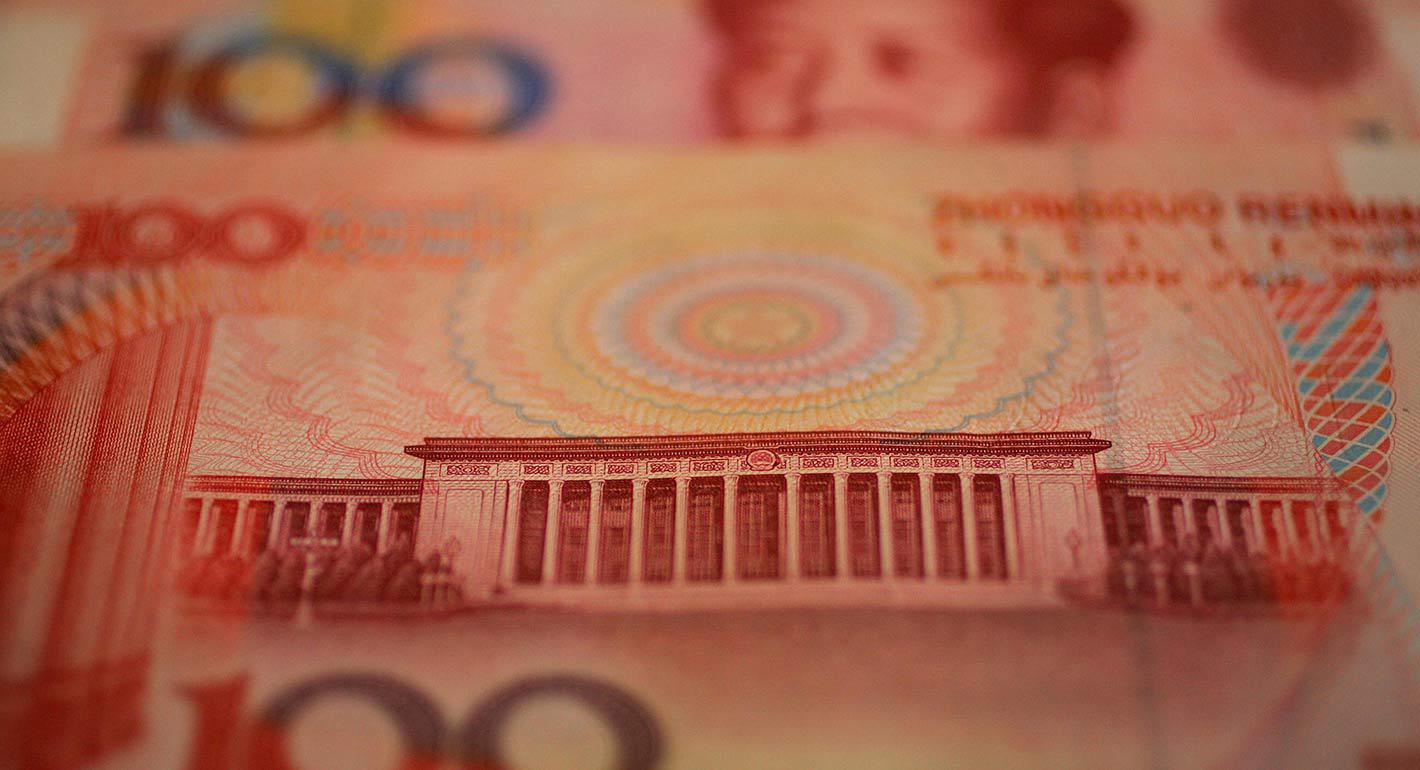
Borrowing from the World Bank not only makes economic sense for China but it also benefits the World Bank.
Source: Caixin
The World Bank’s proposal in early December to continue lending to China triggered concern within Washington’s political circles that such activities should cease. Last year, as the U.S. Treasury undersecretary, David Malpass also questioned why the World Bank was still lending to China, though his views have evolved since he was appointed the World Bank’s president. Even President Donald Trump has commented on this issue. Many within the international financial community also share this view.
Conventional wisdom suggests that China, as the world’s second-largest economy with $3 trillion in foreign reserves, no longer needs to borrow from the World Bank, particularly when the question is embellished with a politically charged notion that U.S taxpayers should not be subsidizing loans to China. But the reality is actually the reverse. Borrowing from the World Bank not only makes economic sense for China but it also benefits the World Bank.
To understand the rationale, consider why the U.S., the richest and most powerful nation in the world, borrows billions each year from China, a developing country whose per capita GDP rank 64th globally. The fact that the U.S. borrows from China and China borrows from the World Bank illustrates the point that seemingly well-off countries with ample foreign exchange reserves often need to borrow, and the lender may be foreign.
The U.S. government borrows because it needs to finance its persistent federal budget deficits. Americans may be rich by global standards, but Washington still needs to find resources to make up for inadequate tax revenues. Such borrowing comes from both foreign and domestic sources, with China and Japan being its major foreign creditors. The U.S. Treasury manages the borrowing with the objective of securing the lowest interest rates. China, with the huge savings of its citizens and the need to invest its substantial foreign exchange reserves abroad, is quite willing to lend on these terms.
China also needs to borrow to cover its budget deficits, which come primarily from the fiscal pressures facing many of its poorer provinces. China’s central government borrows on their behalf both domestically and abroad. World Bank loans are attractive in this regard, since its interest rates — which are linked to rates in U.S. financial markets — are lower than the lending rates in China. China continues to be eligible for such lending as a developing country, but the amounts it borrows have been declining since China’s per capita GDP has reached the threshold mandating that over time it should “graduate.” World Bank officials have proposed a gradual decline in lending over the coming years, but not that it stop immediately.
World Bank loans offer advantages unavailable from commercial banks because they are in the form of lending for investment projects such as roads, education and programs addressing climate change. These project-related loans not only provide financing but also help transfer knowledge and institutional expertise. It is this knowledge-transfer aspect rather than the money per se that now drives China’s requests for World Bank loans. And this knowledge is secured from a collaborative and multi-year project implementation process that brings in outside expertise in technical and financial issues. Such insights simply cannot be transferred to Chinese officials and institutions by asking Beijing to pay for advisory services devoid of a project context, as some observers have suggested.
While China may benefit from World Bank support, skeptics question whether the World Bank — and indirectly the U.S. government — gains anything by lending to China? First, one should note that U.S. taxpayers are not subsidizing World Bank lending to China. China borrows on commercial terms, with interest rates determined by adding a margin to the cost of the funds raised by the lender through its sales of bonds in major financial markets. China has long since been ineligible for any subsidized lending from the World Bank, but its borrowing has helped the lender to become more profitable.
Second, World Bank loans to China are seen as relatively risk-free compared with those to other developing countries. This strengthens the World Bank’s credit rating and in turn lowers the interest rates it pays in marketing its bonds. As a result, all developing countries that borrow from the World Bank benefit by paying less for their loans, while shareholders like the U.S. are under less pressure to help fund its operations. Thus, it would be more appropriate to say that China is subsidizing the World Bank, rather than the other way around.
Finally, the political considerations that some have raised for curtailing lending to China are precluded in the World Bank’s Articles of Agreement which “explicitly prohibit the institution from interfering in a country’s internal political affairs and require it to take only economic considerations into account in its decisions.” China is unique in being a largely risk-free borrower with a history of development success, but also one that still requires help — both for targeted poverty alleviation purposes and to gain expertise from more advanced economies. China’s experience in moving some half a billion of its people out of poverty is seen as a global success story, and the lessons are more easily shared with other developing countries if China continues to be an active borrower.
The irony is that the World Bank needs China more than China needs the World Bank.

Senior Fellow, Asia Program
Huang is a senior fellow in the Carnegie Asia Program where his research focuses on China’s economy and its regional and global impact.
Recent Work


Sheena Chestnut Greitens, Oriana Skylar Mastro, Yukon Huang, …

Yukon Huang, Isaac B. Kardon, Matt Sheehan
Carnegie does not take institutional positions on public policy issues; the views represented herein are those of the author(s) and do not necessarily reflect the views of Carnegie, its staff, or its trustees.

Funding Ukraine remains a priority for European leaders. As Russia’s war of aggression heads into another winter, two feasible options to mobilize support for Kyiv should be fast-tracked.


Vladyslav Rashkovan, Gregory P. Wilson

Russian strikes are weakening the economy sustaining Ukraine’s war effort. Closing the growing funding gap will require more European support and politically contentious reforms in Kyiv.

Balázs Jarábik

While the EU and European governments are embracing the much-lauded middle-power moment, this entails three difficult conundrums.

Richard Youngs
The middle power moment will not be defined by sovereign states alone, and California stands out for its potential contributions to international cooperation.


Ian Klaus, Stewart Patrick

Europe is facing rising populism internally as well as external pressures from Russia, China, Turkey, and the United States.

Dimitar Bechev