

Q&A
- +1
Sheena Chestnut Greitens, Oriana Skylar Mastro, Yukon Huang, …
{
  "authors": [
    "Yukon Huang"
  ],
  "type": "legacyinthemedia",
  "centerAffiliationAll": "dc",
  "centers": [
    "Carnegie Endowment for International Peace"
  ],
  "collections": [],
  "englishNewsletterAll": "asia",
  "nonEnglishNewsletterAll": "",
  "primaryCenter": "Carnegie Endowment for International Peace",
  "programAffiliation": "AP",
  "programs": [
    "Asia"
  ],
  "projects": [],
  "regions": [
    "North America",
    "United States",
    "East Asia",
    "China"
  ],
  "topics": [
    "Economy",
    "Trade",
    "Foreign Policy"
  ]
}
Source: Getty
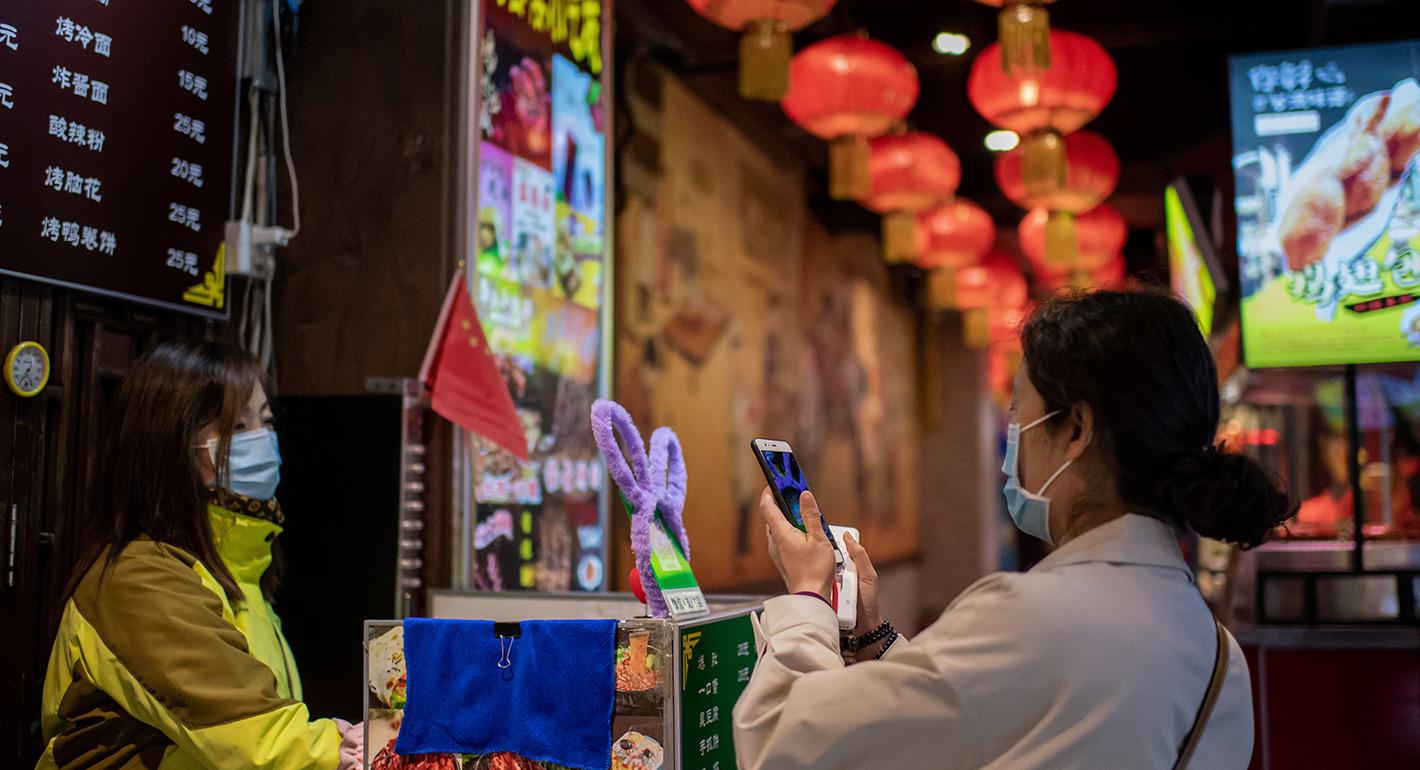
China’s success in recovering from the pandemic-induced recession faster than other major economies has not eliminated the uncertainties surrounding China’s growth outlook.
Source: South China Morning Post
President Xi Jinping’s highly publicised trip to Shenzhen this month signalled the reform priorities to be endorsed when the 14th five-year plan is laid out at the fifth plenum of the Communist Party’s Central Committee this week. This development plan covers 2021 to 2025 and, along with a longer-term plan running to 2035, has special significance because of the trade war with the United States and the Covid-19 pandemic.
Key messages emerging from the meeting, as well as Xi’s Shenzhen speech and recent press briefings, have been a mix of past themes and some new twists: socialism with Chinese characteristics, “dual circulation” as a growth driver, supply-side reforms, achieving carbon neutrality, strengthening the financial system, opening up to foreign investment, enforcing the rule of law, and becoming more innovative and self-sufficient in technology.
While many of these programmes represent a continuation of ongoing policies, they take on a new urgency in today’s circumstances. Socialism with Chinese characteristics has been the overarching theme of China’s reform process for decades. Such lofty, ambiguous wording reconciles an implicit contradiction: the role of market forces in a state-driven economy.
The third plenum’s policy agenda that Xi endorsed in 2013 made the oft-cited distinction that markets would play a “decisive” role in the allocation of resources. But confusion has persisted because the same document emphasised that “public ownership” is at the “core” of the economic system.
China’s success in recovering from the pandemic-induced recession faster than other major economies has not eliminated the uncertainties surrounding China’s growth outlook. Growth has been slowing steadily over the past decade and prospects have been dampened further by the trade and tech war with the US.
The government is likely to set lower and more flexible growth targets in the five-year plan. In response to tensions with Washington, Beijing has also changed tack: the party media has pronounced that the new “dual circulation” strategy is “a new development pattern in which domestic and foreign markets boost each other, with the domestic market as the mainstay”.
Many observers have interpreted the emphasis on domestic demand to mean the promotion of more consumption, but this emphasis can be overdone. Growth comes from investment and productivity increases; consumption is the consequence of economic growth, not its engine. With rising wages, China’s household consumption has already been growing faster than that of any other comparable economy, averaging 9.7 per cent annually between 2011 and 2018.
By contrast, the average in Organisation for Economic Cooperation and Development countries is 1.9 per cent. Improving the potential for more rapid growth in consumption lies in strengthening the government’s social programmes to deal with issues like the pandemic. But this will require a reordering of priorities, given budget limitations.
The five-year plan should include a multitude of initiatives to support growth – most a continuation of past policies. But strategies that worked well when growth was exceptionally high need to be reconsidered at a time when even a 6 per cent growth target is being debated. Today, the concerns are about quality and increasing productivity – getting more out of the same amount of investment. This requires markets to play a greater role.
The returns on investment in China have been declining and are now half what they were a decade ago. To reverse this trend, potential strategies include liberalising the use of rural land, making the urbanisation process more efficient and improving the performance of state-owned enterprises.
The five-year plan should see that strengthening links between rural and urban land markets and liberalising hukou residency requirements in the major cities can increase the returns on infrastructure investment. Efforts to address the deteriorating performance of SOEs have been on the agenda for years, so the test is whether, this time around, intentions will be acted upon.
Without realigning the roles of the state and market forces, China’s growth rate is likely to continue declining – and even faster than before if the US-China decoupling process persists.
Strengthening the rule of law is a high priority for Xi. Much of the public commentary has been on whether this is being done to protect the Chinese people or help the party control the behaviour of officials. Less attention has been given to the relationship between the rule of law and Xi’s anti-corruption campaign. The campaign is likely to have slowed the initiative of government officials and made some averse to risk-taking.
Conventional wisdom tells us corruption is normally bad for growth, but China is an outlier – it grew rapidly even as corruption flourished. The explanation lies in China’s dual economy, with parallel private and state-driven activities that created the incentive for corruptive interaction.
Since the state sector generates lower returns than private firms, rent-seeking activities have been the means of transferring the use of state-owned assets to private entrepreneurs who were able to generate higher returns, making China’s rapid growth possible.
But the corrosive social consequences of corruption have become untenable. Breaking corruptive relationships begins by clearly defining the roles of the party, government and private enterprises and relying on the rule of law to curb illegal activities.
Finally, when Deng Xiaoping highlighted the key role to be played by the special economic zones such as Shenzhen in his historic southern tour, the driving force was links with Hong Kong, given the city’s pivotal role in finance and trade. This time, Xi’s speech glossed over Hong Kong in emphasising Shenzhen as the focus of the Greater Bay Area master plan for promoting innovation.
Markets have welcomed Shenzhen’s economic dynamism as reflected in private firms like Huawei and Tencent but their future, and that of others like ByteDance, are being threatened by the Trump administration’s punitive actions.
So, the ultimate challenge for the 14th five-year plan, which is due to be formally approved next March, is finding ways to combine the strengths of the private and state sectors and promote the innovation exemplified by Shenzhen, while assuaging the West’s concerns about great power rivalry and security.
This article was originally published by South China Morning Post.

Senior Fellow, Asia Program
Huang is a senior fellow in the Carnegie Asia Program where his research focuses on China’s economy and its regional and global impact.
Recent Work


Sheena Chestnut Greitens, Oriana Skylar Mastro, Yukon Huang, …

Yukon Huang, Isaac B. Kardon, Matt Sheehan
Carnegie does not take institutional positions on public policy issues; the views represented herein are those of the author(s) and do not necessarily reflect the views of Carnegie, its staff, or its trustees.

Funding Ukraine remains a priority for European leaders. As Russia’s war of aggression heads into another winter, two feasible options to mobilize support for Kyiv should be fast-tracked.


Vladyslav Rashkovan, Gregory P. Wilson

Russian strikes are weakening the economy sustaining Ukraine’s war effort. Closing the growing funding gap will require more European support and politically contentious reforms in Kyiv.

Balázs Jarábik

In an interview, Rozina Ali discusses her new book on the rise and manifestations of Islamophobia in the United States.

Michael Young

While the EU and European governments are embracing the much-lauded middle-power moment, this entails three difficult conundrums.

Richard Youngs
The middle power moment will not be defined by sovereign states alone, and California stands out for its potential contributions to international cooperation.


Ian Klaus, Stewart Patrick