

Commentary
Russian strikes are weakening the economy sustaining Ukraine’s war effort. Closing the growing funding gap will require more European support and politically contentious reforms in Kyiv.
Balázs Jarábik
{
  "authors": [
    "Benjamin Press",
    "Thomas Carothers"
  ],
  "type": "commentary",
  "centerAffiliationAll": "",
  "centers": [
    "Carnegie Endowment for International Peace"
  ],
  "collections": [],
  "englishNewsletterAll": "",
  "nonEnglishNewsletterAll": "",
  "primaryCenter": "Carnegie Endowment for International Peace",
  "programAffiliation": "",
  "programs": [],
  "projects": [],
  "regions": [
    "North America",
    "Middle East",
    "North Africa",
    "Southern, Eastern, and Western Africa",
    "South Asia",
    "East Asia",
    "Central Asia",
    "Southeast Asia",
    "Caucasus",
    "Russia",
    "Eastern Europe",
    "Western Europe"
  ],
  "topics": []
}
Source: Getty
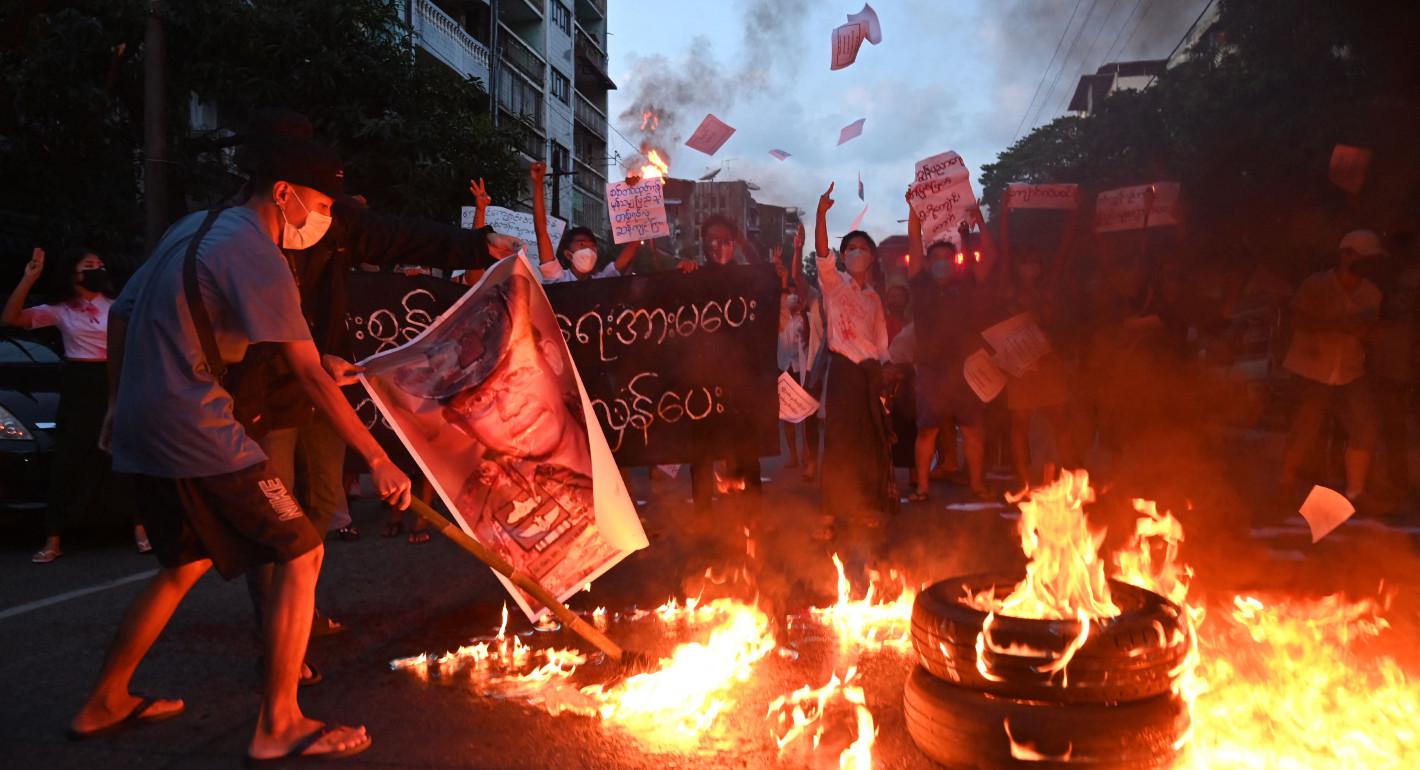
Despite their geographic diversity, the uprisings shared similar root causes.
Whereas 2020 demonstrated the resilience of protests amid the coronavirus pandemic, 2021 found protesters responding to—and shaping—the major dynamics roiling politics across the world. An increasingly authoritarian political landscape, heightened political confrontation, and rising economic insecurity brought public frustration to a boiling point in many countries, as did discontent over how governments responded to the viral threat.
Data from Carnegie’s Global Protest Tracker shows that seventy-six new significant antigovernment protests emerged last year, at a rate of roughly one new event every five days. Although the number of new protests declined slightly relative to the record of eighty-seven set in 2020, the pace at which new protests emerged in 2021 still greatly outstripped pre-pandemic levels; in 2019, for example, only sixty-five new protests emerged.
The geographic breadth of protests in 2021 is striking: fifty-eight countries, from Malaysia and Paraguay to Georgia and Malawi, encountered significant antigovernment demonstrations during the year. Quite a few countries, including Burkina Faso, Paraguay, and the Solomon Islands, had not previously appeared in the tracker, which has logged protests since 2017. The addition of these new entries underscores how unrest has reached every corner of the world: roughly two-thirds of all countries have experienced at least one major antigovernment protest since 2017.
Despite this geographic diversity, many of the protests in 2021 shared one of four crosscutting drivers.
Resistance to coups and rising authoritarianism. 2021 was a record year for coups, and most provoked significant popular resistance. In Myanmar and Sudan, hundreds of thousands of protesters demanded a return to civilian rule after the countries’ militaries seized power. So, too, did thousands of activists in Chad. And while the self-coup led by Tunisian President Kais Saied was initially greeted with popular acclaim, his turn toward repression and failure to effectively address pervasive political and economic challenges spurred increasingly vocal protests calling for a return to democracy.
The surge in coups was just one part of a broader democratic recession that was hotly contested by demonstrators around the world. In Bolivia, Russia, and Senegal, thousands called out the arrests of prominent opposition leaders, while in Benin protesters criticized President Patrice Talon’s increasingly authoritarian rule after he announced plans to seek another term in office. And in Poland, the introduction of a restrictive media ownership law and fears about the erosion of judicial independence drew at least 100,000 people into the streets.
Fierce political contestation. Beyond resistance to authoritarianism, other types of high-stakes political battles spilled out into the streets of many countries. Such disputes often centered around elections or controversial judicial decisions with political ramifications. In Georgia, protesters expressed concerns over electoral integrity and condemned the arrest of former president Mikheil Saakashvili. In Peru, supporters of presidential candidate Keiko Fujimori alleged improper interference in the country’s tight presidential election, while in Bolivia, supporters of former president Jeanine Áñez criticized her arrest and detention. In the United States, the transitional period between the presidential administrations of Donald Trump and Joe Biden was marked by protests around electoral integrity, culminating in the riot and attempted insurrection at the U.S. Capitol on January 6.
In the most extreme cases, demonstrators used the streets as a venue for representation in the absence of functioning political institutions. Protests in Haiti, Iraq, Lebanon, and Yemen channeled public fury at dysfunctional political systems that have been unable to deliver basic governance.
Frustration with public health responses. As the pandemic entered its second year, citizens in many places protested public health measures, including lockdowns, mask mandates, and vaccine requirements. Such protests were especially prevalent in Western democracies such as Australia, Belgium, France, Romania, Switzerland, and the United States. In contrast to those arguing for less intervention, however, protesters in many other places took issue with insufficient or mishandled government efforts. In Paraguay, for example, protesters decried inequality in medical access, insufficient vaccine supplies, and corruption in procurement that had undermined public health. Mongolia’s prime minister resigned after demonstrators, enraged by video footage of a patient receiving substandard care, condemned the government’s ineffectual response. And protests in Tunisia over crumbling medical infrastructure helped pave the way for Saied to seize power.
Economic insecurity. Rising costs of living, chronic unemployment, shortages of goods, and government spending cuts stoked public anger. As the pandemic weighed on state budgets and prompted governments to tighten their belts, protests erupted in response to unpopular austerity proposals. In Ecuador, an increase in fuel prices sparked nationwide unrest, as did a tax increase in Ghana. Elsewhere, protests were not targeted at specific policy decisions, but rather at broader economic failure. This was particularly clear in Cuba, where the largest demonstration in decades broke out amid a severe shortage of food and medicine, which many ascribed to the failure of the country’s command-style economy. Economic protests saw a comparatively high degree of success in achieving at least some of their aims: among others, India’s government repealed controversial farm laws, Colombia’s president abandoned tax increases, and Malawi’s president proposed a new economic development plan.
The unexpected outbreak of massive protests in Kazakhstan at the start of 2022 offered a vivid reminder of how a seemingly small grievance—an increase in natural gas prices—can provoke large-scale citizen demonstrations that upend a country’s politics. Given the depth and persistence of the global authoritarian trend, the strained economic situations of many countries, and the pandemic’s long tail, the forecast for 2022 can only be for the continued multiplication and intensification of protests globally. The consequences for political life—even where stasis has long prevailed—and the potential for the emergence of new geopolitical flashpoints will almost certainly be significant.

Benjamin Press
Former Nonresident Research Analyst, Democracy, Conflict, and Governance Program
Benjamin Press was a nonresident research analyst in the Democracy, Conflict, and Governance Program.

Harvey V. Fineberg Chair for Democracy Studies; Senior Fellow, Democracy, Conflict, and Governance Program
Thomas Carothers, a senior fellow in the Carnegie Endowment for International Peace’s Democracy, Conflict, and Governance Program, is a leading expert on comparative democratization and international support for democracy.
Carnegie does not take institutional positions on public policy issues; the views represented herein are those of the author(s) and do not necessarily reflect the views of Carnegie, its staff, or its trustees.

Russian strikes are weakening the economy sustaining Ukraine’s war effort. Closing the growing funding gap will require more European support and politically contentious reforms in Kyiv.

Balázs Jarábik

Ex-president Gurbanguly Berdimuhamedov remains interested in politics, but his son Serdar, Turkmenistan’s current president, is becoming increasingly independent and willing to break with his father’s legacy. If their covert rivalry goes too far, both risk losing power.

Galiya Ibragimova

Europe is facing rising populism internally as well as external pressures from Russia, China, Turkey, and the United States.

Dimitar Bechev

A notable degree of participative democracy has firmly arrived in Europe. But to have more far-reaching impact, democratic deliberation needs to move into a radically new phase.

Richard Youngs
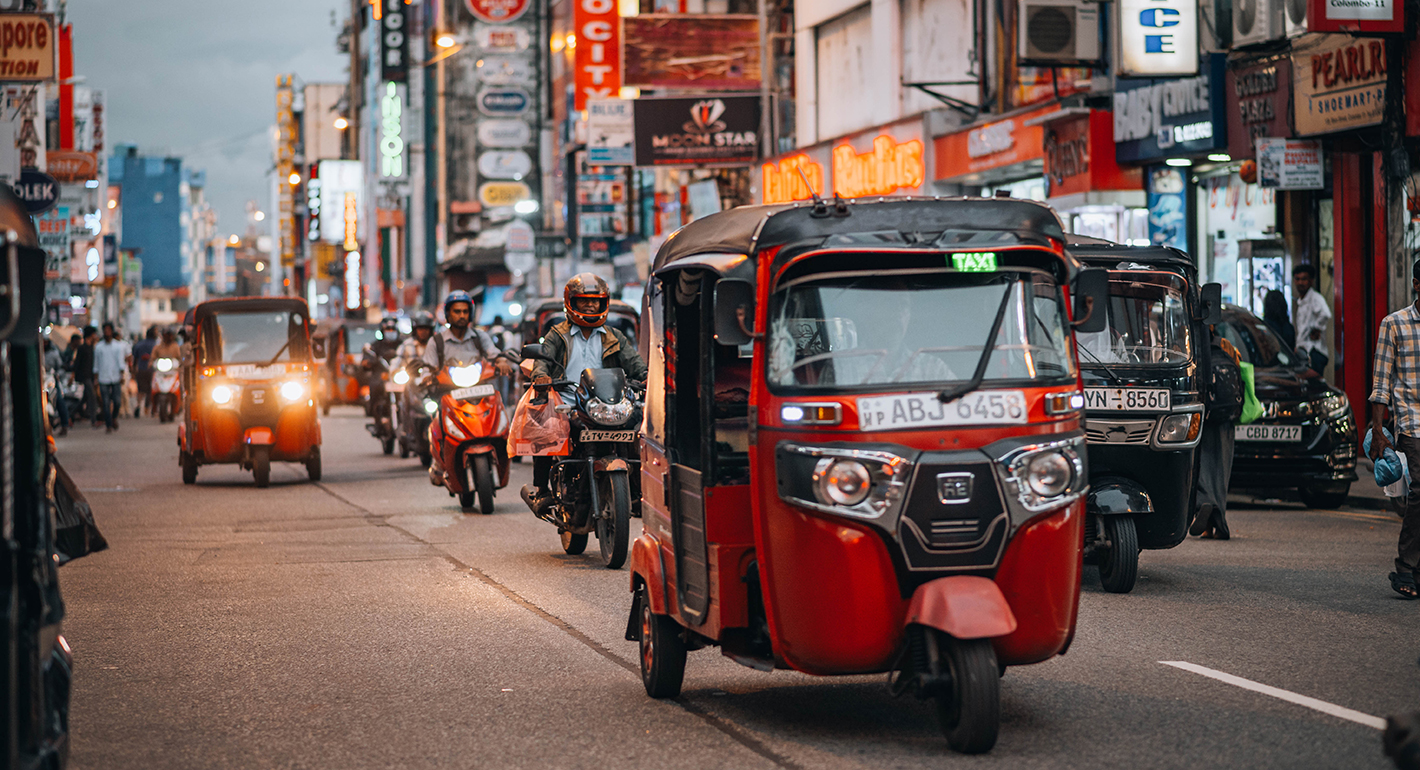
Economic recovery has brought Sri Lanka a modicum of stability, but domestic strains and great-power rivalry could test how long it lasts.
Avinash Paliwal