

Commentary
Fatima El Mansouri is the country’s first female prime minister. She’s also a privileged insider in a largely ceremonial position.
Sarah Yerkes
{
  "authors": [
    "James M. Acton",
    "Aubra Anthony",
    "Frances Z. Brown",
    "Noah Gordon",
    "Zainab Usman",
    "Milan Vaishnav",
    "Stephen Wertheim",
    "Sarah Yerkes"
  ],
  "type": "commentary",
  "centerAffiliationAll": "",
  "centers": [
    "Carnegie Endowment for International Peace"
  ],
  "collections": [],
  "englishNewsletterAll": "",
  "nonEnglishNewsletterAll": "",
  "primaryCenter": "Carnegie Endowment for International Peace",
  "programAffiliation": "",
  "programs": [],
  "projects": [],
  "regions": [],
  "topics": [
    "Democracy",
    "Climate Change",
    "Security",
    "Foreign Policy",
    "Technology"
  ]
}
Source: Getty
Carnegie experts share their audio favorites for keeping up on news, debates, and trends in international affairs.
Topic: Interviews with political scientists and other scholars to discuss their arguments on democracy, governance, and political life
Why I love it: It’s admittedly on-brand that I would choose a democracy-oriented podcast, but Democracy Paradox is truly a gem. Host Justin Kempf approaches each conversation with deep thoughtfulness, connecting his guests’ work to broader scholarly debates but never coming across as overly academic. His recent series on democracy in hard places (profiling a book of the same name) examined democratic survival in countries ranging from Indonesia to South Africa to Benin. It gave a much more nuanced understanding of democracy’s fortunes in each place and even a bit of that rarest of feelings in the democracy field: hope.
—Frances Z. Brown, Vice President for Studies
Topic: An in-depth analysis of Chinese economic engagement in Africa and the socio and geopolitical implications of these relationships
Why I love it: This podcast has been consistently producing high-quality analysis for more than a decade, and the hosts make the effort to feature a wide variety of experts from Africa, China, the United States, Europe, and other parts of the world.
—Zainab Usman, Director, Africa Program
Topic: A biweekly debate of key issues in U.S. foreign policy from War on the Rocks
Why I love it: Hosts Zack Cooper, Melanie Marlowe, and Christopher Preble have deep disagreements and don’t hesitate to air them with candor and civility. I can’t think of another foreign policy podcast so adept at exploring differences of perspective.
—Stephen Wertheim, Senior Fellow, American Statecraft Program
Topic: The global transition from dirty fossil fuels to clean energy
Why I love it: While this isn’t strictly a foreign policy podcast, it is about the global move toward low-carbon energy—and one of our beliefs on the Carnegie climate team is that climate policy is foreign policy. Check it out for deep dives on everything from the latest Intergovernmental Panel on Climate Change report to nuclear power in Japan to how Russia is dealing with Western energy sanctions.
—Noah J. Gordon, Fellow, Europe Program
Topic: Covers a variety of both domestic and foreign policy issues, with a focus on national security, including interviews with policymakers, scholars, journalists, and analysts
Why I love it: I enjoy Lawfare’s podcast because it is not solely a foreign policy podcast. It does a great job of marrying omestic and foreign policy and helps me keep up with events and topics that have an impact on U.S. national security, whether at home or abroad. I am not a lawyer, so I find the approach by the hosts and guests very helpful in translating what are often complicated issues into an easily digestible format.
—Sarah Yerkes, Senior Fellow, Middle East Program
Topic: A biweekly live show hosted by Aaron David Miller featuring conversations with journalists, policymakers, historians, and experts on pressing foreign policy issues
Why I love it: I listen to Carnegie Connects because it’s where the sharpest global thinkers get asked the most incisive questions.
—James Acton, Co-director, Nuclear Policy Program
Topic: A podcast on all things India—covering topics from arts and culture to politics and foreign policy
Why I love it: The Seen and the Unseen is not so much a podcast as it is an eclectic collection of oral histories—episodes are often measured in hours rather than minutes. Varma is not searching for ephemeral click-bait but rather building an audio encyclopedia for the long haul.
—Milan Vaishnav, Director, South Asia Program and host of Grand Tamasha
Topic: Explores the current co-evolution of society with some of the most far-reaching technological advances: the rise of social media, artificial intelligence, and global developments in cybersecurity and information ecosystems
Why I love it: The podcast from the Center for Humane Technology explores some of the most challenging tech-fueled conundrums we find ourselves in today (disinformation campaigns, social media addiction, cyber warfare, algorithmic discrimination) with an appreciation for the dynamic interplay between technology and the many different contributors to our social fabric (psychology, sociology, even anthropology, as well as the “medieval institutions” that confine us). The team brings on experts to discuss not only how we got here but also why, recognizing that technology’s pace of evolution often exceeds our ability to make meaningful sense of its implications, let alone ensure that it is a force for good in society.
—Aubra Anthony, Senior Fellow, Technology and International Affairs Program

Jessica T. Mathews Chair, Co-director, Nuclear Policy Program
Acton holds the Jessica T. Mathews Chair and is co-director of the Nuclear Policy Program at the Carnegie Endowment for International Peace.
Former Nonresident Scholar, Technology and International Affairs Program
Aubra Anthony was a nonresident scholar in the Technology and International Affairs Program at Carnegie, where she researches the human impacts of digital technology, specifically in emerging markets.

Vice President for Studies
Dr. Frances Z. Brown is a vice president for studies at the Carnegie Endowment for International Peace. Brown served on the White House National Security Council (NSC) staff over the past three presidential administrations. Her research focuses on U.S. foreign policy, Africa, the Middle East, and governance.
Former Fellow, Sustainability, Climate, and Geopolitics Program and Fellow, Europe Program
Noah J. Gordon was a fellow in the Sustainability, Climate, and Geopolitics Program at the Carnegie Endowment for International Peace in Washington, DC.
Former Director, Africa Program
Zainab Usman was a senior fellow and the inaugural director of the Africa Program at the Carnegie Endowment for International Peace.

Director and Senior Fellow, South Asia Program
Milan Vaishnav is a senior fellow and director of the South Asia Program and the host of the Grand Tamasha podcast at the Carnegie Endowment for International Peace. His primary research focus is the political economy of India, and he examines issues such as corruption and governance, state capacity, federalism, and electoral behavior. He also conducts research on the Indian diaspora.

Senior Fellow, American Statecraft Program
Stephen Wertheim is a senior fellow in the American Statecraft Program at the Carnegie Endowment for International Peace.

Acting Co-Director and Senior Fellow, Middle East Program
Sarah Yerkes is acting co-director and a senior fellow in the Middle East Program at the Carnegie Endowment for International Peace. Her research focuses on democracy and governance, U.S. foreign policy towards the Middle East and North Africa, and political and economic reform in Tunisia.
Carnegie does not take institutional positions on public policy issues; the views represented herein are those of the author(s) and do not necessarily reflect the views of Carnegie, its staff, or its trustees.
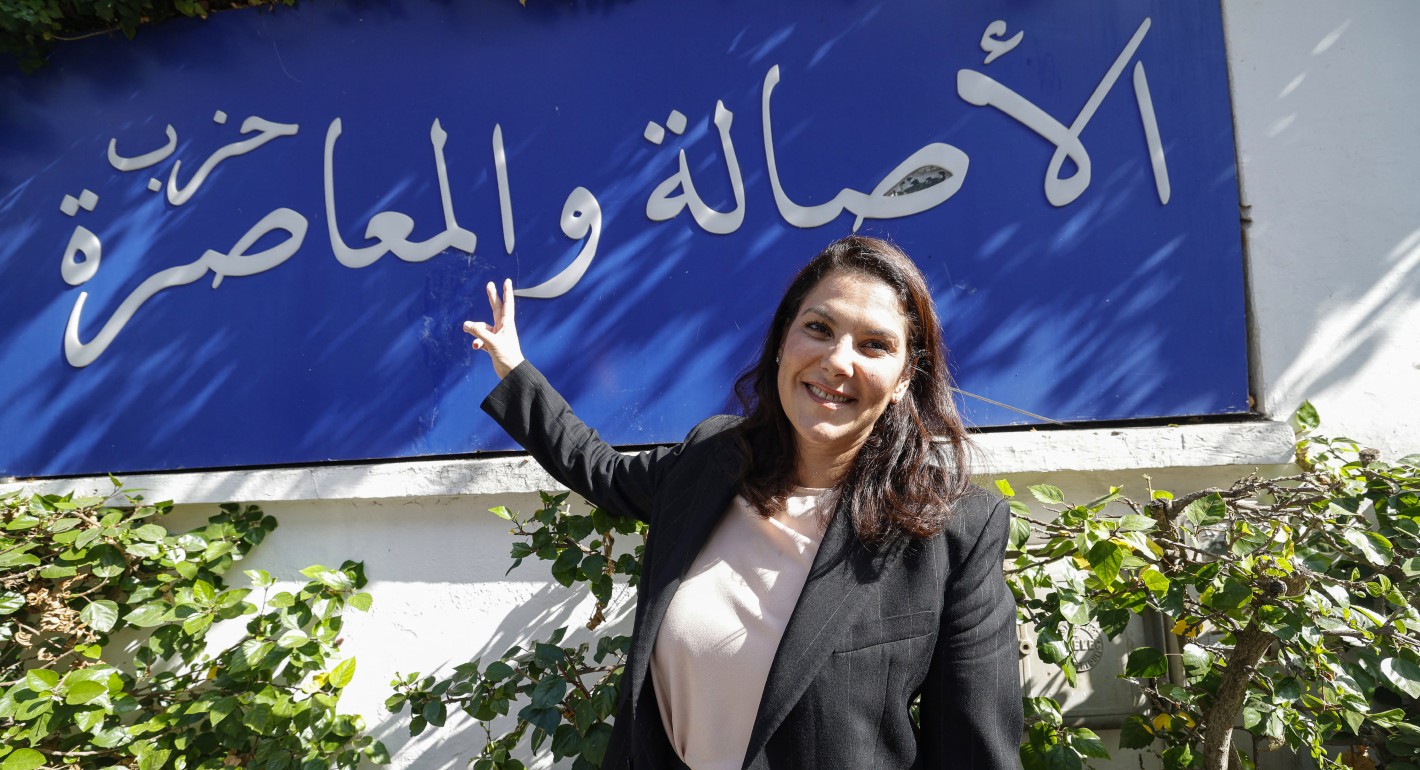
Fatima El Mansouri is the country’s first female prime minister. She’s also a privileged insider in a largely ceremonial position.
Sarah Yerkes

The acknowledgment has sparked fears of a new arms race with China and Russia.

Chris O’Meara

Smaller powers cannot go it alone, but Canadian history shows that integration with the United States will not always be benign.
Paul Samson

The European Commissioner for Trade is headed to China. But after President Xi’s bridge-building visit to Washington, can a more isolated EU overcome Beijing’s stranglehold on critical raw materials? Who will blink first?

Rym Momtaz, ed.
The summit may be remembered as a fatal blunder, when Washington, Beijing, and the AI industry collectively chose ceremony over action.
Jeffrey Prescott