For Ukrainian officials, China’s diplomatic statements about Russia’s war of aggression are often hard to understand and filled with contradictions. On the one hand, Beijing proclaims to be neutral. Indeed, it has refrained from providing direct military support to Russia and from recognizing its illegal annexation of parts of Ukraine’s territory. On the other hand, China’s purchases of Russian energy and supplies of key technologies have provided Moscow a vital economic lifeline amid Western sanctions.
To date, President Volodymyr Zelensky has followed a careful course in navigating this challenging dynamic. He has sought direct dialogue with President Xi Jinping and expressed openness to China’s peace proposals. At the same time, Zelensky is clear that he will not sacrifice Ukraine’s territorial integrity and sovereignty.
Cautious Pragmatism
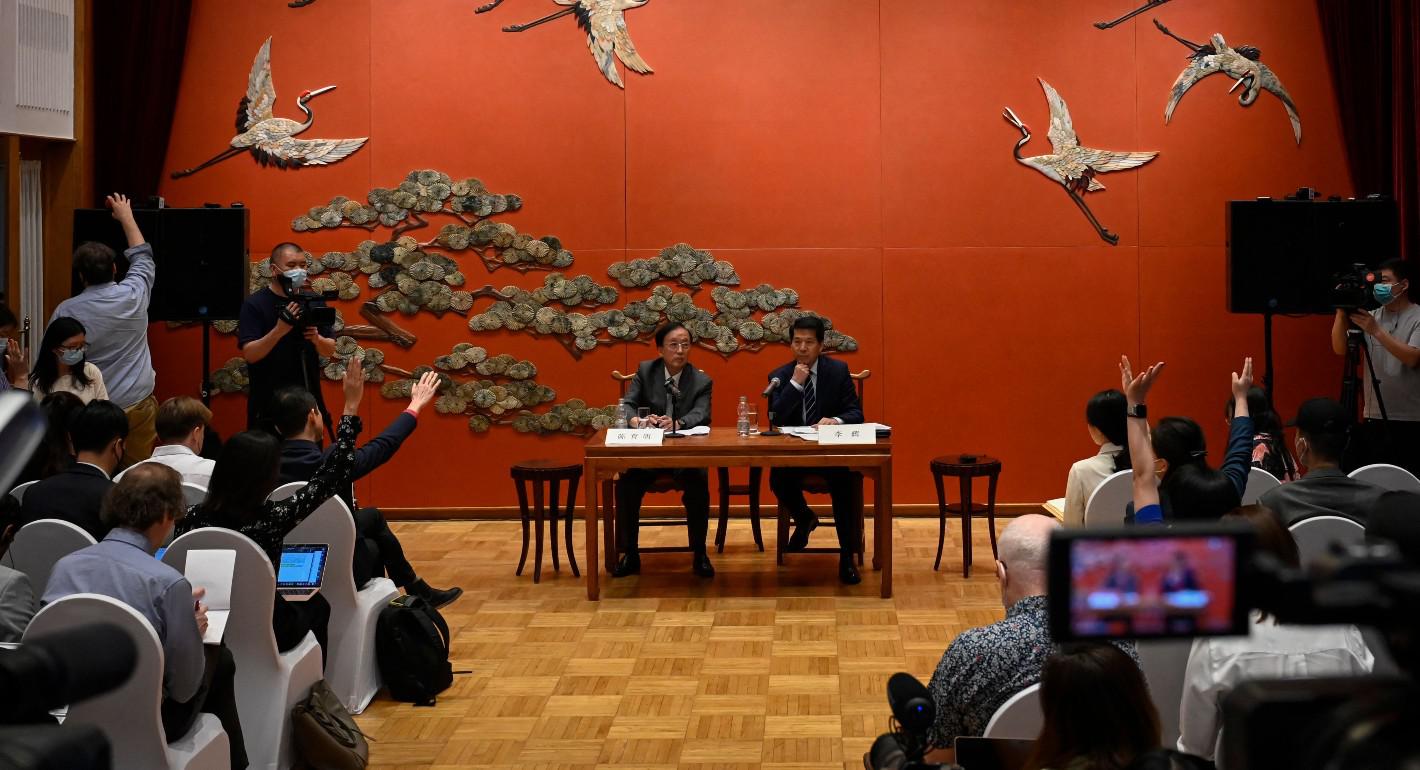
In April, Zelensky and Xi spoke by phone for the first time since Russia launched its full-scale invasion in February 2022. Zelensky agreed to welcome Xi’s envoy, Li Hui, to Ukraine as part of his European tour promoting China’s twelve-point peace plan. This vague document is hardly a roadmap to a peace rooted in justice, international law, and respect for Ukraine’s sovereignty and territorial integrity. For one thing, it omits any demand for Russia to withdraw its troops while criticizing the use of “unilateral sanctions.”
There is little expectation in Kyiv that China’s mediation efforts will amount to much, but Zelensky was smart not to have rejected the offer outright. Instead, he expressed optimism that Beijing could use its influence to “restore the strength of the principles and rules on which peace should be based.” He used China’s unveiling of its plan and Li’s visit to Ukraine in May to call for face-to-face negotiations with Xi. Zelensky’s past success in using personal diplomacy to persuade reluctant counterparts to support Ukrainian positions apparently has fortified his belief that he can do the same with Xi. At a minimum, keeping China invested in seeking a solution is far better than the alternative in which it offers economic and material support to Russia.
Ukrainian officials have spent a lot of time trying to explain to a skeptical public why dialogue with China is in their country’s interests. In April, comments by China’s ambassador to France calling into question Ukraine’s borders sparked outrage in Kyiv. After Li’s visit, reports emerged that he had counseled European officials that Ukraine might have to trade some of its territory for peace. Foreign Minister Dmytro Kuleba publicly refuted these, reassuring Ukrainians that the government would never compromise on the country’s borders. In a public opinion survey conducted in June, 34 percent of respondents saw China as definitely or rather hostile, a sharp increase from 9 percent before the full-scale invasion.
Ukraine works to explain to Chinese officials how its position on territorial integrity and sovereignty align with China’s professed commitment to these principles. Moreover, engaging with Beijing has the potential to increase global solidarity with Ukraine, insofar as it helps correct the misguided view in parts of Africa, Asia, and Latin America that Kyiv is a proxy of the West. China’s harmful narratives about the war, which mirror Russian state propaganda, are popular in many parts of the Global South that have grievances against the West. Beijing often portrays the war as a “Ukrainian crisis” or as a response by Russia to Western encroachment, with Ukraine merely a pawn. By showing openness to China’s mediation, Kyiv demonstrates to the world that Moscow is the obstacle to peace. This careful engagement can also help Ukraine persuade fence-sitting countries to support UN accountability mechanisms.
A Diplomatic Tightrope
Ukraine’s approach to China must not come at the expense of its values, however. Taiwan is a case in point. While Kyiv previously downplayed its links with Taipei and privileged its significant trade relationship with Beijing, the geopolitical shifts brought on by Russia’s full-scale invasion and Taiwan’s considerable support for Ukraine are triggering a reassessment.
In the face of the widespread power outages caused by Russian attacks and the ensuing challenges faced by the Ukrainian population in 2022, Taiwan emerged as a prominent supporter by supplying generators to address the urgent need for electricity. This was part of a broader range of aid initiatives it extended to Ukraine over the past year. Since the start of the full-scale invasion, Taiwan has consistently demonstrated its support by delivering humanitarian goods and offering financial aid to help Ukrainian communities recover faster. Enhancing relations with it is, therefore, of high importance from a moral, political, and economic standpoint.
Ukraine’s stance on human rights abuses against the Uighurs is another potential flashpoint with China. Last October, it abstained from voting on a UN Human Rights Council resolution to discuss the potential Uighur genocide in China that was defeated by two votes. However, following criticism at home, Ukraine’s delegation requested a modification to the meeting record, indicating the country’s support for the resolution. A month later, Ukraine joined a 50-strong coalition at the United Nations calling on China to revise its policies against the Uighurs and other ethnic groups in Xinjiang.
China as an Economic Partner?
The Chinese market holds great importance for Ukraine. Prior to the full-scale invasion, China was its largest trading partner, accounting for 11.8 percent of exports and 15.1 percent of imports in 2021.
Despite this, Ukrainians have mixed views about an eventual participation by China in their country’s reconstruction. In a November 2022 opinion poll, 45 percent of respondents were for and 25 percent against. The United States and Europe have held China at arm’s length when discussing reconstruction, but it would be a mistake for Kyiv to dismiss the possibility of Beijing playing a role, even though China’s deepening partnership with Russia makes this proposition controversial in Ukraine.
Ukraine must nonetheless avoid potential traps in this regard. It must be wary of Chinese loans that will saddle it with excessive debt, a mainstay of Beijing’s economic statecraft. Crucially, it must keep China out of sensitive strategic sectors of the economy. Before Russia’s full-scale invasion, Chinese investors acquired stakes in Ukraine’s main aircraft engine manufacturer. Lobbying by the United States prompted the government in 2021 to nationalize the company on security grounds. In retrospect, the initial sale was a serious error. As it develops a reconstruction strategy, Kyiv must keep such national security concerns at the forefront.
Maintaining Realistic Expectations
Managing relations with China should not prevent Ukraine from pursuing its other interests in the global arena. This includes establishing normal economic cooperation with Taiwan and condemning China’s human rights violations. Moreover, as a candidate for EU membership, Ukraine should align its policies on these two issues with those of the union.
Ukraine will require deft diplomacy and empathy from its Western partners in navigating this minefield. Its overriding goal should be to prevent China from providing meaningful support to Russia’s war. Beyond that, it must remain realistic about what is achievable. China’s ability and willingness to pressure Russia to withdraw its troops from Ukraine are questionable. It is playing its own game and benefits from Russia’s aggression. Western sanctions have increased Russia’s economic dependence on China, which has increased its purchases of cheap Russian oil and gas. But Beijing’s reluctance to overtly support Moscow is less about principles than about its desire to avoid falling under Western sanctions. It is navigating the situation adeptly, exploiting Russia’s vulnerabilities while seeking to ensure that its main geopolitical partner is not defeated.
Ukrainian officials hope that battlefield successes against Russian forces this year will lead China to reassess its approach in order to build ties to the winning side. Ukraine should not plan on China coming to its rescue. But it should endeavor to keep Beijing’s support for Moscow as limited as possible and leave open the door to a more constructive Chinese approach in the future.