

Article
Global and rising powers will need to engage with Africa’s priorities and agency in order to secure the continent’s increasingly attractive partnerships.
Fonteh Akum
{
  "authors": [
    "Sylvester Quansah"
  ],
  "type": "commentary",
  "centerAffiliationAll": "dc",
  "centers": [
    "Carnegie Endowment for International Peace"
  ],
  "collections": [
    "Technology and Innovation",
    "AI x International Development and Economics"
  ],
  "englishNewsletterAll": "africa",
  "nonEnglishNewsletterAll": "",
  "primaryCenter": "Carnegie Endowment for International Peace",
  "programAffiliation": "AFP",
  "programs": [
    "Africa"
  ],
  "projects": [],
  "regions": [
    "North Africa",
    "Southern, Eastern, and Western Africa"
  ],
  "topics": [
    "AI",
    "Technology"
  ]
}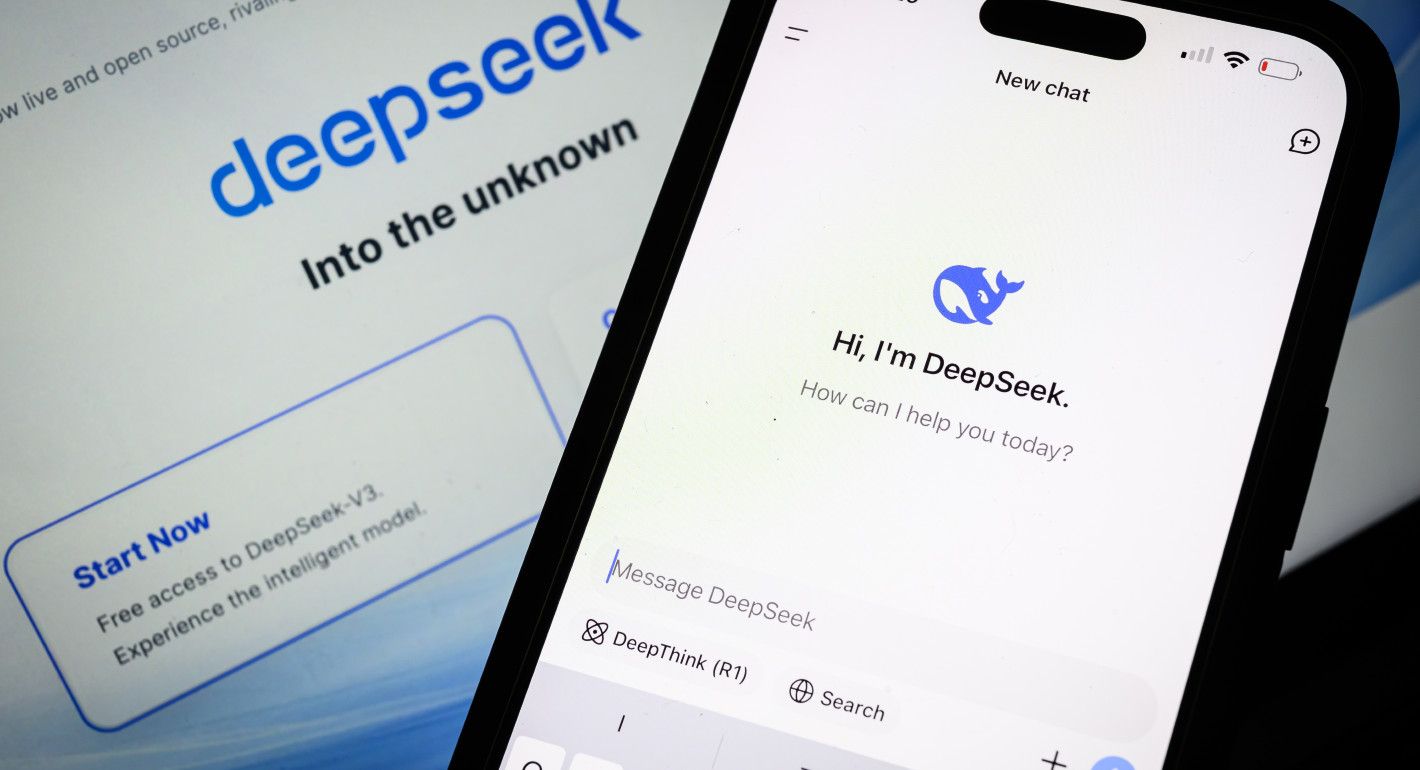
Photo by Leon Neal/Getty Images
The Chinese AI model demonstrates that powerful AI can be developed affordably, paving the way for broader and more equitable AI adoption.
In what industry experts are calling the Sputnik moment of the twenty-first century, a research lab in China has launched DeepSeek R1, an artificial intelligence (AI) model equivalent to OpenAI’s ChatGPT o1, which is widely seen as one of the best AI models available. This launch is being hailed as a defining moment in modern AI development, raising urgent questions about what DeepSeek R1 is, why it matters, and what its implications are for the rest of the world—especially Africa.
DeepSeek R1 is the latest and most advanced iteration of a large language model developed by DeepSeek Artificial Intelligence Co. Ltd, founded in late 2023 by Chinese hedge fund manager Liang Wenfeng. The R1 model is open-source and regarded as highly efficient. According to AI performance benchmarks, DeepSeek R1 operates at near parity with OpenAI’s ChatGPT, excelling in key areas such as language reasoning, mathematics, and coding. It is also significantly more cost-effective compared to its Western counterparts. DeepSeek R1 is reported to have a development cost of just $5.6 million, versus $100 million for OpenAI’s GPT-4. This claim has fueled skepticism within the AI community, with many questioning whether DeepSeek R1’s cost figures are accurate.
Regardless, one thing is clear: DeepSeek R1 represents a new era in AI optimization, balancing cost and efficiency. Previously, industry leaders and policymakers widely assumed that the substantial investments required to develop state-of-the-art AI models would exclude or significantly delay their adoption in Africa, India, and the broader Global South. Such assumptions implied that advanced AI would remain accessible only to wealthy nations and large multinational corporations. DeepSeek R1 shatters this belief by demonstrating that world-class AI can be developed affordably, paving the way for broader and more equitable AI adoption.
The launch of the R1 model has had far-reaching effects globally. First, on the stock market: Since R1’s release on January 27, 2025, U.S. tech stocks for AI companies have taken a significant hit. This hit was caused by panic selloffs stemming from concerns over the potential disruption of the top positions of companies such as Nvidia and OpenAI in the AI market and their profitability.
The second effect has been on geopolitics. DeepSeek R1 has shown that China has the capability to develop advanced AI systems despite U.S. trade restrictions. These trade restrictions specifically include export controls on advanced chips and AI computing hardware, as well as limitations on the transfer of AI software and knowledge—measures designed to limit advancements by strategic competitors. Additionally, DeepSeek R1 introduces new geopolitical nuances that demand attention. The U.S. AI diffusion policy explicitly restricts advanced AI exports to adversaries such as China, Russia, Iran, and North Korea while granting exemptions to eighteen allies, including the UK, France, and Germany, and limiting access for more than 120 other nations, many in Africa. Could this lead to African countries increasingly seeking strategic AI partnerships with China? China’s success in developing a world-class Al model—at a fraction of the cost of its Western counterparts—suggests that AI partnerships, particularly with China, are a worthy cause. It is plausible that African countries could pivot more toward China for AI collaboration.
R1 has also caused a stir in AI development circles as its breakthrough is seen to have leveled the AI field. For too long, the prevailing narrative has been that only the wealthiest nations and corporations can afford to develop innovative AI systems. Sam Altman, OpenAI’s founder, once remarked during a visit to India that building an AI system on a $10 million budget was hopeless, a comment particularly resonant given the resource constraints faced by countries in the Global South. DeepSeek R1 upends that belief. If a Chinese research lab, working with limited funds and restrictions, can develop an AI model that competes with the best in the world, then African countries and stakeholders—with strategic investments—can do the same or even better. This breakthrough is a hopeful signal for African governments, research institutions, and technology firms to rethink the narrative of what it takes to develop AI using fewer resources.
Additionally, DeepSeek R1’s open-source nature means African developers can download, modify, and fine-tune the model to suit local conditions. This could entail incorporating African languages such as Swahili, Hausa, or Amharic, or by adapting it for specific market demands. This architecture makes it possible for African talent to develop solutions that address local needs in finance, healthcare, education, or governance. For instance, African financial technology startups can leverage DeepSeek’s architecture to build AI-powered financial solutions that align with the continent’s unique economic landscape, potentially bolstering initiatives such as the African Continental Free Trade Area.
DeepSeek R1 offers Africa potential to redefine its AI ecosystem. However, it is not a magic pill. The continent still has to develop its AI enablers. To capitalize on opportunities like DeepSeek R1, Africa must address fundamental requirements in its AI ecosystem. First, compute power is essential. High-performance computing resources are needed to train and deploy AI models. Without modern compute infrastructure, algorithms cannot reach their full potential. Second, robust data infrastructure is critical. Reliable data centers, improved internet connectivity, and secure data storage systems are necessary to handle the vast amounts of data that fuel AI. Third, investing in research infrastructure is vital. This includes establishing research labs, AI incubators, and innovation hubs that can nurture local talent. Lastly, supportive government policies and strategic investments are needed. These policies should encourage private sector participation, foster international collaborations, and create a regulatory framework that balances innovation with ethical considerations.
DeepSeek R1 has challenged existing assumptions about AI development, cost efficiency, and global competition. More importantly, it presents Africa with a new opportunity to rethink its approach to Al and to define its stake. The Al race is far from over, and Africa still has a chance to define its role in it. A Ghanaian adage is relevant here: “Se wo di man wo kot a, ankyere se wo adi bim”—taking the lead in a race does not guarantee that you will win it. This will not happen through wishful thinking, passive observation, or dependency on external players. It can only happen through deliberate action, strategic investments, and bold policymaking that includes open-source AI adoption. DeepSeek R1 has shattered a key perception on barriers to AI development. Opportunities abound, but how Africa responds and takes advantage of this moment is yet to be seen.
Sylvester Quansah
Former Research Analyst, Africa Program
Carnegie does not take institutional positions on public policy issues; the views represented herein are those of the author(s) and do not necessarily reflect the views of Carnegie, its staff, or its trustees.
Global and rising powers will need to engage with Africa’s priorities and agency in order to secure the continent’s increasingly attractive partnerships.
Fonteh Akum
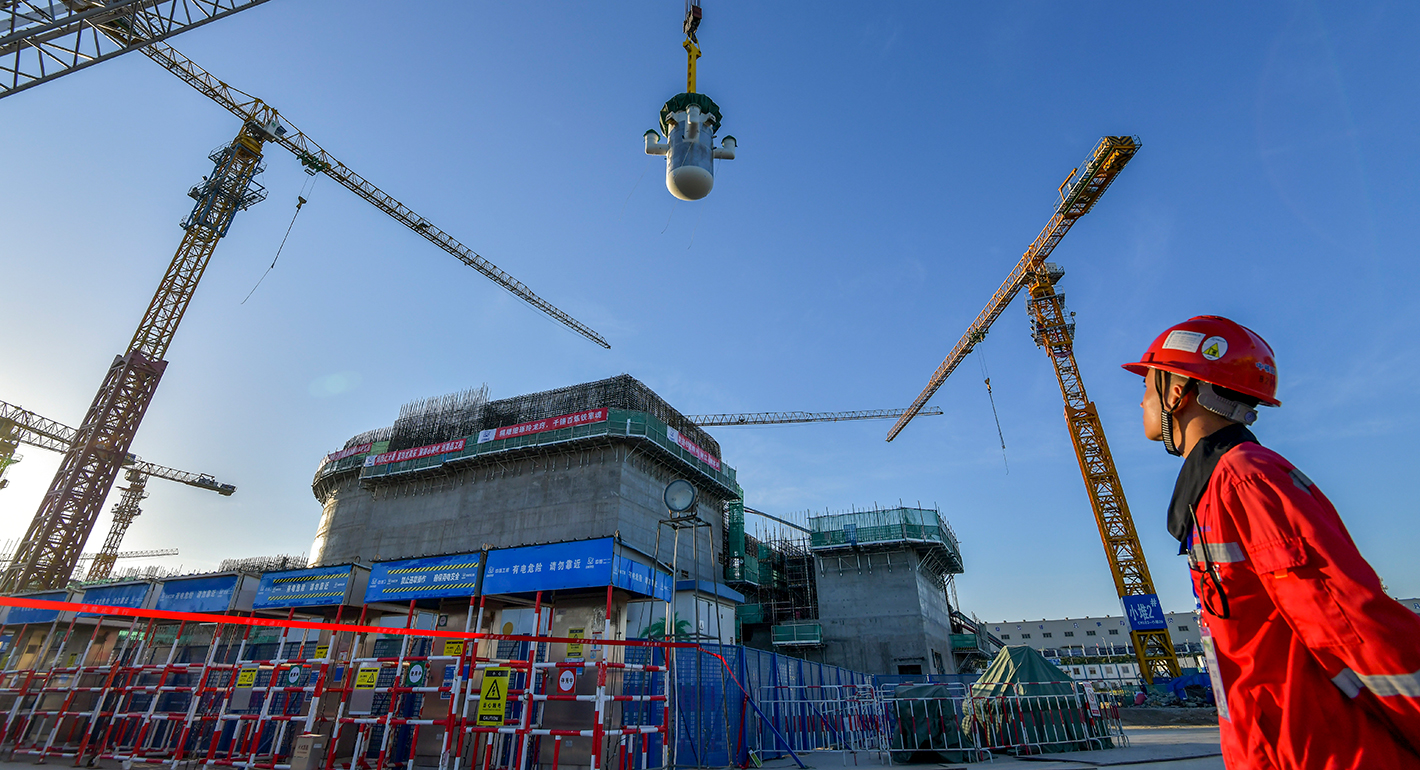
China has showcased its engineering prowess with small modular reactor demonstration projects. But turning these technological achievements into commercial success will be a greater challenge.

Tong Zhao

Scholars and policymakers increasingly use ecological metaphors such as “information environment” and “information ecosystem” to describe contemporary informational spaces. Ecology offers more than loanwords. Its concepts and frameworks can help researchers understand relationships among people, technology, content, and society.



Alicia Wanless, Claire Wardle, David Scales

Despite public disputes over trade and immigration, the strategic partnership’s foundations remain sturdy.

Sameer Lalwani

Russia spent years building a “sovereign internet,” concentrating web infrastructure exclusively within Russian territory. Ukrainian drone attacks have shown how vulnerable that approach has left the Russian internet.

Maria Kolomychenko