

Paper
Ashley J. Tellis
The numerous important controversies that have surrounded U.S. foreign policy over the past four years have obscured a strategic success with major implications for the future balance of power in Asia: the transformation of relations between the United States and India.
Source: Carnegie Endowment
The numerous important controversies that have surrounded U.S. foreign policy over the past four years have obscured a strategic success with major implications for the future balance of power in Asia: the transformation of relations between the United States and India. Through a series of breakthroughs in bilateral diplomatic collaboration, military-to-military relations, counterterrorism cooperation, and public diplomacy, the way was paved for this major diplomatic achievement.
This year, the Bush administration has unveiled a potentially far more radical initiative with respect to India—the United States has pledged to “help India become a major world power in the twenty-first century,” investing the energy and resources necessary to secure its untroubled ascent to great-power status. In this new report, Ashley J. Tellis, a leading expert on U.S.-South Asian relations, provides an overview of this official, strong desire to transform relations with India, the administration’s assessment of the geopolitical challenges likely to confront the United States in this century, and an action agenda for achieving these goals.
Ashley J. Tellis is a senior associate at the Carnegie Endowment for International Peace in Washington, D.C. Previously, he served as senior adviser to the ambassador at the embassy of the United States in India. He also served on the National Security Council staff as special assistant to the president and senior director for strategic planning and Southwest Asia. Before his government service, he was for eight years a senior policy analyst at RAND and professor of policy analysis at the RAND graduate school. He is the author of India’s Emerging Nuclear Posture and co-author of Interpreting China’s Grand Strategy. He has co-edited Strategic Asia 2004-05: Confronting Terrorism in the Pursuit of Power and Strategic Asia 2005-06: Military Modernization in an Era of Uncertainty.
Former Senior Fellow
Ashley J. Tellis was a senior fellow at the Carnegie Endowment for International Peace.
Recent Work
Ashley J. Tellis
Ashley J. Tellis
Carnegie does not take institutional positions on public policy issues; the views represented herein are those of the author(s) and do not necessarily reflect the views of Carnegie, its staff, or its trustees.

For every ruble allocated to social policy, health, and education in 2027, double that amount is earmarked for the army, the police, and the security services.

Alexandra Prokopenko
The acknowledgment has sparked fears of a new arms race with China and Russia.

Chris O’Meara

Smaller powers cannot go it alone, but Canadian history shows that integration with the United States will not always be benign.
Paul Samson

The European Commissioner for Trade is headed to China. But after President Xi’s bridge-building visit to Washington, can a more isolated EU overcome Beijing’s stranglehold on critical raw materials? Who will blink first?

Rym Momtaz, ed.
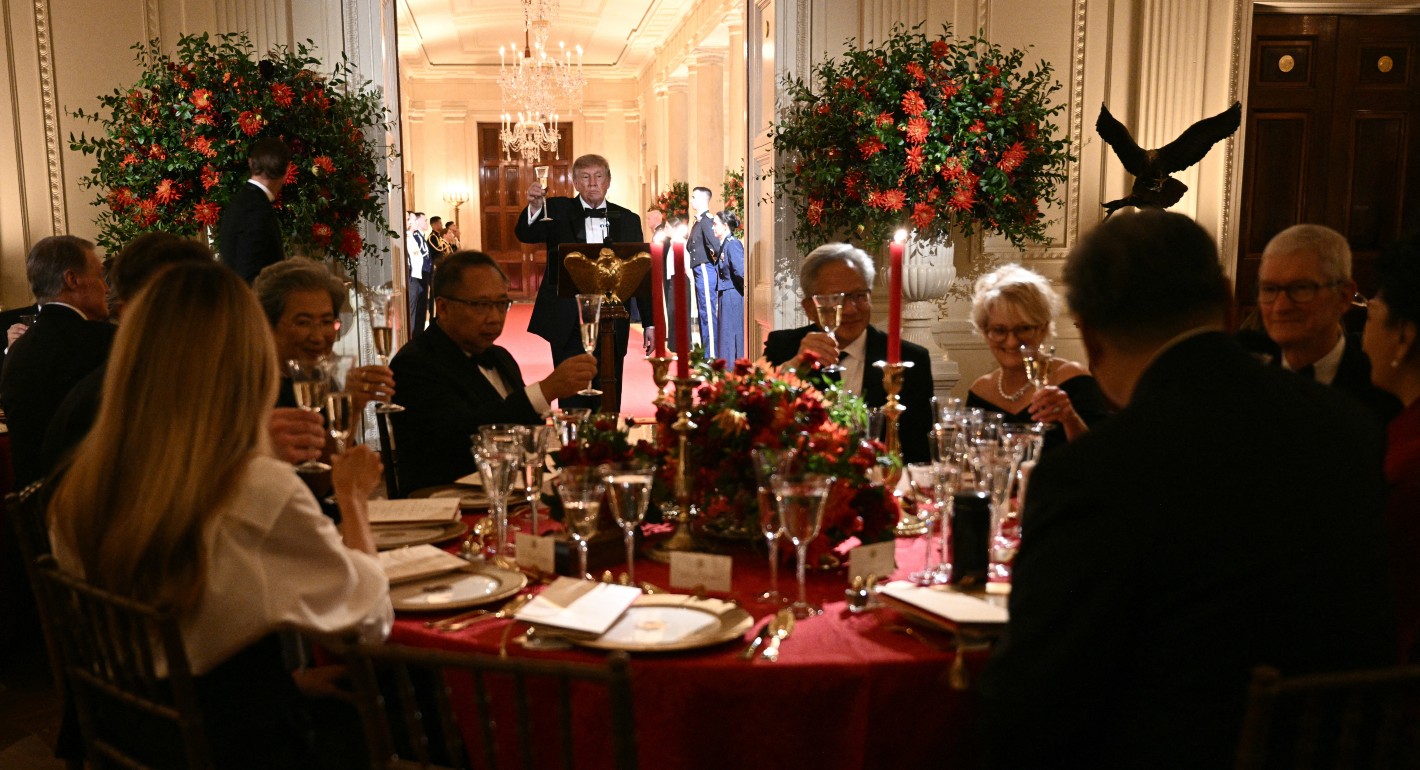
The summit may be remembered as a fatal blunder, when Washington, Beijing, and the AI industry collectively chose ceremony over action.
Jeffrey Prescott