

Commentary
In Egypt’s dense cities, the disappearance of foliage has health implications and punishes daily commuters.
Angie Omar

REQUIRED IMAGE
Without strong secular parties, political competition in the Arab world could be reduced to a dangerous head-on confrontation between Islamist parties and the incumbent governments. Yet secular parties are clearly facing a crisis in the Arab world as they struggle for influence, relevance, and in some cases, survival.
Source: Carnegie Endowment
Without strong secular parties, political competition in the Arab world could be reduced to a dangerous head-on confrontation between Islamist parties and the incumbent governments. Yet secular parties—a broad term referring to organizations that do not embrace a political platform inspired by religious ideals—are clearly facing a crisis in the Arab world as they struggle for influence, relevance, and in some cases, survival.
In a new Carnegie Paper, Fighting on Two Fronts: Secular Parties in the Arab World, Carnegie Endowment Senior Associates Marina Ottaway and Amr Hamzawy explore the uncertain future of secular parties across the Arab world by examining their role in Morocco, Egypt, Yemen, and Kuwait. The authors argue that secular parties need to reform their vision, message, and organization to be able to affect the political system in a meaningful way.
Voters see little reason to support secular parties that offer neither the patronage of government parties, nor the vision and social services of Islamist movements. As a result, they have become second-tier actors who cannot compete successfully for voter support. Their leaders, in turn, feel victimized by authoritarian governments that allow little legal space for free political activity and believe they cannot compete with the grassroots mobilization by the Islamist movements.
The authors argue that secular parties can re-energize and attract disenchanted voters by clearly distinguishing themselves from Islamist movements and the government. Low political participation in Arab countries indicates that there are new constituencies that secular parties could attract, and the ability of the ruling government to provide patronage has declined.
The crisis of secular parties is emerging as a major obstacle to democratic reform in the Arab world. “The weakness of secular parties is leading to a curious blurring of the lines between government and opposition, with many secular parties looking to the government for protection against the rise of Islamists, even as they try to curb the power of those governments.”
A limited number of print copies of this Carnegie Paper are available.
Request a copy
About the Authors
Marina Ottaway is a senior associate in the Democracy and Rule of Law Program and director of the Carnegie Middle East Program.
Amr Hamzawy, a senior associate at the Carnegie Endowment, is a noted Egyptian political scientist who previously taught at Cairo University and the Free University of Berlin.
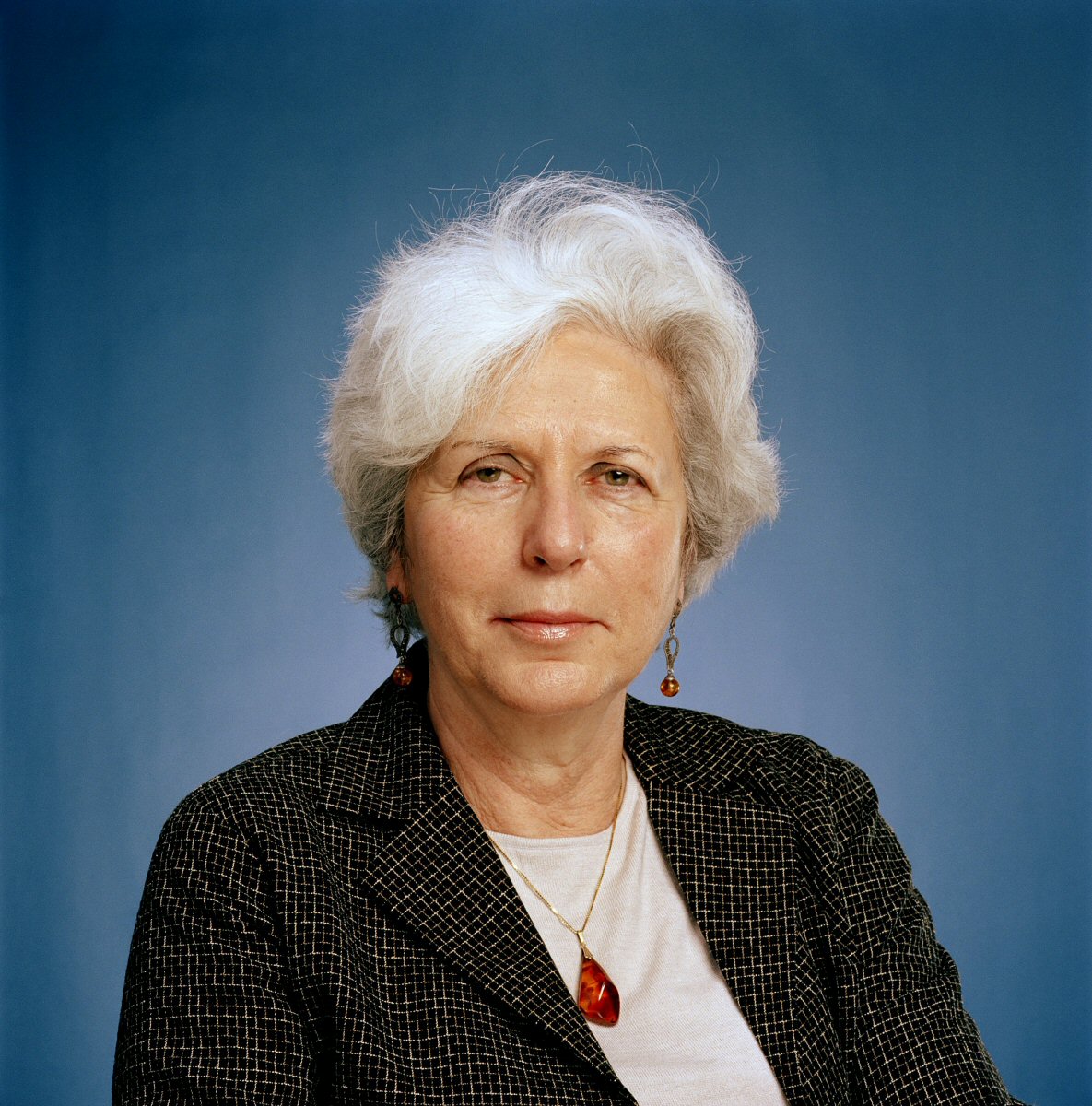
Former Senior Associate, Middle East Program
Before joining the Endowment, Ottaway carried out research in Africa and in the Middle East for many years and taught at the University of Addis Ababa, the University of Zambia, the American University in Cairo, and the University of the Witwatersrand in South Africa.

Director, Middle East Program
Amr Hamzawy is a senior fellow and the director of the Carnegie Middle East Program. His research and writings focus on Egypt’s and other middle powers’ involvement in regional security in the Middle East, particularly through collective diplomacy and multilateral conflict resolution
Carnegie does not take institutional positions on public policy issues; the views represented herein are those of the author(s) and do not necessarily reflect the views of Carnegie, its staff, or its trustees.

In Egypt’s dense cities, the disappearance of foliage has health implications and punishes daily commuters.

Angie Omar

If the Russian-speaking community in Latvia cannot articulate their interests without being seen as disloyal, they could end up embracing a pro-Kremlin agenda.

Sergejs Potapkins

Russia’s ruling party would have benefited from Putin appearing as its distant patron, but as an active frontman imposing his views on the public, he has done nothing but harm both the party’s election campaign and the ruling system overall.

Andrey Pertsev

Huawei pushed hard to enter the Egyptian data centers market, until the Americans made a better offer.
Angie Omar

The aftermath of the Ceuta crisis shows Europe has drawn the wrong lessons. Rather than doubling down on failed migration policies, the EU needs to address the underlying roots of such episodes.

Richard Youngs