

Commentary
The books, podcasts, and films that explain the world it made.
Andrew Leber
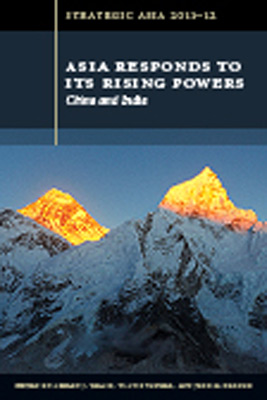
Asian states are adopting new strategies to preserve their national interests, prompted by the rising power of India and China. These strategies have implications for U.S. interests and leadership in the Asia-Pacific.
Source: The National Bureau of Asian Research

Order this book, or read the introduction by Ashley J. Tellis for free.
About the Editors:
Ashley J. Tellis, Senior Associate at the Carnegie Endowment for International Peace and Research Director of the Strategic Asia Program at NBR, served in the U.S. Department of State as senior adviser to the Undersecretary of State of Public Affairs, and previously as senior adviser to the Ambassador at the U.S. Embassy in India. He also served on the National Security Council Staff as special assistant to the President and senior director for Strategic Planning and Southwest Asia. He is the author of India’s Emerging Nuclear Posture (2001) and co-author of Interpreting China’s Grand Strategy: Past, Present, and Future (2000), as well as the co-editor of seven most recent volumes of Strategic Asia, published by NBR.
Travis Tanner is the Senior Project Director and Director of the Pyle Center for Northeast Asian Studies at the National Bureau of Asian Research.
Jessica Keough is the Publications Director at the National Bureau of Asian Research.
Former Senior Fellow
Ashley J. Tellis was a senior fellow at the Carnegie Endowment for International Peace.
Travis Tanner
NBR
Jessica Keough
The National Bureau of Asian Research
Carnegie does not take institutional positions on public policy issues; the views represented herein are those of the author(s) and do not necessarily reflect the views of Carnegie, its staff, or its trustees.

The books, podcasts, and films that explain the world it made.

Andrew Leber

Blurring the line between humans and animals is a long-standing tradition in social utopian prose. In his latest novel, Leonid Bershidsky reminds us that in social experiments, people are often treated no differently than animals.

Alexander Baunov

U.S. trading partners in Asia are closely watching the dispute for signs of how it may affect their own interests.

Barbara Weisel

The aftermath of the Ceuta crisis shows Europe has drawn the wrong lessons. Rather than doubling down on failed migration policies, the EU needs to address the underlying roots of such episodes.

Richard Youngs
By abandoning past U.S. pro-democracy policies and adopting several lines of pro-autocratic action, the Trump administration has fundamentally repositioned the United States vis-à-vis democracy in the world.

Thomas Carothers