

Commentary
The books, podcasts, and films that explain the world it made.
Andrew Leber
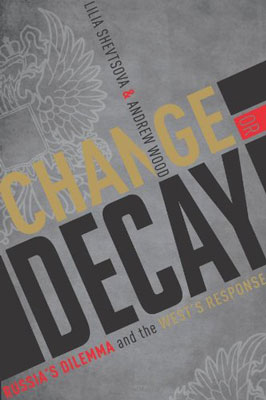
Two decades after the collapse of the Soviet Union, the West has yet to adjust to the post-Soviet reality and Russia has not settled on its relationship with the rest of the world.
Source: Washington
The world is still coping with the consequences of the collapse of the Soviet Union. Two decades later, the West has yet to adjust to the post-Soviet reality and Russia has not settled on its relationship with the rest of the world.
In Change or Decay, two of the most respected scholars on Russia analyze how relations are shifting between Russia and the world. In a series of lively and candid conversations, Lilia Shevtsova and Andrew Wood discuss how the Russia of Putin and Medvedev emerged from the ashes of the Soviet Union and the trajectory of Russia’s relations with the West.
“This book attacks the widely held myths and illusions that have for so long governed both the evolution of Russia and the ideas of Russia held by the outside world. It’s a lively book made still better by flashes of humor. You may agree with it, or dispute it. You may like some of it, and hate the rest. But read it.”
—Mikhail Gorbachev, former president of the Soviet Union, Nobel Peace Prize winner, and president of the Gorbachev Foundation
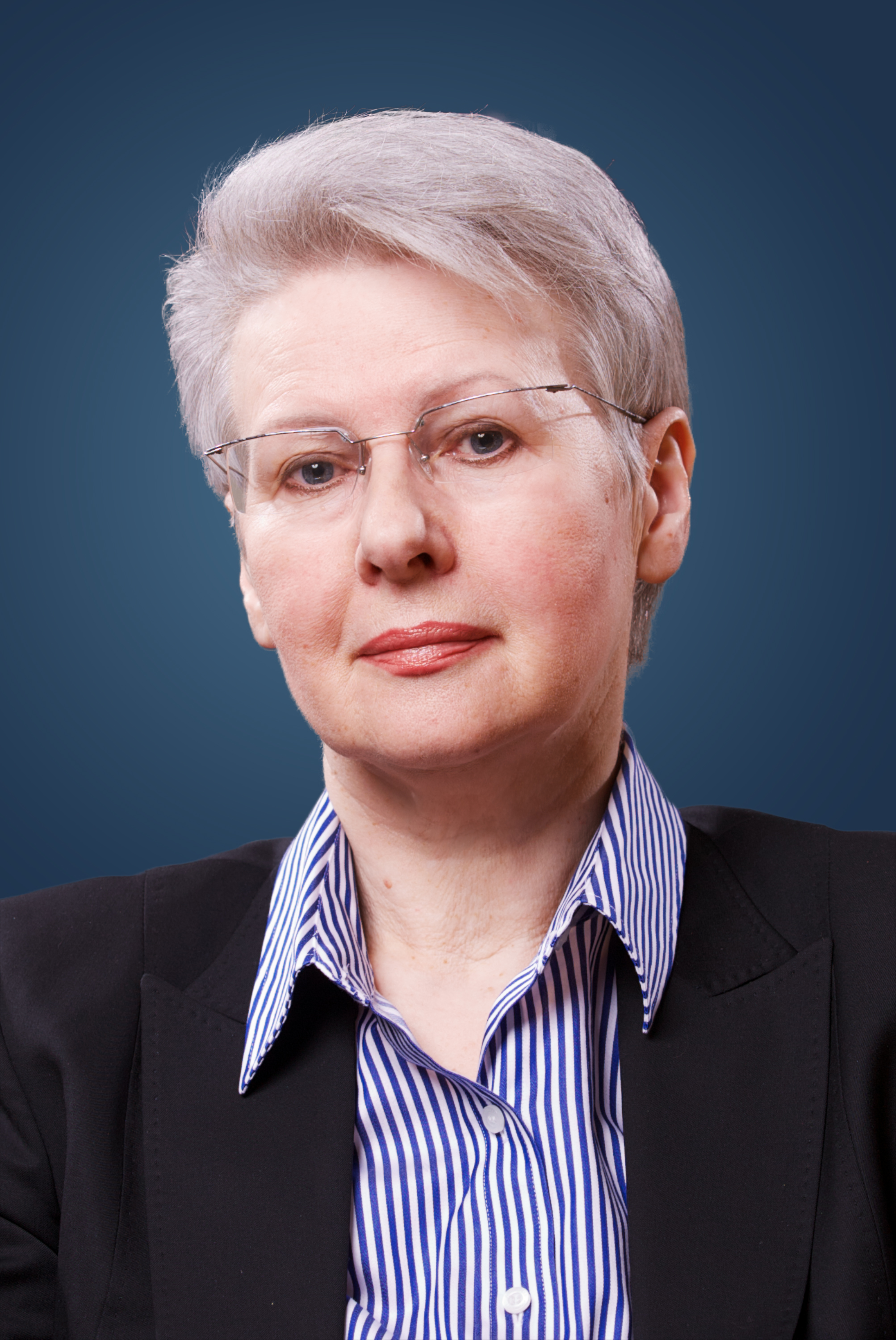
Former Senior Associate, Russian Domestic Politics and Political Institutions Program, Moscow Center
Shevtsova chaired the Russian Domestic Politics and Political Institutions Program at the Carnegie Moscow Center, dividing her time between Carnegie’s offices in Washington, DC, and Moscow. She had been with Carnegie since 1995.
Andrew Wood
Carnegie does not take institutional positions on public policy issues; the views represented herein are those of the author(s) and do not necessarily reflect the views of Carnegie, its staff, or its trustees.

The books, podcasts, and films that explain the world it made.

Andrew Leber
Blurring the line between humans and animals is a long-standing tradition in social utopian prose. In his latest novel, Leonid Bershidsky reminds us that in social experiments, people are often treated no differently than animals.

Alexander Baunov

U.S. trading partners in Asia are closely watching the dispute for signs of how it may affect their own interests.

Barbara Weisel

The aftermath of the Ceuta crisis shows Europe has drawn the wrong lessons. Rather than doubling down on failed migration policies, the EU needs to address the underlying roots of such episodes.

Richard Youngs
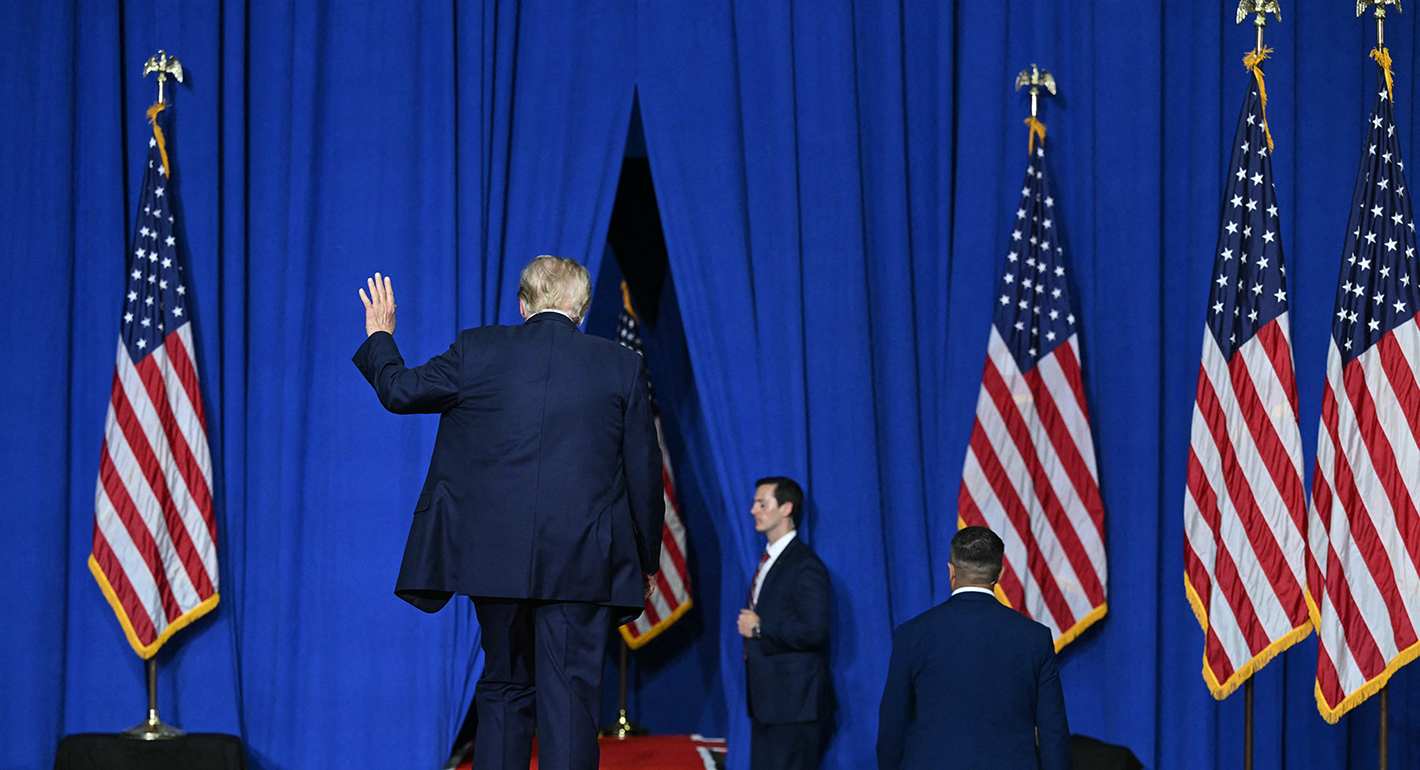
By abandoning past U.S. pro-democracy policies and adopting several lines of pro-autocratic action, the Trump administration has fundamentally repositioned the United States vis-à-vis democracy in the world.

Thomas Carothers