Is America serious about democracy and political reform in the Arab world? Does the neo-Wilsonian dimension of the Bush administration's policy toward the region presage a decisive departure from the longstanding realist policy of "regime maintenance"?
A definitive answer is probably several years off, as the administration's recent focus on "regime improvement" in the Middle East as an alternative to regime maintenance remains a work in progress.
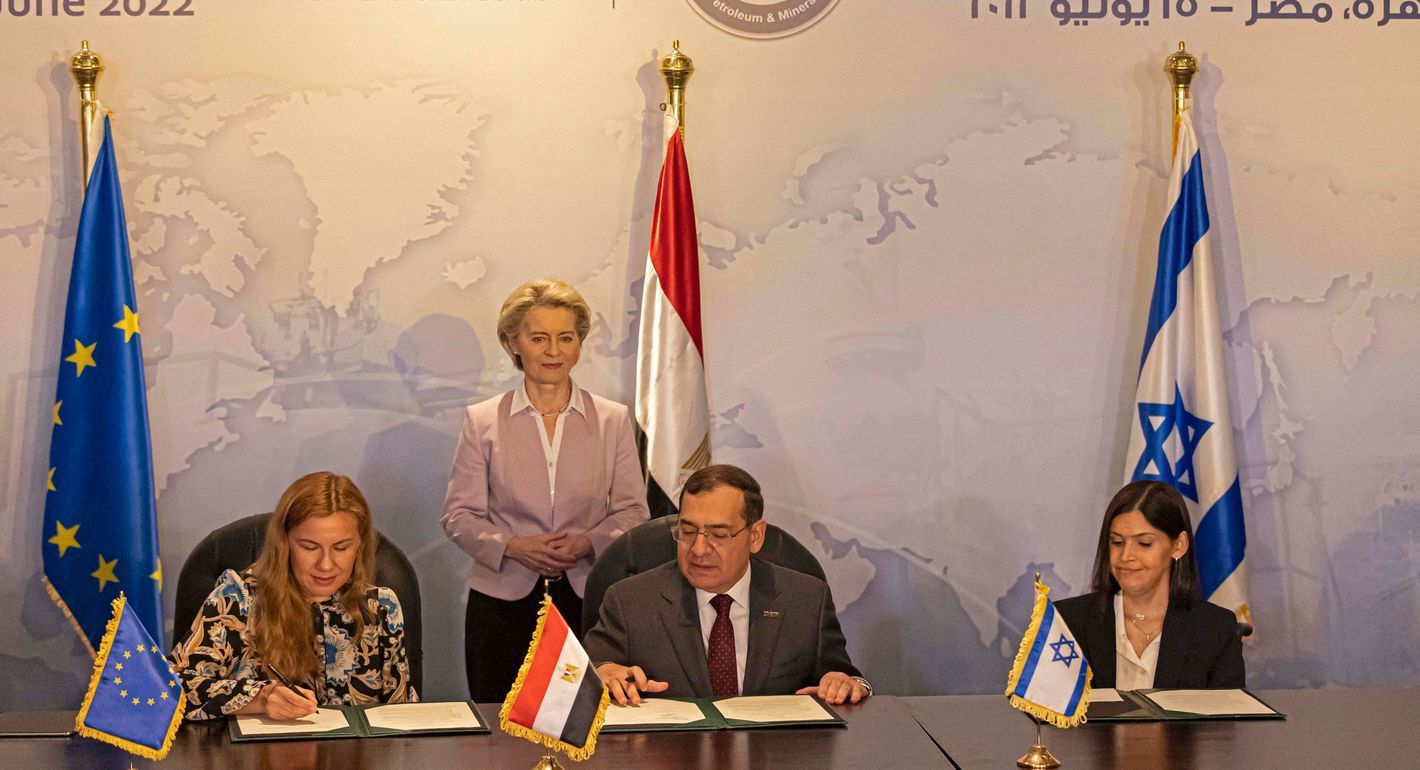
It is possible, however, to illuminate some aspects of this question by considering why the United States has chosen judicial reform as a prominent theme in the Department of State's Middle East Partnership Initiative (MEPI), a new, several-hundred-million dollar initiative to promote Arab reform. Last month, MEPI sponsored a major forum in Bahrain that brought together more than 200 representatives of Arab ministries of justice to discuss the topic of "Judicial Systems in the Twenty-First Century." U.S. Supreme Court Justice Sandra Day O'Connor addressed the gathering; participants discussed various themes including judicial ethics, recruitment procedures for judges, court administration, and --somewhat more daringly-- the role of the judiciary in human rights. MEPI is funding pilot judicial reform programs across the region.
A case can be made that promoting the rule of law, narrowly construed, permits the Bush administration to perpetuate the ambiguity between the Wilsonian and realist approaches because the rule of law reads one way to a western audience and quite another way to Arab leaders of authoritarian and semi-authoritarian regimes.
For most Americans and Europeans, heirs to the legal traditions of Montesquieu and Locke and their view of liberal governance, the rule of law and judicial reform seem the ideal entry point for a liberal reconsideration of the nature of the state in Arab society.
In the Ottoman and modern Arab traditions, however, the rule of law is a more ambiguous proposition. Indeed, "rule of law" does not have a linguistic counterpart in modern Arabic. "Sovereignty of law" (siyadat al qanun) is the closest Arab legal construct, conveying a very different balance between the place of the individual and the place of the state in Arab society.
Law, the courts, and the judiciary are essential elements of legitimacy for all governments. In the modern Arab world, where the legitimacy of most governments is not rooted in the consent of the governed, law and the judiciary are especially critical to undergird regime legitimacy.
Promoting the rule of law, therefore, can provide a rubric that is comfortable for both sides. Americans and European officials understand the effort as a way to encourage human rights and an evolutionary approach towards more liberal institutions of governance. Middle Eastern regimes read it as making their courts more efficient, and thus as an investment in the supporting infrastructure of their legitimacy.
An ambitious and broad-based set of initiatives in judicial reform could, in fact, serve both ends. But the past decade of American efforts in the region, along with the early MEPI programs, have not demonstrated unusual ambition and breadth.
In the Middle East, the U.S. has to date operated largely in the "safe areas" rule of law programming, investing scores of millions of dollars in improving court administration, automating case records, training judges in commercial law themes, and drafting modernized commercial codes in Egypt, the Palestinian Authority, Jordan and Morocco. The largest investment by far has been in the realm of court administration and automated case management, to make courts more competent, efficient and accountable. Pilot programs in Egypt and the West Bank have indeed increased efficiency by measurably reducing delays in resolving civil court cases. One might compare these modest gains in court efficiency to the railroad reforms in fascist Italy of the 1930s that improved on-time performance. Egyptians and Palestinians in the pilot court regions no doubt have benefited from more timely court judgments, but the quality of justice remains unchanged and the elusive goal of more liberal governance remains essentially a chimera.
These programs are in contrast to initiatives that aim at the deeper goal of increasing governments' compliance with the law. As Thomas Carothers of the Carnegie Endowment has noted, such changes depend less on technical or institutional measures than on enlightened leadership and sweeping changes in the values and attitudes of those in power.
Perhaps more fundamental, however, is the question of whether rule of law and judicial reform efforts, even when they are of this deeper type, are constructive and promising entry points to encourage the evolution of more liberal institutions of governance in the region.
The global evidence is mixed at best. Rule of law, in the Montesquieu and Locke conception, seems to proceed from a more liberal conception of the state and its relationship to society rather than to precede it.
Until American policy objectives for the region become less ambivalent about the choice between regime maintenance and the long-term value of more open political institutions, it is unlikely that MEPI's rule of law programs can aspire to anything grander than democracy-lite.
John Stuart Blackton served as director of the United States Agency for International Development missions in Pakistan and Afghanistan. After leaving government service, he directed a multi-year USAID program in Cairo to modernize the Egyptian Ministry of Justice's court administration. He currently consults on security and governance in Afghanistan and Iraq.