

Commentary
Syria's transition promised a fresh start. But are old habits of power making a comeback? This analysis looks at the warning signs and what it will take to build a more accountable state.
Sima Beitinjaneh
{
  "authors": [
    "Moataz El Fegiery"
  ],
  "type": "commentary",
  "blog": "Sada",
  "centerAffiliationAll": "",
  "centers": [
    "Carnegie Endowment for International Peace"
  ],
  "collections": [],
  "englishNewsletterAll": "",
  "nonEnglishNewsletterAll": "",
  "primaryCenter": "Carnegie Endowment for International Peace",
  "programAffiliation": "",
  "programs": [],
  "projects": [],
  "regions": [
    "Middle East",
    "North Africa",
    "Egypt",
    "Morocco",
    "Tunisia",
    "Saudi Arabia",
    "Yemen"
  ],
  "topics": [
    "Political Reform"
  ]
}

REQUIRED IMAGE
In the Arab world, what UN literature calls national human rights institutions (NHRIs) have emerged in recent years. A few of them—for example in Morocco and Palestine—have attained a degree of autonomy in confronting governments.
In the Arab world, what UN literature calls national human rights institutions (NHRIs) have emerged in recent years. A few of them—for example in Morocco and Palestine—have attained a degree of autonomy in confronting governments. Most Arab NHRIs, however, have been unable to establish legitimacy in society because they are seen as government organizations. In addition, the relationship between these institutions and independent human rights groups is often tense, especially when it comes to subjects such as civil rights, political reform, and constitutional reform.
All NHRIs in the Arab world were created by the ruling elite during two waves of activity over the past two decades. The first wave occurred in the 1990s, when governments in certain countries—Morocco, Tunisia, Algeria, Sudan, Palestine, and Yemen—launched these institutions as part of a package of policies to shore up wavering political legitimacy at home and absorb social crises. The second wave came in the context of the international and regional debate over political reform during the past five years, which pushed countries such as Jordan, Saudi Arabia, Egypt, and Qatar to establish these institutions.
Procedures for appointing members—and whether they guarantee the needed representation of key forces in society—are one factor affecting the autonomy and credibility of NHRIs. NHRI members are appointed in Tunisia, Algeria, Qatar, and Jordan by presidential or royal decision. In Egypt, meanwhile, the partly-elected upper house of parliament appoints the members of the National Council for Human Rights. The National Society for Human Rights in Saudi Arabia actually was formed by a group of forty-one intellectuals who then obtained a decree of appointment from the king. By contrast, in Morocco the forty-four member Consultative Council for Human Rights is partly appointed—the king chooses fourteen members—and partly selected by a specified list of political and civil organizations (human rights groups, unions, political parties, university professors), which assures a certain diversity. In Palestine, an independent board of commissioners selects the Palestinian Independent Commission for Citizens’ Rights.
Beyond membership, there is the question of what NHRIs actually do in Arab countries. NHRIs are largely consultative in nature, offering advice on national strategies to increase respect for human rights policies and to spread a culture of human rights. In most Arab countries, legislation also allows NHRIs to receive complaints about human rights violations, but the wording of these laws is always vague. Generally legislation does not specify complaint mechanisms or obligate state apparatuses to cooperate with the NHRIs. In some cases NHRIs have undertaken more significant work. Morocco’s Consultative Council, for example, played a major role in forming the Justice and Reconciliation Commission through which the country has come to terms with its past human rights violations.
Meanwhile, the experience of the Egyptian National Council for Human Rights typifies the sort of problems NHRIs face creating autonomy from the ruling elite. The Council’s first annual report (2004/5) on the state of human rights in Egypt got high marks for criticizing government and security apparatus practices. The Council has also issued occasional condemnations of government policies and helped to facilitate the work of non-government organizations, notably in organizing the first massive electoral monitoring effort in 2005. But then the Council also falls into the role of defending the Egyptian government, particularly from international critics such as Amnesty International and Human Rights Watch. Some of the Council’s leaders denounced, for example, a recent EU Parliament resolution criticizing human rights practices in Egypt, calling it unacceptable meddling in internal affairs. The Council also supported Egypt’s nomination to gain membership in the UN Human Rights Council, despite the reservations expressed by dozens of Egyptian and international rights organizations, which argued Egypt was unworthy of membership considering its own record.
What is most revealing of Arab governments’ intentions on human rights—and the NHRIs’ helplessness—is the recent crackdown in many countries on human rights defenders. The past two years have witnessed a noticeable decline in conditions for defenders of human rights in Arab countries. Measures taken against them have ranged from harassment, restrictions on movement, arbitrary arrest, trial on various charges, the closure of organizations working on human rights, to the refusal to grant legal status to new local organizations or branches of international organizations. Arab NHRIs have been conspicuously silent on such cases. In 2007, the Egyptian authorities arbitrarily shut down two rights organizations—one working on torture cases, the other on labor rights—yet the National Council for Human Rights did not intervene in any serious way. Likewise, the NHRI in Tunisia has yet to condemn the harsh measures taken by the authorities against human rights defenders there.
In the end, political will on the part of governments is what determines the role NHRIs play. Given the deterioration of the democratic transformation in most Arab states and the strained relations between the ruling authorities and civil and political societies, the formation of NHRIs has not led to improvement in human rights situations—with Morocco and Palestine standing as exceptions to some degree. Only if NHRIs are permitted to play their rightful role in mobilizing public opinion, communicating with civil society, and in turn pressing governments will their work move beyond an academic exercise that any scholarly institution could undertake.
Moataz El Fegiery is the executive director of the Cairo Center for Human Rights Studies and a member of the board of the Euro-Mediterranean Human Rights Network. Paul Wulfsberg translated this article from Arabic.
Moataz El Fegiery
Carnegie does not take institutional positions on public policy issues; the views represented herein are those of the author(s) and do not necessarily reflect the views of Carnegie, its staff, or its trustees.
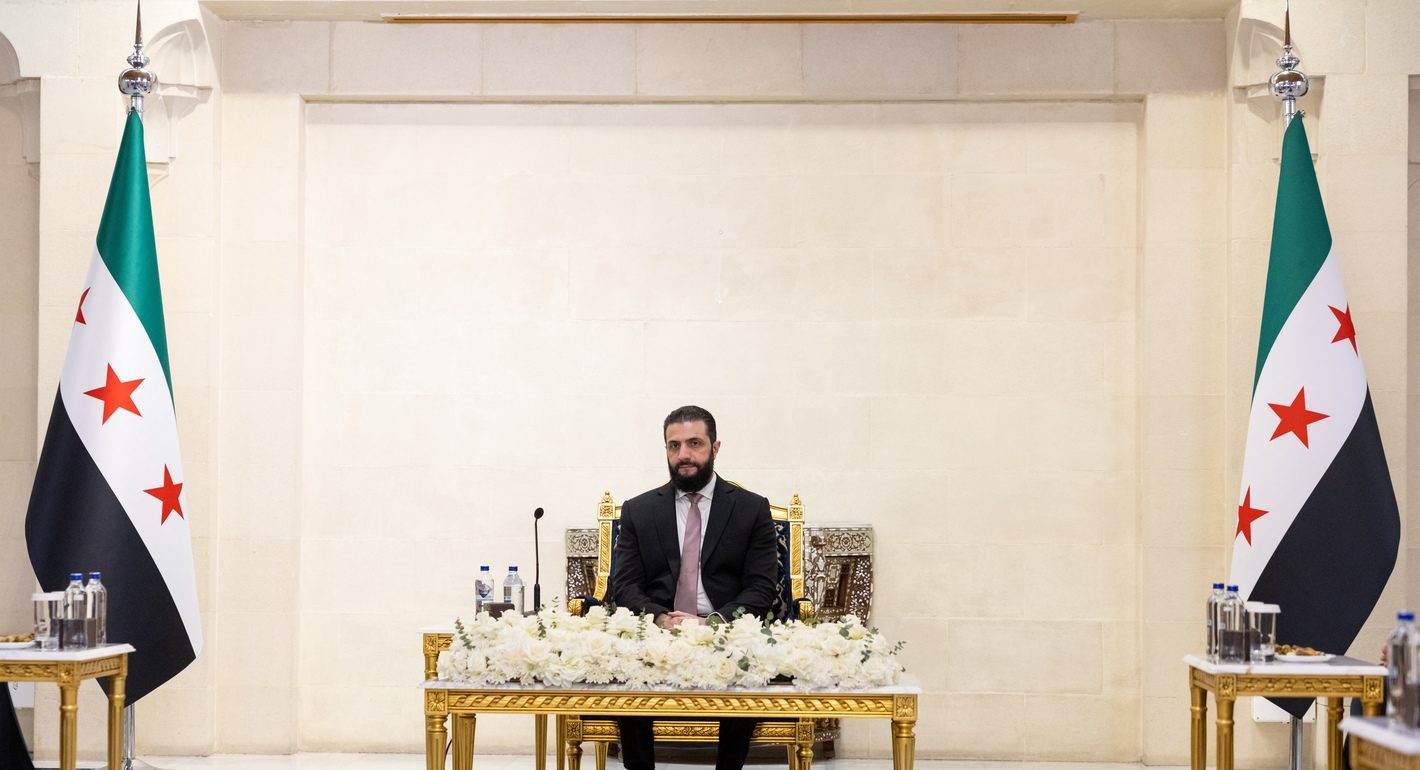
Syria's transition promised a fresh start. But are old habits of power making a comeback? This analysis looks at the warning signs and what it will take to build a more accountable state.

Sima Beitinjaneh
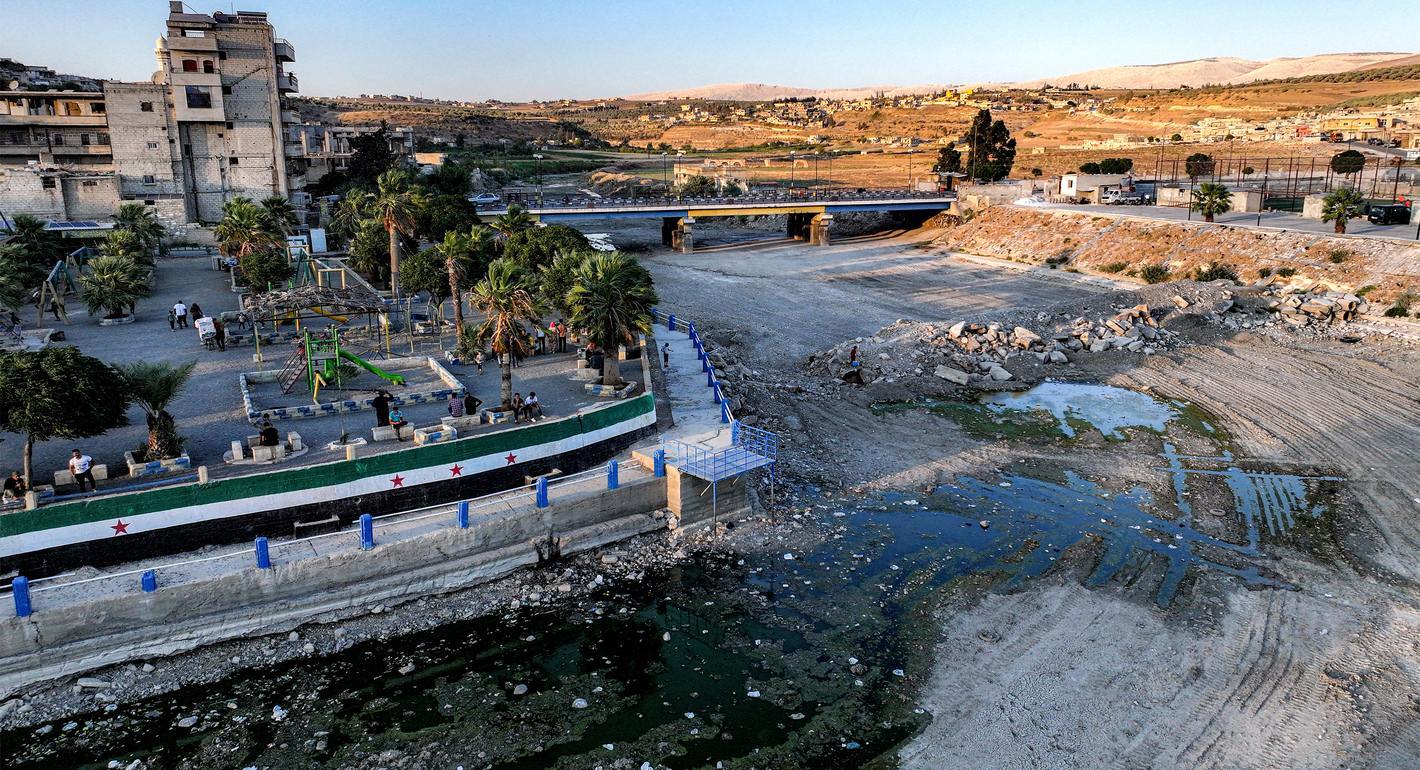
Syria’s worsening drought is no longer a seasonal crisis. This report explains what climate change is doing to rainfall, groundwater, and food security, and what solutions experts say are still possible.

Milia Esper
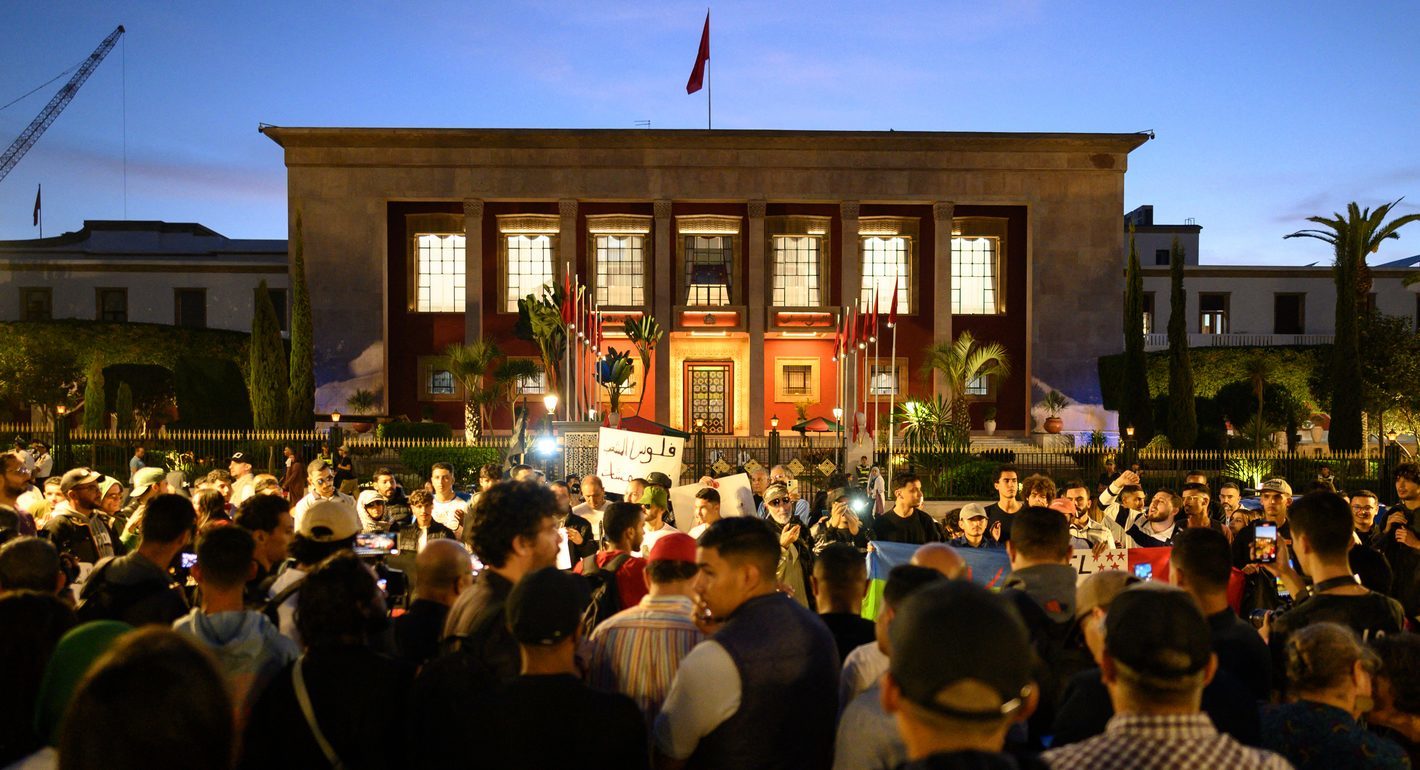
From anime heroes to online gaming communities, Morocco’s Gen Z is building a new protest culture. What does this digital imagination reveal about youth politics, and how should institutions respond?
Abdelilah Farah

In a volatile Middle East, the Omani port of Duqm offers stability, neutrality, and opportunity. Could this hidden port become the ultimate safe harbor for global trade?
Giorgio Cafiero, Samuel Ramani
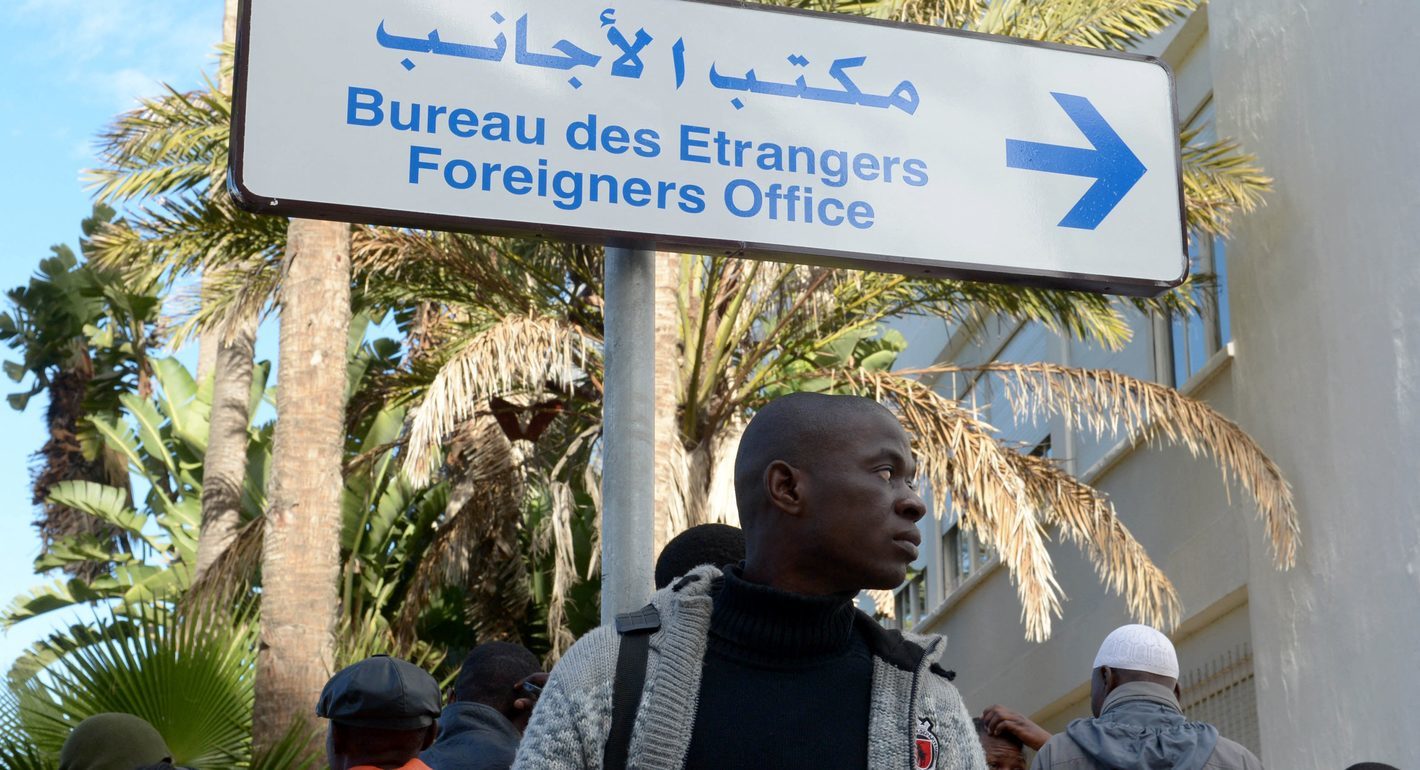
Is Morocco’s migration policy protecting Sub-Saharan African migrants or managing them for political and security ends? This article unpacks the gaps, the risks, and the paths toward real rights-based integration.
Soufiane Elgoumri