In The Media
Michele Dunne, Robert Kagan
{
  "authors": [
    "Robert Kagan"
  ],
  "type": "legacyinthemedia",
  "centerAffiliationAll": "dc",
  "centers": [
    "Carnegie Endowment for International Peace"
  ],
  "collections": [],
  "englishNewsletterAll": "asia",
  "nonEnglishNewsletterAll": "",
  "primaryCenter": "Carnegie Endowment for International Peace",
  "programAffiliation": "AP",
  "programs": [
    "Asia",
    "Russia and Eurasia",
    "Democracy, Conflict, and Governance"
  ],
  "projects": [],
  "regions": [
    "China",
    "Caucasus",
    "Russia"
  ],
  "topics": [
    "Political Reform",
    "Democracy",
    "Economy",
    "Military",
    "Foreign Policy"
  ]
}
Source: Getty
Many believe that when Chinese and Russian leaders stopped believing in communism they became pragmatists. But Chinese and Russian rulers do have a set of beliefs that guide their domestic and foreign policies. They believe in the virtues of strong central government and disdain the weaknesses of the democratic system. Chinese and Russian leaders are not just autocrats. They believe in autocracy.
Source: Washington Post

Many believe that when Chinese and Russian leaders stopped believing in communism, they stopped believing in anything. They had become pragmatists, pursuing their own and their nation's interests. But Chinese and Russian rulers, like past rulers of autocracies, do have a set of beliefs that guide their domestic and foreign policies. They believe in the virtues of strong central government and disdain the weaknesses of the democratic system. They believe strong rule at home is necessary if their nations are to be respected in the world. Chinese and Russian leaders are not just autocrats. They believe in autocracy.
And why shouldn't they? In Russia and China, growing national wealth and autocracy have proved compatible, contrary to predictions in the liberal West. Moscow and Beijing have figured out how to permit open economic activity while suppressing political activity. People making money will keep their noses out of politics, especially if they know their noses will be cut off if they don't. New wealth gives autocracies a greater ability to control information -- to monopolize television stations and control Internet traffic, for instance -- often with the assistance of foreign corporations eager to do business with them.
In the long run, rising prosperity may produce political liberalism, but how long is the long run? It may be too long to have strategic or geopolitical relevance.
In the meantime, the power and durability of these autocracies will shape the international system. The world is not about to embark on a new ideological struggle of the sort that dominated the Cold War. But the new era, rather than being a time of common values and shared interests, will be one of growing tensions and sometimes confrontation between the forces of democracy and those of autocracy.
If autocracies have their own set of beliefs, they also have their own set of interests. China's and Russia's rulers are pragmatic chiefly in protecting their continued rule. Their interest in self-preservation shapes their approach to foreign policy.
Russia is a good example of how a nation's governance affects its relations with the world. A democratizing Russia, and even Mikhail Gorbachev's democratizing Soviet Union, took a fairly benign view of NATO and tended to have good relations with neighbors that were treading the same path toward democracy. But Vladimir Putin regards NATO as a hostile entity, calls its enlargement "a serious provocation" and asks "against whom is this expansion intended?" Yet NATO is less provocative and threatening toward Moscow today than it was in Gorbachev's time.
So what is it that Putin fears about NATO? It is not the military power. It is the democracy.
The post-Cold War world looks different from autocratic Beijing and Moscow than it does from democratic Washington, London, Paris, Berlin or Brussels. The "color revolutions" in Georgia and Ukraine, so celebrated in the West, worried Putin because they checked his regional ambitions and because he feared their examples could be repeated in Russia. Even today he warns against "jackals" in Russia who "got a crash course from foreign experts, got trained in neighboring republics and will try here now."
American and European policymakers say they want Russia and China to integrate into the international liberal order, but it is not surprising if Russian and Chinese leaders are wary. Can autocrats enter the liberal international order without succumbing to the forces of liberalism?
Afraid of the answer, the autocracies are understandably pushing back, with some effect. Autocracy is making a comeback. The modern liberal mind at "the end of history" has trouble understanding the enduring appeal of autocracy in this globalized world. But changes in the ideological complexion of the most influential world powers have always had some effect on the choices made by leaders of smaller nations. Fascism was in vogue in Latin America in the 1930s and '40s partly because it seemed successful in Italy, Germany and Spain. The rising power of democracies in the last years of the Cold War, culminating in communism's collapse after 1989, contributed to the global wave of democratization. The rise of two powerful autocracies may shift the balance back again.
Russia's foreign minister, Sergei Lavrov, welcomes the return of ideological competition. "For the first time in many years," he boasts, "a real competitive environment has emerged on the market of ideas" between different "value systems and development models." And the good news, from the Kremlin's perspective, is that "the West is losing its monopoly on the globalization process."
All this comes as an unwelcome surprise to a democratic world that believed such competition ended when the Berlin Wall fell. It's time to wake up from the dream.
Robert Kagan, a senior associate at the Carnegie Endowment for International Peace, writes a monthly column for The Post. His latest book is The Return of History and the End of Dreams.
This article originally appeared in the Washington Post.
Former Senior Associate
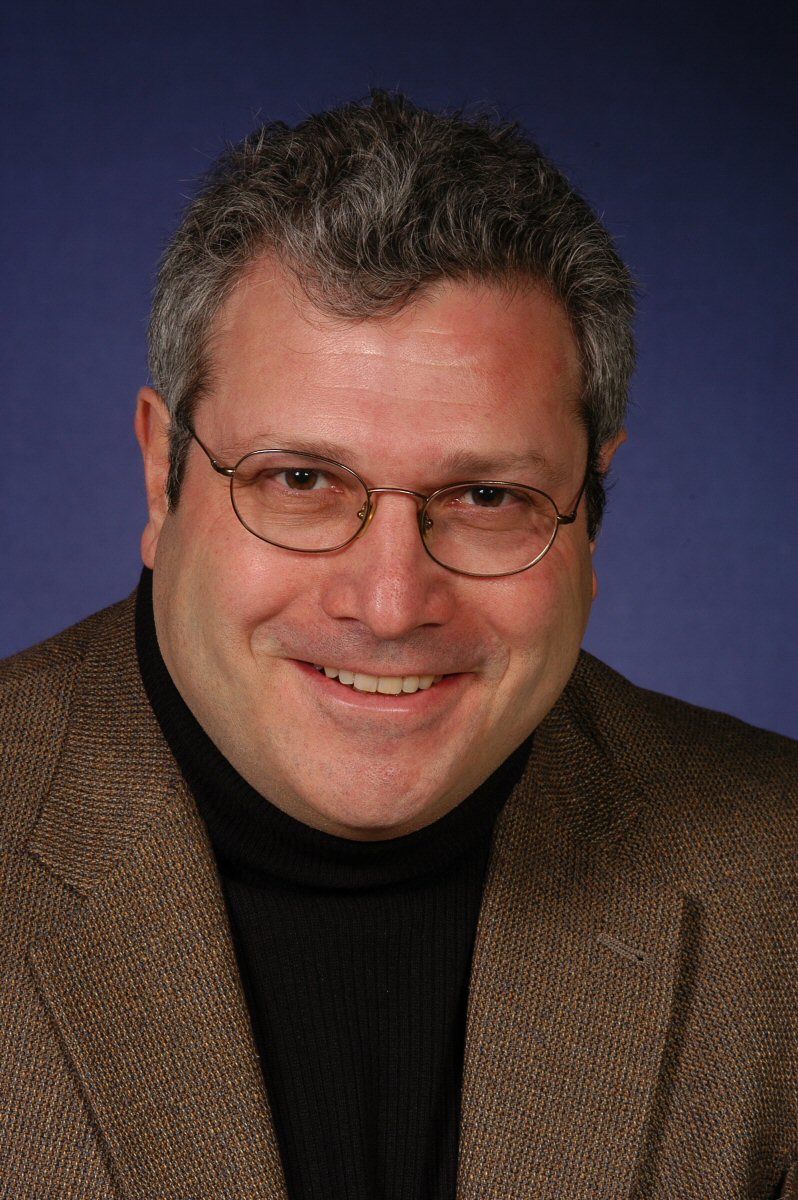
Kagan, author of the recent book, The Return of History and the End of Dreams (Knopf 2008), writes a monthly column on world affairs for the Washington Post and is a contributing editor at both the Weekly Standard and the New Republic.
Recent Work

Michele Dunne, Robert Kagan
Robert Kagan, Michele Dunne
Carnegie does not take institutional positions on public policy issues; the views represented herein are those of the author(s) and do not necessarily reflect the views of Carnegie, its staff, or its trustees.
As the war between the United States, Israel, and Iran continues, Carnegie scholars contribute cutting-edge analysis on the events of the war and their wide-reaching implications. From the impact on Iran and its immediate neighbors to the responses from Gulf states to fuel and fertilizer shortages caused by the effective shutdown of the Strait of Hormuz, the war is reshaping Middle East alliances and creating shockwaves around the world. Carnegie experts analyze it all.
The return of war as the organizing factor in Middle Eastern politics has predictable consequences: governments are prioritizing regime stability and becoming averse to political and social reform.

Sarah Yerkes, Amr Hamzawy
Central Asia’s digital ambitions are achievable, but only if policy is aligned with the region’s physical constraints.

Aruzhan Meirkhanova
Donald Trump has repeatedly bashed NATO and European allies, threatening to annex Canada and Greenland and deploring their lack of enthusiasm for his war of choice in Iran. Is this latest round of abuse the final straw?

Rym Momtaz, ed.

The future looks bleak for independent media worldwide, but there is a robust infrastructure of knowledge, organizations, and people to build upon.


Daniel Sabet, Susan Abbott