

Commentary
Washington and New Delhi should be proud of their putative deal. But international politics isn’t the domain of unicorns and leprechauns, and collateral damage can’t simply be wished away.
Evan A. Feigenbaum
Source: Getty
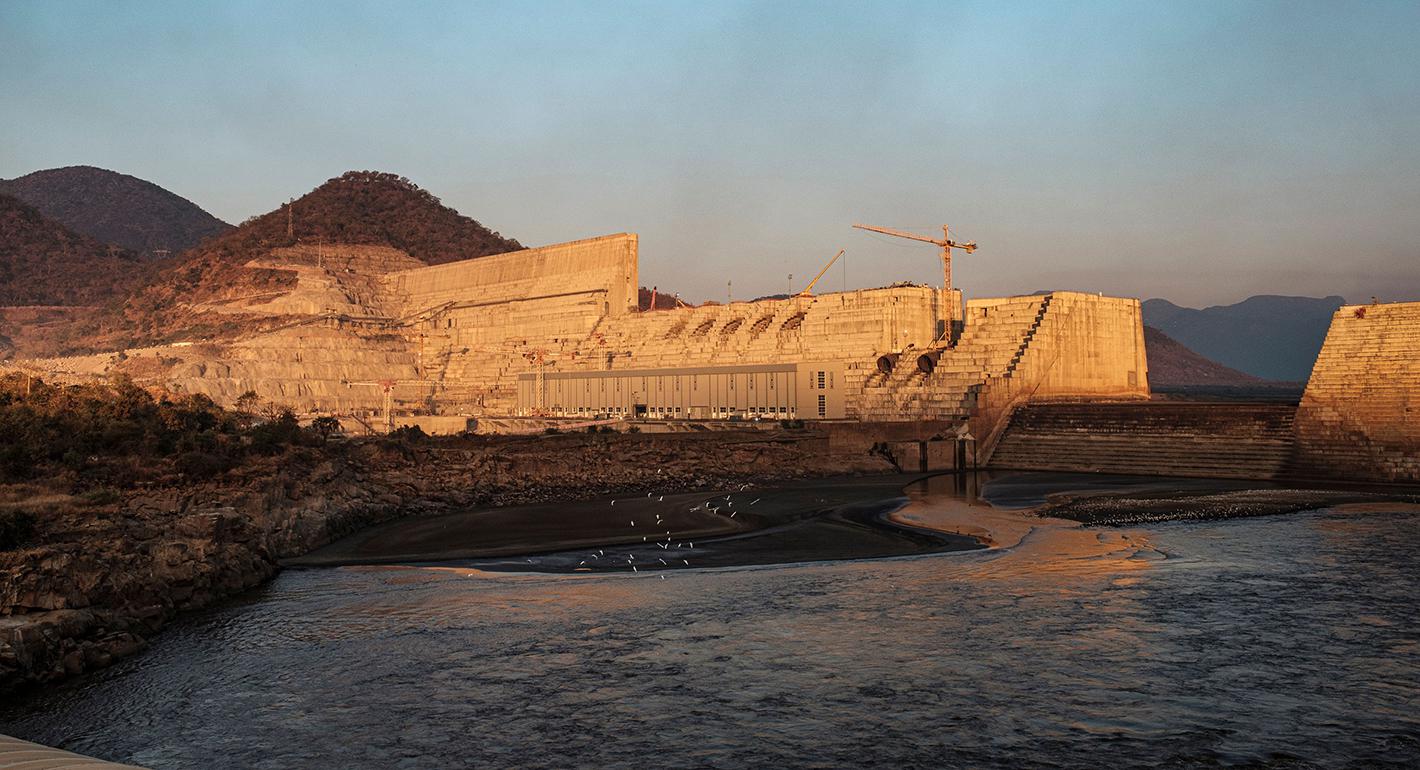
As Egypt and Ethiopia negotiate the details of the Grand Ethiopian Renaissance Dam, tensions are on the rise. Sudan, which has vested interest in the dam, too, could be an essential third party to smooth over the disputes.
In a phone conversation that took place in October 2020, then U.S. president Donald Trump warned Sudan’s Prime Minister Abdalla Hamdok that Egypt might end up “blowing up” the Grand Ethiopian Renaissance Dam (GERD), the construction of which is progressing apace despite the lack of an Ethiopian-Egyptian agreement regarding the extent of its operations and the rules by which Ethiopia must abide. Work on the dam, which began in 2011, reached a milestone in July 2020 when Ethiopia began filling its reservoir. Barring technical mishaps, the GERD could commence operations before the end of 2022. With this in mind, Egypt, which fears for its water security and accuses Ethiopia of intransigence in refusing to submit to impact studies and international monitoring, has hardened its stance. In June 2020, a few months before Hamdok’s phone conversation with Trump, Egyptian Foreign Minister Sameh Shoukry announced that, due to Ethiopia’s obstinacy in reaching a negotiated settlement, Egypt was now considering “other options” for resolving the dispute.
Yet any Egyptian airstrike on the facility—of the sort Trump speculated about—would lead to a military conflict between Egypt and Ethiopia. In fact, before such a conflict got underway, the airstrike itself would most likely wreak havoc in the immediate vicinity of the GERD, which is located in Ethiopia’s western Benishangul-Gumuz regional state, on a site that stands only 15 kilometers from the border with Sudan. Were Egypt to destroy the facility in whole or even just in part, flooding is a probable outcome. This would have a disastrous effect on communities in the Ethiopian-Sudanese borderlands. Indeed, it is no coincidence that Trump attempted to enlist Hamdok’s cooperation in averting an Egyptian attack on the GERD. The Sudanese government realizes that, if the Egyptian-Ethiopian dispute over the GERD takes a military turn, ordinary Sudanese in the borderlands will pay a greater price than their Ethiopian counterparts because of the direction of the flooding. As such, Sudan has a vested interest in bringing the dispute to a peaceful resolution and should choose to play a more active role in mediation efforts.
The Egyptian-Ethiopian Nile River dispute has its origins in the Anglo-Egyptian Treaty of 1929. The Ethiopians were not party to the accord, which the United Kingdom purported to negotiate with Egypt on behalf of Ethiopia and several other Nile Basin countries where the British held sway. In 1959, three years after Sudan gained independence from Anglo-Egyptian rule, Khartoum and Cairo signed their own Nile River agreement. This 1959 agreement consecrated the Anglo-Egyptian Treaty—albeit with adjustments that benefitted both countries, such as increasing Egypt’s guaranteed annual allotment of water to 55.5 billion cubic meters and Sudan’s to 18.5 billion cubic meters. Again, Ethiopia and other countries were not consulted. As a result, Ethiopia—whose highlands, in the form of the Blue Nile and, to a lesser extent, the Atbara (both of which are Nile River tributaries) supply the main river with 80 percent of the water that flows downstream to Sudan and Egypt—has long maintained that the 1929 treaty and the 1959 agreement ignore its water needs.
In April 2011, when Ethiopia launched the GERD project, it consulted neither Egypt nor Sudan, maintaining that the matter was an open-and-shut case of Ethiopian sovereignty. Egyptian authorities knew full well that the Blue Nile, on whose riverbank the GERD was being built, is the main source of the Nile and therefore provides much of the water upon which the country relies so heavily. So, Addis Ababa’s actions set off alarm bells in Cairo. To make matters worse, Ethiopia stalled on allowing an environmental and social impact assessment (ESIA) of the dam, which is required under international law for projects of this kind. Again, the Ethiopians maintained that the issue was one of sovereignty.
Despite initially opposing the very idea of the GERD and arguing that the Anglo-Egyptian Treaty granted it the right to veto any such project, Egypt relented in 2012 and demonstrated a degree of flexibility. That year, Egypt, Ethiopia, and Sudan agreed to charge an international panel of experts with studying the potential impact of the GERD. In March 2015, the three countries signed the Declaration of Principles (DoP) in Khartoum. According to the terms of this general agreement, Ethiopia would implement the panel’s recommendations, which included an ESIA. This was seen by many observers as paving the way for a more detailed agreement between the three countries, one that would establish rules and limits for the filling of the dam and the manner of its operation. However, Ethiopia subsequently reverted to its original position and refused to allow an ESIA.
From the Egyptian perspective, now that the country has accepted the inevitability of the dam going operational, an ESIA is crucial to addressing its technical concerns. Among these concerns is that the initial filling of the GERD’s reservoir not proceed too quickly. The Egyptian government is insisting on a slow fill of twelve to twenty-one years to prevent major challenges to Egypt’s water security, but the Ethiopian government insists on completing the process within six years in order to increase its capacity to generate power, a major preoccupation as more than half of Ethiopia’s population has no access to electricity. Additionally, given that Egypt expects to face water scarcity as soon as 2025, the Egyptian government wants to ensure that downstream river flow is not affected by Ethiopia’s refilling of the reservoir during periods of prolonged drought, when the Blue Nile’s water level recedes due to lack of rainfall.
In February 2020, Egypt, Ethiopia, and Sudan seemed on the verge of resolving their differences. The latest of ten rounds of negotiations stretching over five years had taken place in Washington, D.C. under the aegis of both former U.S. president Donald Trump’s administration and the World Bank. From this negotiating marathon was born a proposal. When it came to signing it, however, Ethiopia backed out over concerns that its provisions would infringe upon the country’s sovereignty. A few months later, the Ethiopian government reiterated its intention to begin filling the dam’s reservoir in July. Egypt, which considered such a unilateral move to be in contravention of the DoP, immediately called on the UN Security Council to condemn it.
Shortly thereafter, the African Union (AU) got involved and managed to convince the parties to resume negotiations under its auspices. By this time, Egyptian-Ethiopian ties had frayed, leading the parties to devise a somewhat clumsy and time-consuming format for three-way negotiations between Egypt, Ethiopia, and Sudan, sometimes in the presence of AU officials and sometimes not. Yet the negotiations have failed to yield tangible results, and have even led to a spat between Sudan on one side and Egypt and Ethiopia on the other regarding the extent of AU involvement. Meanwhile, the danger is that Egypt feels it is running out of time.
Intractable as the problem may seem, given Ethiopia’s intransigence and Egypt’s impatience, it is not beyond repair. However, resolving the dispute, or at least preventing it from taking a military turn and thereby spiraling out of control, necessitates assertive and persistent intervention by a third party. At first blush, it might not appear as though Sudan is well-placed to undertake such a task. The country is undergoing a shaky transition to democracy following decades of authoritarian rule, while a flare-up of violence in Darfur, a western state on Sudan’s border with Chad, may signal a return to protracted ethnic conflict in that troubled region. Moreover, Sudanese-Ethiopian relations have grown strained of late, with Sudan becoming increasingly embroiled in a violent confrontation with Ethiopia over the Fashaga border area. Finally, in Sudanese civil society—which has gained a new lease on life since the 2019 toppling of then president Omar al-Bashir, a former army officer—some suspect that Egypt under President Abdel-Fattah al-Sisi, himself a former commander-in-chief of the armed forces, would prefer that someone drawn from the Sudanese military’s ranks take the helm in Khartoum.
Yet these factors, even when considered cumulatively, do not outweigh those that qualify Sudan to mediate between Egypt and Ethiopia. Khartoum is much more flexible than Cairo when it comes to the GERD. Like Egypt, Sudan is concerned about how much water will continue to flow downstream once the GERD becomes operational and what effect this will have on its own dam, the Roseires. With this in mind, Sudan recently warned Ethiopia against forging ahead with the second phase of filling the reservoir without having come to an agreement on the matter. However, Sudan stands to benefit from the cheaper electricity that the dam will generate, the easier irrigation it will enable, and the likelihood of less flooding if everything goes smoothly. This is why, despite the fact that Sudan has had its differences with both Egypt and Ethiopia, it has refrained from siding with either. Such relative impartiality is a positive attribute that can help Khartoum gain the trust of both sides. Moreover, three additional factors that position Sudan well for launching a mediation initiative double as incentives for it to do just that.
Sudan may be a third party to a dispute that is largely between Egypt and Ethiopia, but it would hardly escape the consequences of a conflict between its neighbors. On the contrary, ordinary Sudanese would probably bear the brunt of such a conflict. For one thing, owing to its geographic location, Sudan would find itself caught in the middle of any military confrontation. Indeed, Egypt and Ethiopia do not share a border; as such, they would most likely turn Sudan into a borderland and a battlefield. Sudan’s airspace and even its territory would face periodic violation, and an Egyptian airstrike on the GERD’s reservoirs could lead to flooding of Sudanese territory. Preventing this from happening is a Sudanese national security interest of the first order.
The second factor or incentive also has to do with the dangerous prospect of flooding, albeit not of the kind caused by an airstrike. Sudan fears that a lack of regulation governing the GERD’s operations may lead to technical errors that could cause flooding in certain circumstances. This would hardly remain a domestic Ethiopian matter. Given the GERD’s location, flooding would spell disaster for the inhabitants of Sudan’s southeastern Blue Nile state, which abuts Benishangul-Gumuz, and possibly others beyond. As it happens, Sudan is still reeling from the effects of the devastating Blue Nile flood of September 2020, which laid waste to nearly one third of the country’s cultivated land and affected about three million people, of whom more than 100 lost their lives. In theory, the GERD is supposed to reduce flooding, but Ethiopia’s continued refusal to allow ESIAs means that Sudan remains in the dark as to the possible ramifications of what might go awry and how, once the dam goes operational. In order to take the appropriate measures, Sudanese officials must know more, and in order for them to know more, they will have to prevail upon the Ethiopians to soften their position.
The third factor or incentive is the improved regional and even international standing Sudan would attain through successful mediation. Sudan is actively trying to effect a break with its recent past as a pariah state. Taking tentative steps toward democracy is part of this strategy. But there is a great deal more that Khartoum can do to signal the arrival of a new Sudan on the regional and international stage. Tamping down the risk of conflict between two regional powers and convincing them to reach a negotiated settlement would give a tremendous boost to Sudan’s fledgling government—which would have triumphed where the United States and AU came up short—as well as increase Sudan’s influence in the Horn of Africa.
This last factor or incentive may even benefit Sudan’s own relations with Egypt and Ethiopia. In brokering a reconciliation between its two most important neighbors, it is reasonable to assume that Sudan would generate goodwill on their part. This could augur well for long-stalled attempts to resolve Sudan’s border disputes with both Egypt and Ethiopia and increase the chances that a solution would align with Sudan’s interests. The Halayeb Triangle (including the town of Shalateen), which lies on the border between northeast Sudan and southeast Egypt, is under Cairo’s control but is claimed by Khartoum. The area is economically important, owing to deposits of minerals and even gold, but Egypt may be willing to adopt a more flexible position—for example, one that allows for shared control and resource-extraction—in the event Sudan helps to ensure that Egypt’s far weightier concerns regarding the GERD are addressed.
Khartoum’s dispute with Addis Ababa over Fashaga is more serious, evidenced by the recent outbreak of violence in the fertile border area. Ethiopia acknowledges that Fashaga falls within Sudanese territory, but it seeks recognition of the rights of its inhabitants, most of whom belong to the ethnic Amhara community whose national identity is intertwined with that of Ethiopia. As serious as the dispute has become, the fact that it is not a classic case of two countries claiming sovereignty over the same piece of land may make it easier to resolve. Ethiopia will not abandon the Amhara of Fashaga, much less after their recent expulsion from the area at the hands of Sudanese military forces. However, the Ethiopian government may agree to a reduced say in their affairs provided Sudan brokers a settlement between Egypt and Ethiopia that guarantees, once and for all, acceptance of the GERD according to mutually agreed-upon conditions.
However sound it is in theory, a Sudanese initiative requires both Egypt and Ethiopia to be receptive if it is to take shape—let alone succeed. Fortunately, chances are good that Egypt and Ethiopia, both of which maintain strong trade relations with Sudan, would react positively. Cairo is keen to demonstrate good will toward the new government in Khartoum in order not to undermine its longstanding ties with Sudan. In fact, Egypt has previously indicated that it would welcome greater Sudanese involvement in the GERD issue. Sudan should have little difficulty in making headway with Egypt.
With Ethiopia, Sudan faces a trickier situation, in large part because of the flare-up over Fashaga, which has seen Sudanese and Ethiopian military forces clash. However, precisely because the Ethiopian government today finds itself at odds with several of its neighbors—as well as its own regional state of Tigray, against which it recently concluded a military campaign to crush a movement seeking autonomy—it cannot afford to dismiss a Sudanese initiative of the sort discussed here. As developments on the ground indicate, Ethiopia has overextended itself. For example, with its forces bogged down in Tigray and Fashaga, Ethiopia was powerless to stop its neighbor Eritrea—which, ironically, provided military support to the Ethiopian army’s campaign in Tigray—from seizing the disputed Badme border area from Ethiopian control. The last thing Ethiopia needs is an Egyptian air strike that scuttles a project it has touted as a matter of Ethiopian national pride. A Sudanese initiative that aims to spare Ethiopia just such a scenario, to say nothing of a costly subsequent military entanglement, would in all probability gain solid acceptance.
While Sudan may want to keep open the option of eventually building on the Khartoum DoP for a final settlement of the dispute, today the priority is averting a military conformation between Egypt and Ethiopia and convincing the two countries to resume negotiations in earnest. Limiting itself, at least at the beginning, to trying to effect a rapprochement between Egypt and Ethiopia would ensure that Sudan’s mission is both manageable and likely to succeed. Moreover, if achieved, it might then facilitate the resolution of the country’s border disagreements with both Egypt and Ethiopia, as well as cement a newly democratic Sudan’s standing in the Horn of Africa and beyond. Ultimately, Sudan’s initiative might even lay the groundwork for a permanent solution to the long-running Egyptian-Ethiopian Nile River dispute.
Sherif Mohyeldeen is a nonresident scholar at the Malcolm H. Kerr Carnegie Middle East Center in Beirut, where his research focuses on Egyptian and North African cross-border issues.
Carnegie does not take institutional positions on public policy issues; the views represented herein are those of the author(s) and do not necessarily reflect the views of Carnegie, its staff, or its trustees.
Washington and New Delhi should be proud of their putative deal. But international politics isn’t the domain of unicorns and leprechauns, and collateral damage can’t simply be wished away.

Evan A. Feigenbaum

Senior climate, finance, and mobility experts discuss how the Fund for Responding to Loss and Damage could unlock financing for climate mobility.

Alejandro Martin Rodriguez
The EU lacks leadership and strategic planning in the South Caucasus, while the United States is leading the charge. To secure its geopolitical interests, Brussels must invest in new connectivity for the region.

Zaur Shiriyev
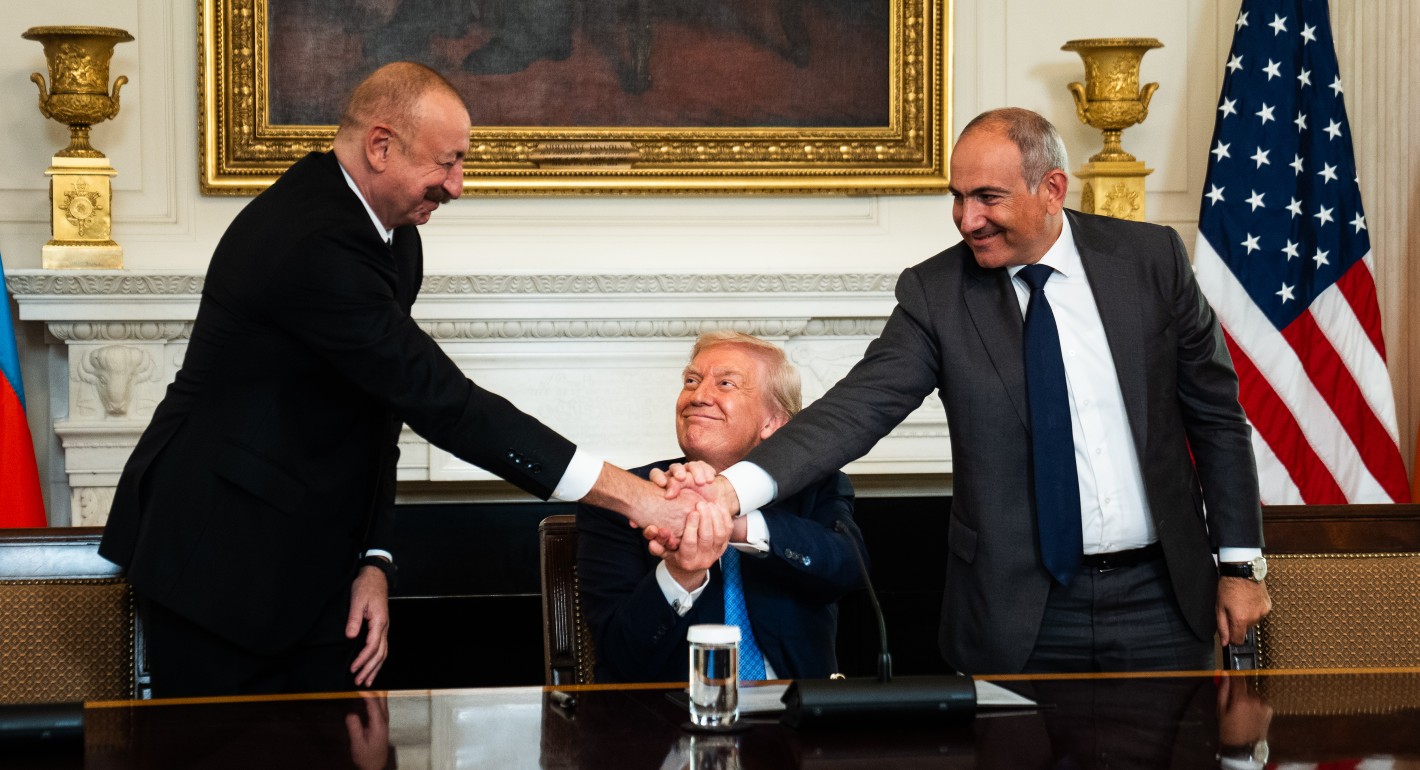
An Armenia-Azerbaijan settlement may be the only realistic test case for making glossy promises a reality.

Garo Paylan
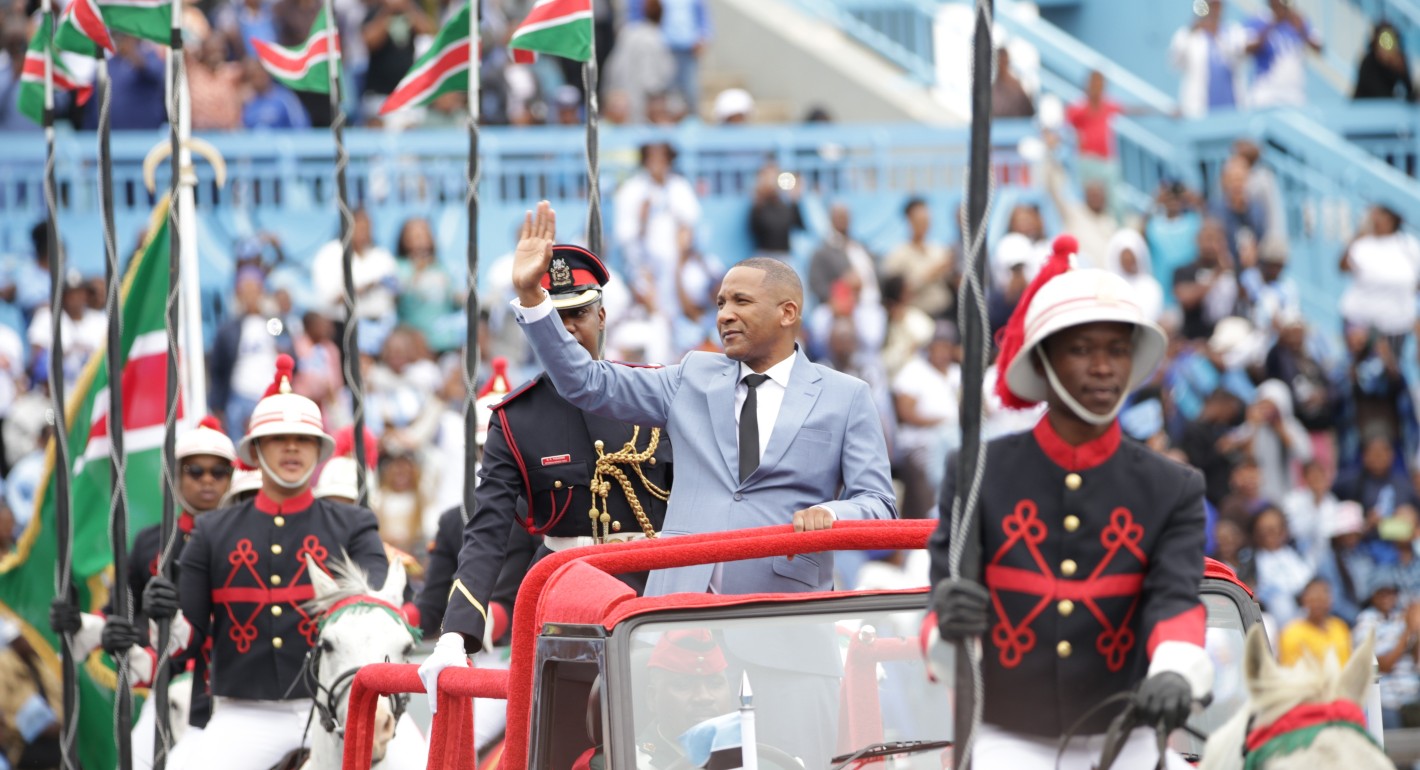
Supporters of democracy within and outside the continent should track these four patterns in the coming year.


Saskia Brechenmacher, Frances Z. Brown