


• Research
  • Emissary
  • About
  • Experts
Carnegie Global logoCarnegie lettermark logo
Democracy
  • Donate
{
  "authors": [
    "Michael D. Swaine",
    "M. Taylor Fravel"
  ],
  "type": "legacyinthemedia",
  "centerAffiliationAll": "",
  "centers": [
    "Carnegie Endowment for International Peace"
  ],
  "collections": [],
  "englishNewsletterAll": "",
  "nonEnglishNewsletterAll": "",
  "primaryCenter": "Carnegie Endowment for International Peace",
  "programAffiliation": "",
  "programs": [
    "Asia"
  ],
  "projects": [],
  "regions": [
    "North America",
    "United States",
    "East Asia",
    "South Korea",
    "China",
    "Taiwan",
    "Japan",
    "Southeast Asia"
  ],
  "topics": [
    "Political Reform",
    "Security",
    "Military",
    "Foreign Policy"
  ]
}
In The Media

China's Assertive Behavior—Part Two: The Maritime Periphery

While China's behavior in its surrounding seas has become more assertive in recent years, its basic strategy of avoiding conflict in favor of negotiation and cautious management, while defending against attempts by others to undermine its position, remains the same.

Link Copied
By Michael D. Swaine and M. Taylor Fravel
Published on Jun 24, 2011
Program mobile hero image

Program

Asia

The Asia Program in Washington studies disruptive security, governance, and technological risks that threaten peace, growth, and opportunity in the Asia-Pacific region, including a focus on China, Japan, and the Korean peninsula.

Learn More

Source: China Leadership Monitor

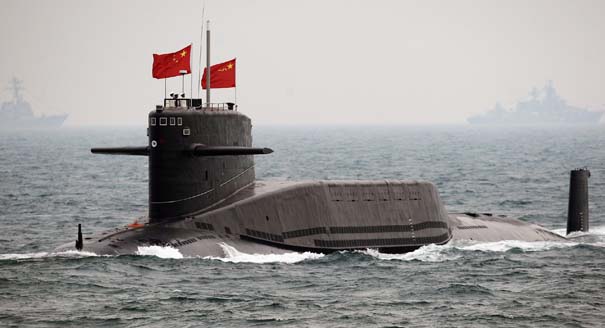
This China Leadership Monitor (CLM) will examine Chinese actions along China’s entire maritime periphery, from the Yellow Sea to the South China Sea, with regard to both disputed and undisputed maritime areas, as well as those recent official diplomatic statements and legal submissions from the People's Republic of China (PRC) of relevance to such maritime behavior.

The primary purpose of such an examination is: a) to assess whether, to what degree, and in what major ways China has become more assertive along its maritime periphery in recent years; b) to examine the external and internal forces motivating China to become more or less assertive over time; and c) to assess the prospects for Chinese assertiveness with regard to maritime sovereignty issues in the future.

The essay will examine what have been regarded by outside observers as the most potentially troubling Chinese actions and diplomatic or legal statements with regard to territorial issues taken along China’s maritime periphery since approximately 2007–2008, when concern with a more “assertive” China was emerging in the West and elsewhere (see CLM 32). These encompass five major issue areas: 1) legal and diplomatic submissions, statements, and governmental actions with regard to the South China Sea; 2) diplomatic statements and governmental actions with regard to the East China Sea; 3) legal statements and actions concerning China’s maritime Exclusive Economic Zone (EEZ); and 4) diplomatic, official, and media statements and actions with regard to the Yellow Sea.

For each issue area, the essay will: 1) provide as accurate a summary as possible from open sources of the major relevant Chinese behavior that has occurred since 2007–2008; 2) assess whether such behavior represents an increase or decrease in frequency and type or intensity compared to earlier years; and 3) examine the larger external and domestic context surrounding such Chinese behavior, to determine the apparent motives and objectives at work and the reasons for apparent changes in level and intensity over time. The essay will conclude with an assessment of the significance of and future prospects for Chinese assertiveness in the maritime realm derived from the preceding analysis.

Authors

Michael D. Swaine
Former Senior Fellow, Asia Program
Michael D. Swaine
M. Taylor Fravel

M. Taylor Fravel is the Arthur and Ruth Sloan Professor of Political Science and Director of the Security Studies Program at the Massachusetts Institute of Technology. Taylor studies international relations, with a focus on international security, China, and East Asia. His books include, Strong Borders, Secure Nation: Cooperation and Conflict in China’s Territorial Disputes, (Princeton University Press, 2008) and Active Defense: China's Military Strategy Since 1949 (Princeton University Press, 2019). His other publications have appeared in International Security, Foreign Affairs, Security Studies, International Studies Review, The China Quarterly, The Washington Quarterly, Journal of Strategic Studies, Armed Forces & Society, Current History, Asian Survey, Asian Security, China Leadership Monitor, and Contemporary Southeast Asia. Taylor is a graduate of Middlebury College and Stanford University, where he received his PhD. He also has graduate degrees from the London School of Economics and Oxford University, where he was a Rhodes Scholar. In 2016, he was named an Andrew Carnegie Fellow by the Carnegie Corporation. Taylor is a member of the board of directors of the National Committee on U.S.-China Relations and serves as the Principal Investigator for the Maritime Awareness Project.

M. Taylor Fravel
Political ReformSecurityMilitaryForeign PolicyNorth AmericaUnited StatesEast AsiaSouth KoreaChinaTaiwanJapanSoutheast Asia

Carnegie does not take institutional positions on public policy issues; the views represented herein are those of the author(s) and do not necessarily reflect the views of Carnegie, its staff, or its trustees.

More Work from Carnegie Endowment for International Peace

  • People on a stage
    Commentary
    Emissary
    The Dangerous Consequences of Treating Colombia Like Venezuela

    When democracies and autocracies are seen as interchangeable targets, the language of democracy becomes hollow, and the incentives for democratic governance erode.

      • Sarah Yerkes

      Sarah Yerkes, Amr Hamzawy

  • Commentary
    Carnegie Politika
    Has Trump the Destroyer Eclipsed Putin the Destroyer?

    Unexpectedly, Trump’s America appears to have replaced Putin’s Russia’s as the world’s biggest disruptor.

      Alexander Baunov

  • Soldier looking at a drone on the ground
    Commentary
    Emissary
    Are All Wars Now Drone Wars?

    From Sudan to Ukraine, UAVs have upended warfighting tactics and become one of the most destructive weapons of conflict.

      • Jon Bateman

      Jon Bateman, Steve Feldstein

  • Carney speaking on stage
    Commentary
    Emissary
    Carney’s Remarkable Message to Middle Powers

    And how they can respond.

      • +1

      Sophia Besch, Steve Feldstein, Stewart Patrick, …

  • Trump speaking on a stage
    Commentary
    Emissary
    The Greenland Episode Must Be a Lesson for Europe and NATO

    They cannot return to the comforts of asymmetric reliance, dressed up as partnership.

      Sophia Besch

Get more news and analysis from
Carnegie Endowment for International Peace
Carnegie global logo, stacked
1779 Massachusetts Avenue NWWashington, DC, 20036-2103Phone: 202 483 7600Fax: 202 483 1840
  • Research
  • Emissary
  • About
  • Experts
  • Donate
  • Programs
  • Events
  • Blogs
  • Podcasts
  • Contact
  • Annual Reports
  • Careers
  • Privacy
  • For Media
  • Government Resources
Get more news and analysis from
Carnegie Endowment for International Peace
© 2026 Carnegie Endowment for International Peace. All rights reserved.