


The country’s strategy is no longer focused on deterrence and diplomacy, it’s about dominance and degradation.
Nathan J. Brown
{
"authors": [
"Uri Dadush",
"Michele Dunne"
],
"type": "legacyinthemedia",
"centerAffiliationAll": "dc",
"centers": [
"Carnegie Endowment for International Peace"
],
"collections": [
"Arab Awakening"
],
"englishNewsletterAll": "menaTransitions",
"nonEnglishNewsletterAll": "",
"primaryCenter": "Carnegie Endowment for International Peace",
"programAffiliation": "MEP",
"programs": [
"Middle East"
],
"projects": [],
"regions": [
"North America",
"United States",
"Middle East",
"North Africa",
"Egypt",
"Libya",
"Tunisia",
"Western Europe"
],
"topics": [
"Political Reform",
"Economy",
"Foreign Policy"
]
}Source: Getty
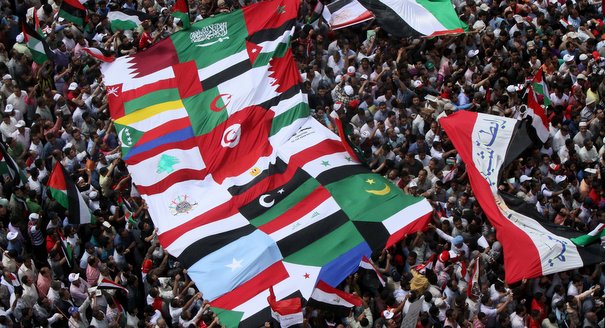
Given the economic problems facing both sides of the Atlantic, Europe and the United States can best support democratic transitions in Arab countries through enhanced trade agreements that improve market access and maximize job-promoting reforms.
Source: Washington Quarterly

Analogous to the process that successfully drew the formerly planned economies of Eastern Europe to liberal democracy, what is needed is a new and compelling vision for closer and more equitable economic relations both among Arab countries and between them and the trans-Atlantic community. Reflecting the global interest in successful transitions, the initiative should also mobilize assistance from large oil-importing countries outside of Europe and the United States. It should also draw on help from Saudi Arabia and the other Gulf States which, though clearly ambivalent about the democratic transitions in their Arab neighbors, have a vital interest in their growth and stability. To these ends, new trade agreements should be far deeper and more comprehensive than those currently in force and contain many of the elements included in Eastern European countries’ accession agreements, including a bold multi-year trade assistance initiative designed to bolster competitiveness and the role of the private sector in the Arab countries.
Former Senior Associate, International Economics Program
Dadush was a senior associate at the Carnegie Endowment for International Peace. He focuses on trends in the global economy and is currently tracking developments in the eurozone crisis.
Former Nonresident Scholar, Middle East Program
Michele Dunne was a nonresident scholar in Carnegie’s Middle East Program, where her research focuses on political and economic change in Arab countries, particularly Egypt, as well as U.S. policy in the Middle East.
Carnegie does not take institutional positions on public policy issues; the views represented herein are those of the author(s) and do not necessarily reflect the views of Carnegie, its staff, or its trustees.
The country’s strategy is no longer focused on deterrence and diplomacy, it’s about dominance and degradation.
Nathan J. Brown
The conflict is exposing the deep energy vulnerabilities of Korea’s chip industry.
Darcie Draudt-Véjares, Tim Sahay
Even if the Iran war stops, restarting production and transport for fertilizers and their components could take weeks—at a crucial moment for planting.
Noah Gordon, Lucy Corthell
The countries in the region are managing the fallout from Iranian strikes in a paradoxical way.
Angie Omar
French President Emmanuel Macron has unveiled his country’s new nuclear doctrine. Are the changes he has made enough to reassure France’s European partners in the current geopolitical context?
Rym Momtaz, ed.