• Research
  • Emissary
  • About
  • Experts
Carnegie Global logoCarnegie lettermark logo
DemocracyIran
  • Donate
{
  "authors": [],
  "type": "other",
  "centerAffiliationAll": "dc",
  "centers": [
    "Carnegie Endowment for International Peace",
    "Carnegie China"
  ],
  "collections": [
    "China’s Foreign Relations",
    "U.S.-China Relations"
  ],
  "englishNewsletterAll": "asia",
  "nonEnglishNewsletterAll": "",
  "primaryCenter": "Carnegie Endowment for International Peace",
  "programAffiliation": "AP",
  "programs": [
    "Asia"
  ],
  "projects": [],
  "regions": [
    "North America",
    "United States",
    "East Asia",
    "China",
    "Taiwan"
  ],
  "topics": [
    "Political Reform",
    "Economy",
    "Trade",
    "Security",
    "Military",
    "Foreign Policy",
    "Arms Control"
  ]
}

Source: Getty

Other

Initial Report of U.S.-China Security Perceptions Project Released

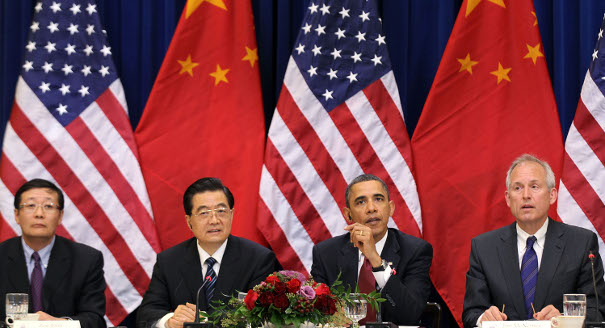
The U.S.-China Security Perceptions Project has released its first report on U.S. public and elite attitudes. Future project reports will also include data from surveys of Chinese public and elites, and will assess the policy implications of these survey results.

Link Copied
Published on Sep 18, 2012
Program mobile hero image

Program

Asia

The Asia Program in Washington studies disruptive security, governance, and technological risks that threaten peace, growth, and opportunity in the Asia-Pacific region, including a focus on China, Japan, and the Korean peninsula.

Learn More

The Pew Research Center released today the initial report of the U.S.-China Security Perceptions Project, presenting the findings of a survey of U.S. foreign affairs experts and the American public conducted by the Pew Global Attitudes Project.

The U.S.-China Security Perceptions Project is a unique collaborative undertaking between leading research institutions in Washington and Beijing launched in 2011. The Carnegie Endowment for International Peace has coordinated this project and provided funding for the U.S. and Chinese public and elite surveys, with additional funding from the China-United States Exchange Foundation and the Ford Foundation. Carnegie's Senior Associate Michael D. Swaine and Research Analyst Rachel Esplin Odell have been the leads in organizing the project.

Carnegie’s partners in this endeavor include, on the U.S. side, the Pew Research Center and the Kissinger Institute on China and the United States at the Woodrow Wilson International Center for Scholars, and on the Chinese side, the China Strategic Culture Promotion Association (CSCPA), a national non-profit civil society group that does security-related analysis, and the Research Center for Contemporary China (RCCC) at Peking University.

This project emerged from an awareness of the growing influence, in both the United States and especially China, of both public and elite attitudes on what many analysts recognize as the increasingly turbulent bilateral security relationship. Its objective is to obtain non-partisan policy-relevant data and insights on the evolving content and influence of such attitudes, as policymakers seek to reduce the likelihood of serious future bilateral crises or conflicts. The project intends to discover and analyze the views of the public and elites in five distinct categories – government, business, academia, the military, and the media – regarding a wide range of national security issues, from the nature of American and Chinese power, both globally and in Asia, to the images held of one another’s national character.

On the U.S. side, the Pew Research Center has conducted, in consultation with the Carnegie Endowment and the Kissinger Institute, the elite and public surveys, while the RCCC and CSCPA have together performed similar tasks in China. This initial project report by the Pew Research Center conveys the findings of the U.S. surveys, including the views of the American public and U.S. foreign affairs experts. Future reports by the project will include findings from parallel surveys in China.

In addition, as part of the broader project, workshops are planned in both Washington and Beijing that will bring together leading experts on U.S.-China relations, as well as representatives of the expert groups polled by the project, to discuss in detail the survey findings and their implications for policy in the United States and China. Following the workshops, the Carnegie Endowment, the Kissinger Institute, and CSCPA will issue a final report on the project. In the longer term, the aim is to make the surveys and workshops a regular event, charting changes over time in how Americans and Chinese see one another in the national security realm.

This project promises to bring a unique perspective to an important topic in international affairs and provide insights on the reasoning behind each country’s security policies and behavior. These findings will thereby help to inform policymakers, the media, and the global public about important issues in U.S.-China relations moving forward. 

The full text of the report published by the Pew Research Center is available here.

Political ReformEconomyTradeSecurityMilitaryForeign PolicyArms ControlNorth AmericaUnited StatesEast AsiaChinaTaiwan

Carnegie does not take institutional positions on public policy issues; the views represented herein are those of the author(s) and do not necessarily reflect the views of Carnegie, its staff, or its trustees.

More Work from Carnegie Endowment for International Peace

  • Commentary
    Strategic Europe
    There Is No Shortcut for Europe in Armenia

    Europe has an interest in supporting Armenian leader Nikol Pashinyan as he tries to make peace with neighbors and loosen ties with Russia. But it is depersonalized support in the long term, not quickfire flash, that will win the day.

      Thomas de Waal

  • Article
    From Labor Scarcity to AI Society: Governing Productivity in East Asia

    The debate over AI and work too often centers on displacement. Facing aging populations and shrinking workforces, East Asian policymakers view AI not as a threat, but as a cross-sectoral workforce strategy.

      Darcie Draudt-Véjares, Sophie Zhuang

  • Article
    Governing AI in the Shadow of Giants: Korea’s Strategic Response to Great Power AI Competition

    In its version of an AI middle power strategy, Seoul is pursuing alignment with the United States not as an endpoint but as a strategy to build industrial and geopolitical leverage. Whether this balance holds remains an open question.

      Darcie Draudt-Véjares, Seungjoo Lee

  • China Financial Markets
    Commentary
    China Financial Markets
    Is China’s High-Quality Investment Output Economically Viable?

    China’s rapid technological progress and its first-rate infrastructure are often cited as refuting the claim that China has been systematically overinvesting in non-productive projects for many years. In fact, as the logic of overinvestment and the many historical precedents show, the former is all-too-often consistent with the latter.

      Michael Pettis

  • Commentary
    Carnegie Politika
    The Much-Touted Middle Corridor Transport Route Could Prove a Dead End

    For the Middle Corridor to fulfill its promises, one of these routes must become scalable. At present, neither is.

      Friedrich Conradi

Get more news and analysis from
Carnegie Endowment for International Peace
Carnegie global logo, stacked
1779 Massachusetts Avenue NWWashington, DC, 20036-2103Phone: 202 483 7600
  • Research
  • Emissary
  • About
  • Experts
  • Donate
  • Programs
  • Events
  • Blogs
  • Podcasts
  • Contact
  • Annual Reports
  • Careers
  • Privacy
  • For Media
  • Government Resources
Get more news and analysis from
Carnegie Endowment for International Peace
© 2026 Carnegie Endowment for International Peace. All rights reserved.