

Paper
Yezid Sayigh
{
  "authors": [
    "Yezid Sayigh"
  ],
  "type": "legacyinthemedia",
  "centerAffiliationAll": "dc",
  "centers": [
    "Carnegie Endowment for International Peace",
    "Malcolm H. Kerr Carnegie Middle East Center"
  ],
  "collections": [
    "Arab Awakening"
  ],
  "englishNewsletterAll": "menaTransitions",
  "nonEnglishNewsletterAll": "",
  "primaryCenter": "Malcolm H. Kerr Carnegie Middle East Center",
  "programAffiliation": "MEP",
  "programs": [
    "Middle East"
  ],
  "projects": [],
  "regions": [
    "Egypt",
    "Gulf",
    "Maghreb",
    "Yemen",
    "Tunisia",
    "Libya",
    "Middle East",
    "North Africa",
    "Iraq"
  ],
  "topics": [
    "Security",
    "Political Reform",
    "Democracy",
    "Civil Society"
  ]
}
Source: Getty
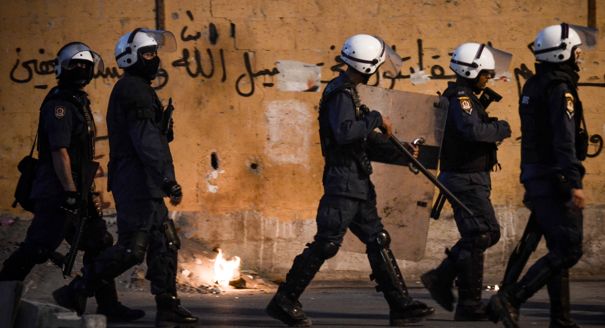
Until the Arab governments undertake security sector reform, the Arab Spring countries—and others that have experienced post-conflict transition, such as Iraq—risk lapsing into new, hybrid forms of authoritarian rule and descending into ever-widening civil strife.
Source: Al-Hayat
Widespread resentment of the systematic abuse of human rights and suppression of basic freedoms by the police and internal security agencies was the primary force driving the popular uprisings in Arab countries that started with the toppling of Tunisian President Zain al-Abidin Bin Ali in January 2011. Addressing the Council of Arab Ministers of Interior in March 2012, his successor, interim president Moncef Marzouki, drew the appropriate lesson: Arab governments should undertake “swift and profound reforms” of the security sector, or face uncontrollable revolution.
But reform has been slow and hesitant at best—as in Yemen, where security sector restructuring is on the official government agenda—and profoundly reversible at worst—as in Egypt, where the interior ministry has spearheaded what may legitimately be regarded a counter-revolution. In both Tunisia and Libya, security sector reform has been stymied by factional and partisan struggles—between Islamists and their opponents, and also between those demanding a complete, revolutionary sweep of the old order and those seeking to preserve basic structures and professional skills of existing police forces and security agencies.
Three years after the start of the Arab Spring, distrust between society and the police remains deep, manifesting itself increasingly in outright hostility and a mutual tendency to violence. Basic law enforcement has regressed, as the rates of violent and organized crime have risen. And accountability to democratically elected civilian authorities is weak or non-existent, resulting in the resurgence of the aggressive culture of security sector impunity that fuelled the uprisings in the first place.Unless these trends are reversed, the Arab Spring countries—and others that have experienced post-conflict transition, most graphically Iraq—risk lapsing into new, hybrid forms of authoritarian rule and descending into ever-widening civil strife.
This grim prospect was not inevitable. Although the manner and circumstances of transition varied widely among the Arab Spring countries, each had a unique opportunity to initiate meaningful reform of its security sector. Most importantly, support for reform was very broad among the general public, and indeed among a large swathe of security sector personnel who hoped to replace their image as brutal and corrupt associates of venal presidents-for-life with a reassertion of what they saw as their proper legal mission, professional skills, and ethical standards. And although support for democratic transition was far from universal within the security sector, the uprisings initially left opponents too demoralized to resist coherent reform agendas—if these were attempted, that is.
The transitional authorities that assumed power in the wake of the Arab Spring were too weak and untested to grapple with daunting social and economic challenges, but security sector reform was one area in which they could have demonstrated tangible progress and reinforced their domestic political legitimacy. With the partial exception of Yemen, however, they failed to do so. In Egypt, the ruling military council that governed the country for the first year and a half indisputably had the power to institute major changes of personnel, structures, and procedures in the massive sector managed by the ministry of interior, but its wish to preserve the status quo within the state apparatus precluded meaningful reforms in any public sector.
In Tunisia, to the contrary, the first interim minister of interior immediately launched a security sector reform White Paper, but this was just as swiftly blocked by Ennahda, the largest party in the new governing coalition, which claimed that the paper represented an attempted come-back by Ben Ali regime remnants. The fact that Ennahda subsequently refrained from proposing an alternative blueprint or launching a new reform effort reflected its preference to reach a political accommodation with the interior ministry and other parts of the state apparatus, but then neither did its secular partners insist on keeping security sector reform on the public agenda.
The path taken in Tunisia was similar in this respect to that followed in Egypt after the Muslim Brotherhood’s Mohammad Morsi assumed the presidency. Initial calls for a clean sweep of the security sector were replaced with a studied neutrality intended to placate the interior ministry that, tragically for Egypt’s democratic transition, was far from reciprocated. Watered-down legislation and half-hearted attempts to modify minor aspects of policing by the Morsi administration were meanwhile met with accusations of “Brotherhood-ization” from Egyptian liberals and other political rivals, but they, too, failed to push for security sector reform either then or since Morsi’s ouster in July 2013.
In both countries, the security sector responded to transition with a mixture of passive non-cooperation and sullen resentment at being blamed for the excesses of past authoritarian regimes. The resulting deterioration of policing and law and order may not have been consciously intended from the outset to undermine the democratic experiment, but as contestation unfolded between old and emerging political actors, the security sector regained considerable institutional autonomy, shielding it from talk of reform or being held accountable for its actions. This has in turn impeded badly needed upgrading of professional skills and capabilities, even as crime rates have risen, law and order has deteriorated, and social peace has declined.
The stalling of security sector reform not only reflects the fluidity of transitional politics and alignments, but also feeds political instability. This is especially evident in both Yemen and Libya, where major restructuring of the military and security sectors is an official goal. The process has gained the most traction in Yemen, where the demands of a mobilized grassroots movement converged with the interests of President Ali Abdullah Saleh’s political rivals to ensure that restructuring was formally incorporated in the 2011 peace accord brokered by the Gulf Cooperation Council. But the same political and societal dynamics threaten a reversion to familiar power struggles, as both the former president and his successor Abd Rabbo Mansour Hadi and their principal competitors seek either to block the restructuring or to use it to weaken rival power bases while strengthening their own.
Libya offers further evidence of the potential for the security sector to become part of new alliances built around ancien régime elements. This seems paradoxical, given the forcible dismantling of the regime of Colonel Muammar Qadhafi. But the stark polarization between the revolutionary militias that seek eradication of all vestiges of the former regime on the one hand, and new parliamentary forces that seek to rebuild and consolidate the state apparatus on the other, has generated a level of insecurity and public dissatisfaction with the new regime that has allowed significant pockets of Qadhafi supporters to survive in the security sector and throughout the country.
There was a clear possibility from the outset of the Arab Spring that the security sector would become part of a broad array of institutional actors within the state apparatus—and beyond it—that would resist genuine democratization, slowing and ultimately diverting the policies of newly elected transitional authorities. The frequent portrayal of transitional politics as a clash between Islamist and secular camps—rather than primarily between pro- and anti-democracy forces—merely obscured this danger. In reality, sustained commitment to the transformation of the security sector is the true measure of the democratic credentials and maturity of any political force in the Arab transition—whether Islamist or secular—and the prerequisite for its success.
This article was originally published in Arabic by Al-Hayat.

Senior Fellow, Malcolm H. Kerr Carnegie Middle East Center
Yezid Sayigh is a senior fellow at the Malcolm H. Kerr Carnegie Middle East Center in Beirut, where he leads the program on Civil-Military Relations in Arab States (CMRAS). His work focuses on the comparative political and economic roles of Arab armed forces, the impact of war on states and societies, the politics of postconflict reconstruction and security sector transformation in Arab transitions, and authoritarian resurgence.
Recent Work
Yezid Sayigh
Yezid Sayigh
Carnegie does not take institutional positions on public policy issues; the views represented herein are those of the author(s) and do not necessarily reflect the views of Carnegie, its staff, or its trustees.

Sergei Kiriyenko used Russia’s parliamentary vote to further hone his strategy of corporate mobilization that is designed to maximize votes for United Russia.

Andrey Pertsev

Before the next wave of EU enlargement takes place, the union needs to grapple with thorny questions of how power is distributed among its members.


Emil Sondaj Hansen, Ditte Brasso Sørensen

The Horn of Africa countries are among those facing a new security calculus.


Andrew Leber, Lesley Anne Warner

The European far right might fail to steer EU policy in the direction Russia wants, but they will create enough chaos inside Europe to benefit the Kremlin.

Dimitar Bechev

The new U.S.–Denmark–Greenland agreement will help Washington exert political, economic, and financial dominance under the guise of security. Yet, it acknowledged Copenhagen’s and Nuuk’s sovereignty on the island.

Marc Pierini