• Research
  • Emissary
  • About
  • Experts
Carnegie Global logoCarnegie lettermark logo
DemocracyIran
  • Donate
{
  "authors": [
    "Alexey Arbatov"
  ],
  "type": "commentary",
  "centerAffiliationAll": "",
  "centers": [
    "Carnegie Endowment for International Peace",
    "Carnegie Russia Eurasia Center"
  ],
  "collections": [
    "Iranian Proliferation"
  ],
  "englishNewsletterAll": "",
  "nonEnglishNewsletterAll": "",
  "primaryCenter": "Carnegie Endowment for International Peace",
  "programAffiliation": "",
  "programs": [],
  "projects": [],
  "regions": [
    "North America",
    "United States",
    "Middle East",
    "Iran",
    "Russia",
    "Eastern Europe",
    "Ukraine",
    "Western Europe"
  ],
  "topics": [
    "Economy",
    "Trade",
    "Climate Change",
    "Security",
    "Military",
    "Foreign Policy",
    "Nuclear Policy",
    "Nuclear Energy",
    "Global Governance"
  ]
}

Source: Getty

Commentary

The Ukrainian Crisis and Iranian Negotiations

A number of complex questions remain unresolved as negotiations on Iran’s nuclear program enter their final stage. The main question is whether the cooperation between Russia and the West would continue at the previous levels in the midst of the crisis in Ukraine.

Link Copied
By Alexey Arbatov
Published on May 29, 2014

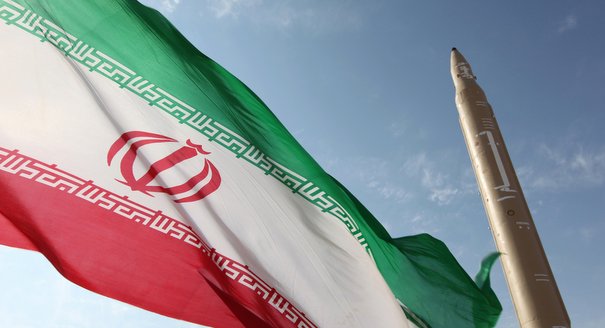
The P5+1 (the United States, Russia, Great Britain, France, China, plus Germany) negotiations with Iran on curtailing the country’s nuclear program and ensuring its transparency have entered their final stage. The November 2013 interim agreement, titled the Joint Action Plan, is scheduled to be upgraded to a comprehensive document this July.

Meanwhile, a number of complex questions remain unresolved. One such question is that of mutually acceptable uranium enrichment potential (Iran insists on its right to have 50,000 centrifuges—supposedly for providing fuel to the Bushehr Nuclear Power Plant). There are also issues of permitted limits for low-enriched uranium stockpile, as well as the questions of Iran’s past nuclear activities, its missile program, and other matters. Some influential political forces and institutions inside Iran are still trying to move closer to the “nuclear threshold” by exploiting any differences between the P5+1 members.

These events unfold in the midst of the crisis in Ukraine, which triggered Western sanctions against Russia and brought the relations between the two sides to a Cold War-like state.

The main question that emerges in this context is whether the cooperation between Russia and the West during the Iranian negotiations would continue at the previous levels. What position will Moscow adopt considering that it was subjected to sanctions and unprecedented political pressure, which include closing off many avenues for cooperation by the United States and NATO?

Clearly, reaching a comprehensive agreement would, first and foremost, be seen as a policy success of the United States and its allies and will improve their relations with Tehran. Lifting the sanctions would put Iranian oil and gas on world markets, posing a serious challenge to the sales of Russia’s main export product and the principal source of the country’s budget revenues. Finally, Russia will lose an important trump card in its game of exploiting the differences between the West and Iran on the nuclear issue.

On the other hand, the failure of the negotiations is likely to spark a new war in the Persian Gulf, which would have devastating political, economic and humanitarian effects for the region and the world at large —including Russia. Even now, Russia’s economic interests seriously suffer from the UN, EU and U.S. sanctions against Tehran. In 2013, the Iranian share in Russia’s foreign trade has reached a historic low of 1 percent (approximately 1.6 billion dollars).

Russian-Iranian cooperation on military technology plays a particularly important role for Moscow. Russia’s share in Iranian military imports has reached 60 percent after the 1979 Islamic Revolution. In the 1990’s, Iran became the main recipient of Russian arms exports, alongside China and India. The sanctions against Iran have led to a significant decrease in Russian arms exports to that country.

Reaching a comprehensive agreement and lifting all the sanctions against Iran would create prospects for the rapid development of economic and military-technological cooperation between the two countries. The Russian big business and governmental organizations are making grandiose plans for investments in the Iranian gas fields. Other planned large-scale projects are related to the development of the Iranian atomic energy industry (there are plans for a total of seven more reactors), construction of hydroelectric and thermal power stations, space cooperation, modernization of Iranian railway infrastructure, and increases in arms and technology exports.

For these reasons Moscow will most probably refrain from complicating negotiations on the comprehensive agreement on Iran’s nuclear program, the crisis in relations between Russia and the West notwithstanding. While it is not going to support more stringent demands on Iran, it will attempt to mediate between Iran and the West in resolving the remaining issues at the negotiating table.

For Russia, besides future economic dividends, developing relations with Iran is directed at an important political objective. Moscow sees Iran, after the nuclear deal is reached, and Syria, after the peace is restored there, as the two main pillars of Russian influence in the Middle East. This is considered to be one of the essential conditions for Russia’s resurgence as a global power center.

About the Author

Alexey Arbatov

Alexey Arbatov is the head of the Center for International Security at the Primakov National Research Institute of World Economy and International Relations.

Alexey Arbatov

Alexey Arbatov is the head of the Center for International Security at the Primakov National Research Institute of World Economy and International Relations.

Alexey Arbatov
EconomyTradeClimate ChangeSecurityMilitaryForeign PolicyNuclear PolicyNuclear EnergyGlobal GovernanceNorth AmericaUnited StatesMiddle EastIranRussiaEastern EuropeUkraineWestern Europe

Carnegie does not take institutional positions on public policy issues; the views represented herein are those of the author(s) and do not necessarily reflect the views of Carnegie, its staff, or its trustees.

More Work from Carnegie Endowment for International Peace

  • Commentary
    China Financial Markets
    The Plaza Accord and Its Relevance for China

    The Plaza Accord was not an externally imposed punishment of Japan but part of a broader restructuring that Japanese economists and policymakers themselves recognized was necessary. Its effects were undermined, however, when Tokyo responded to the resulting slowdown with policies that exacerbated investment, credit expansion, and the very imbalances the adjustment was intended to resolve.

      Michael Pettis

  • Commentary
    Carnegie Politika
    Belarus Wants More From the West Than a ‘Massive Deal’ on Potash

    Trump has promised Belarus a massive potash deal. But Minsk is seeking something greater: restored Western transit and greater room for maneuver from Russia.

      Balázs Jarábik

  • Ukraine Poland Zelensky Tusk Enlargement EU
    Commentary
    Strategic Europe
    The Uncomfortable Truth About EU Enlargement

    Before the next wave of EU enlargement takes place, the union needs to grapple with thorny questions of how power is distributed among its members.

      • Ditte Brasso Sørensen

      Emil Sondaj Hansen, Ditte Brasso Sørensen

  • Commentary
    Emissary
    What to Watch When Trump and Xi Meet in Washington

    The real test may come after the leaders leave the room.

      • Sheena Chestnut Greitens
      • Oriana Skylar Mastro's headshot
      • +1

      Sheena Chestnut Greitens, Oriana Skylar Mastro, Yukon Huang, …

  • large boat sitting off a coastline
    Commentary
    Emissary
    The Impacts of the Houthis’ Advance Could Extend Well Beyond Saudi Arabia

    The Horn of Africa countries are among those facing a new security calculus.

      • Andrew Leber
      • Dr. Lesley Anne Warner

      Andrew Leber, Lesley Anne Warner

Get more news and analysis from
Carnegie Endowment for International Peace
Carnegie global logo, stacked
1779 Massachusetts Avenue NWWashington, DC, 20036-2103Phone: 202 483 7600
  • Research
  • Emissary
  • About
  • Experts
  • Donate
  • Programs
  • Events
  • Blogs
  • Podcasts
  • Contact
  • Annual Reports
  • Careers
  • Privacy
  • For Media
  • Government Resources
Get more news and analysis from
Carnegie Endowment for International Peace
© 2026 Carnegie Endowment for International Peace. All rights reserved.