

The main source of Russian aggression is a profound mistrust of the West and the firm belief that it intends to inflict a “strategic defeat” on Russia. As long as this fear persists, the war will not end.
Tatiana Stanovaya
{
"authors": [
"Mario Abou Zeid",
"Mamoun Abu-Nowar",
"Kamel Wazne"
],
"type": "legacyinthemedia",
"centerAffiliationAll": "dc",
"centers": [
"Carnegie Endowment for International Peace",
"Malcolm H. Kerr Carnegie Middle East Center"
],
"collections": [],
"englishNewsletterAll": "menaTransitions",
"nonEnglishNewsletterAll": "",
"primaryCenter": "Malcolm H. Kerr Carnegie Middle East Center",
"programAffiliation": "MEP",
"programs": [
"Middle East"
],
"projects": [],
"regions": [
"Levant",
"Syria",
"Middle East"
],
"topics": [
"Political Reform",
"Security"
]
}Source: Getty
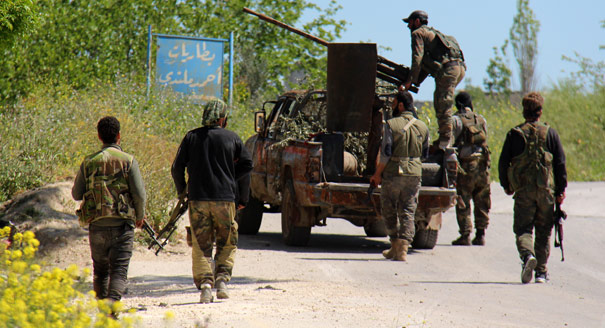
An alliance of opposition forces has seized control of a second strategic city from government troops.
Source: Al Jazeera’s Inside Story
A loose alliance of rebel groups in Syria is claiming a second significant victory against government forces in less than a month. The opposition offensive in northern Idlib province was spearheaded by al-Qaeda’s affiliate in Syria, Nusra Front. Fighting under the banner, “Army of Conquest,” rebel allies seized control of the provincial capital Idlib at the end of March.
A broader union of fighters says it has now overrun nearby Jisr al Shughur. The city was one of the first places to take up arms against president Assad, when security forces cracked down on protests.
The fight for Idlib province comes ahead of UN-backed talks in Geneva on May 4.
So can opposition groups present a united front in the push for peace? Or will the pursuit of different agendas eclipse the fight against a common enemy? Carnegie’s Mario Abou Zeid spoke with Al Jazeera’s Inside Story.
This interview was originally broadcast by Al Jazeera’s Inside Story.
Carnegie does not take institutional positions on public policy issues; the views represented herein are those of the author(s) and do not necessarily reflect the views of Carnegie, its staff, or its trustees.
The main source of Russian aggression is a profound mistrust of the West and the firm belief that it intends to inflict a “strategic defeat” on Russia. As long as this fear persists, the war will not end.
Tatiana Stanovaya
Europe’s interests in Syria extend beyond migration management, yet the EU trails behind other players in the country’s post-Assad reconstruction. To boost its influence in Damascus, the union must upgrade its commitment to ensuring regional stability.
Bianka Speidl, Hanga Horváth-Sántha
Despite its reputation as an island of democracy in Central Asia, Kyrgyzstan appears to be on the brink of becoming a personalist autocracy.
Temur Umarov
It’s dangerous to dismiss Washington’s shambolic diplomacy out of hand.
Eric Ciaramella
Leaning into a multispeed Europe that includes the UK is the way Europeans don’t get relegated to suffering what they must, while the mighty United States and China do what they want.
Rym Momtaz