

Q&A
Matt Ferchen
{
  "authors": [
    "Matt Ferchen"
  ],
  "type": "legacyinthemedia",
  "centerAffiliationAll": "",
  "centers": [
    "Carnegie Endowment for International Peace",
    "Carnegie China"
  ],
  "collections": [
    "China and the Developing World"
  ],
  "englishNewsletterAll": "",
  "nonEnglishNewsletterAll": "",
  "primaryCenter": "Carnegie China",
  "programAffiliation": "",
  "programs": [],
  "projects": [
    "Carnegie Oil Initiative"
  ],
  "regions": [
    "North America",
    "United States",
    "South America",
    "East Asia",
    "China"
  ],
  "topics": [
    "Economy",
    "Climate Change",
    "Foreign Policy"
  ]
}
Source: Getty
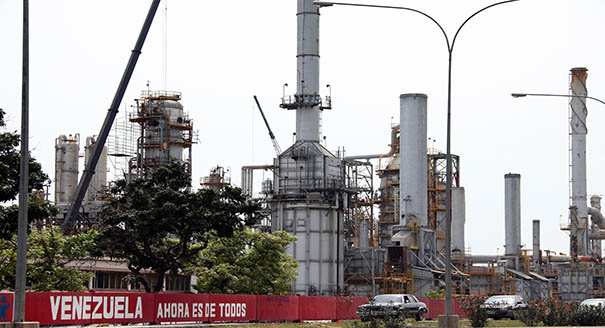
The United States and China can work together to help Venezuela navigate the challenges facing its crude oil exports sector.
Source: Platts
Venezuela was once the largest source of U.S. oil imports, but when that relationship soured, the Latin American powerhouse turned to a new relationship with China. But as Platts senior editors Brian Scheid and Herman Wang explain, that partnership is not quite what was expected.
Matt Ferchen, resident scholar at the Carnegie–Tsinghua Center for Global Policy, joined to lay out the state of affairs between the three countries and the relationships which hinge on crude trade.
Could the United States and China work together to help Venezuela develop its struggling resource base? Is Venezuela looking to reunite with the United States to bolster its struggling crude export sector? And how has crude oil been used as a political tool in this situation?

Former Nonresident Scholar, Carnegie-Tsinghua Center for Global Policy
Ferchen specializes in China’s political-economic relations with emerging economies. At the Carnegie–Tsinghua Center for Global Policy, he ran a program on China’s economic and political relations with the developing world, including Latin America.
Recent Work
Matt Ferchen
Matt Ferchen, Anarkalee Perera
Carnegie does not take institutional positions on public policy issues; the views represented herein are those of the author(s) and do not necessarily reflect the views of Carnegie, its staff, or its trustees.

The Bureau of Industry and Security needs to adjust its focus and practices to maintain its position as the U.S. government’s primary champion of international technological competition.

Geoffrey Irving
They face an uphill climb, but they could draw on a strategy that other diplomats have used in the past.


Shana Tabak, Alejandro Martin Rodriguez

European Commission President Ursula von der Leyen is about to give her annual address on the state of the EU. Here’s what she won’t—but should—say.

Rym Momtaz

Depleted financial reserves and a shrinking tax base mean it is no longer possible to simultaneously deliver high defense spending, price stability, and economic growth.

Alexandra Prokopenko

Understanding the climatic pain points is necessary for policymakers hoping to minimize the war’s negative environmental consequences.


Alejandro Martin Rodriguez, Joy Arkeh, Sarah Yerkes