

Commentary
Evan A. Feigenbaum
{
  "authors": [
    "Evan A. Feigenbaum"
  ],
  "type": "other",
  "centerAffiliationAll": "dc",
  "centers": [
    "Carnegie Endowment for International Peace"
  ],
  "collections": [],
  "englishNewsletterAll": "asia",
  "nonEnglishNewsletterAll": "",
  "primaryCenter": "Carnegie Endowment for International Peace",
  "programAffiliation": "AP",
  "programs": [
    "Asia"
  ],
  "projects": [],
  "regions": [
    "Middle East",
    "South Asia",
    "India",
    "East Asia",
    "China",
    "Central Asia",
    "Southeast Asia"
  ],
  "topics": [
    "Economy",
    "Trade",
    "Foreign Policy"
  ]
}
Source: Getty
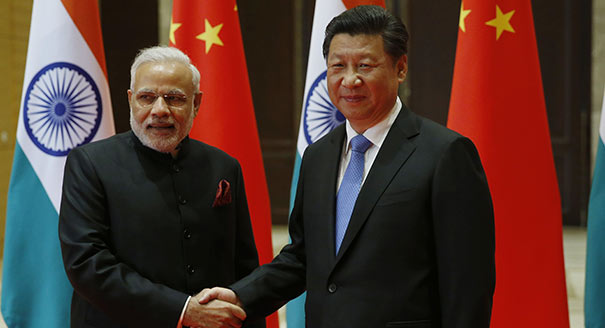
Pan-Asian institutions, such as the Asian Infrastructure Investment Bank, as well as the reconnection of Asia’s sub-regions into a more integrated whole, will challenge the United States. Washington needs to adapt if it is to compete successfully in this new Asia.
Source: Chicago Council on Global Affairs
Spurred by the rise of Asian powerhouses China, Japan, and India, new political and economic institutions and pacts are emerging across the region. Encouraged by rapid economic growth and declining reliance on the West following the 2008 financial crisis, an era of pan-Asianism is set to strengthen integration among Asian countries through enterprises such as the Regional Comprehensive Economic Partnership and the newly formed Asian Infrastructure Investment Bank. As the United States seeks to maintain its influence in the region, how can Washington maximize its interests and compete?
In a speech to the Chicago Council on Global Affairs, Carnegie’s Evan Feigenbaum argued that Asia is changing dramatically but the United States, notwithstanding its “pivot” or “rebalance” to Asia, is “losing the plot.” He explored three key areas of change with which the United States must wrestle—first, the growing collision between economic integration and security fragmentation; second, the certainty that some pan-Asian ideas, pacts, and institutions that do not include the United States will persist and cohere regardless of American views and preferences; third, and perhaps most important, the reconnection of disparate sub-regions of Asia—East, Central, and South—into a more integrated strategic and economic space. Unless Washington adjusts, this more integrated Asia, Feigenbaum added, could make the United States less relevant in each of Asia's constituent parts. Feigenbaum explored how the United States should (and, in some cases, should not) adjust its intellectual, strategic, and bureaucratic approaches to Asia in light of these dramatic changes.
This conversation was originally published by the Chicago Council on Global Affairs.

Vice President for Studies
Evan A. Feigenbaum is vice president for studies at the Carnegie Endowment for International Peace, where he oversees work at its offices in Washington, New Delhi, and Singapore on a dynamic region encompassing both East Asia and South Asia. He served twice as Deputy Assistant Secretary of State and advised two Secretaries of State and a former Treasury Secretary on Asia.
Recent Work
Evan A. Feigenbaum
Evan A. Feigenbaum
Carnegie does not take institutional positions on public policy issues; the views represented herein are those of the author(s) and do not necessarily reflect the views of Carnegie, its staff, or its trustees.

The books, podcasts, and films that explain the world it made.

Andrew Leber

U.S. trading partners in Asia are closely watching the dispute for signs of how it may affect their own interests.

Barbara Weisel

The aftermath of the Ceuta crisis shows Europe has drawn the wrong lessons. Rather than doubling down on failed migration policies, the EU needs to address the underlying roots of such episodes.

Richard Youngs
By abandoning past U.S. pro-democracy policies and adopting several lines of pro-autocratic action, the Trump administration has fundamentally repositioned the United States vis-à-vis democracy in the world.

Thomas Carothers
Chinese strategists are once again debating whether American power is declining and whether U.S. hegemony is experiencing irreversible decay.
Wu Xinbo