• Research
  • Emissary
  • About
  • Experts
Carnegie Global logoCarnegie lettermark logo
Democracy
  • Donate
{
  "authors": [
    "Michele Dunne",
    "Andrew Miller"
  ],
  "type": "commentary",
  "centerAffiliationAll": "dc",
  "centers": [
    "Carnegie Endowment for International Peace"
  ],
  "collections": [],
  "englishNewsletterAll": "menaTransitions",
  "nonEnglishNewsletterAll": "",
  "primaryCenter": "Carnegie Endowment for International Peace",
  "programAffiliation": "MEP",
  "programs": [
    "Middle East"
  ],
  "projects": [],
  "regions": [
    "North Africa",
    "Egypt"
  ],
  "topics": [
    "Political Reform",
    "Foreign Policy"
  ]
}
Source: Getty

Commentary

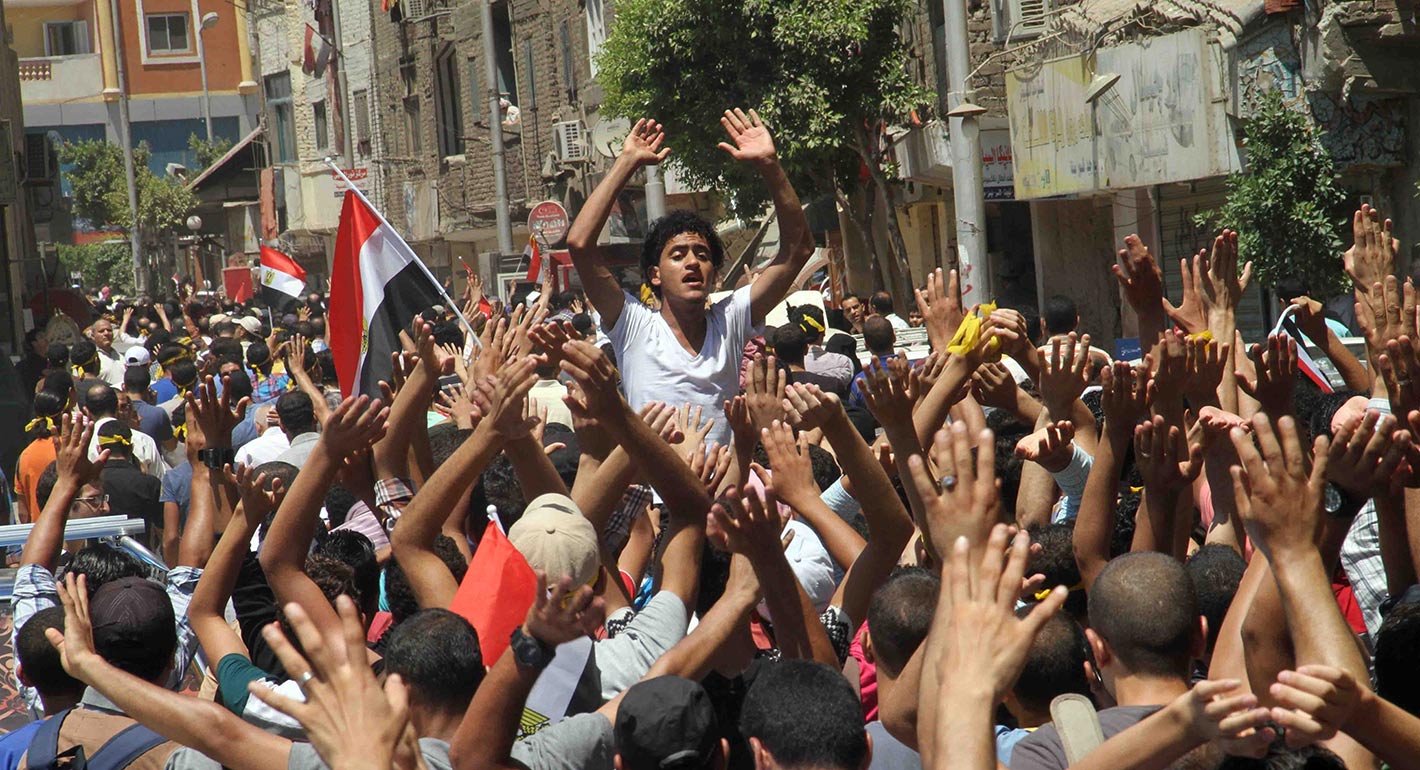
Nine Reasons Why Declaring the Muslim Brotherhood a Terrorist Organization Would Be a Mistake

U.S. President Donald Trump wishes to designate the Muslim Brotherhood, a collection of loosely affiliated Islamist groups, as a terrorist organization. Here is why that would be deeply unwise.

Link Copied
By Michele Dunne and Andrew Miller
Published on May 3, 2019
Program mobile hero image

Program

Middle East

The Middle East Program in Washington combines in-depth regional knowledge with incisive comparative analysis to provide deeply informed recommendations. With expertise in the Gulf, North Africa, Iran, and Israel/Palestine, we examine crosscutting themes of political, economic, and social change in both English and Arabic.

Learn More

There are legal, diplomatic, pragmatic, and civil rights reasons why such a designation would undermine efforts to keep Americans safe from terrorism.

  1. The Muslim Brotherhood (MB) does not fit the legal definition of a foreign terrorist organization. There is no credible evidence that, as an organization, it is using violence to pursue political aims, and it has not deliberately targeted Americans.
  2. The few offshoots of the Muslim Brotherhood that have become violent—Hamas, Hassm, Liwa al-Thawra—have already been designated as terrorist organizations. Designating the Muslim Brotherhood more broadly would not give the United States added tools to go after these groups.
  3. Sweepingly targeting the Muslim Brotherhood would create a cascade of diplomatic problems because political parties with Brotherhood roots serve in parliaments and even governments in many countries. But even a narrower designation of a single Muslim Brotherhood chapter, such as the Egyptian Muslim Brotherhood, would still do just as much damage to U.S. interests for all the reasons that follow.
  4. U.S. law does not permit designation based only on ideology rather than violent actions. To do so would politicize the process.
  5. By joining countries (for example, Egypt, Saudi Arabia, and the U.A.E.) that designate groups as terrorist for political reasons, the United States would tarnish the international legitimacy of its other designations and erode the credibility of its counterterrorism efforts.
  6. Anti-U.S. sentiment among Muslims worldwide would rise. Most Muslims around the world would see the designation as the latest of a series of anti-Muslim steps by the Trump administration, such as the travel ban and the changed U.S. policy on Jerusalem. The U.S. president already stands accused of stoking Islamophobia internationally.
  7. The self-proclaimed Islamic State and al-Qaeda would celebrate such a designation as vindication of their argument that non-violent political activity is futile. They would use the designation in their efforts to recruit desperate and isolated Islamist youth, who once believed in peaceful politics.
  8. Designation could bring devastating consequences for Muslims in the United States, who currently make up less than 2 percent of the population. Anyone suspected of ties to the organization could risk having their assets frozen, or could be deported if they are not citizens. Islamophobic groups—with contacts inside the Trump administration—would press the FBI to investigate every U.S. mosque or Muslim charity for possible ties to Muslim Brotherhood-supported hospitals, clinics, and religious organizations throughout the world.
  9. Designating the Muslim Brotherhood would inevitably divert U.S. counterterrorism resources away from the real terrorists that are actually seeking to kill Americans, such as branches of the Islamic State and al-Qaeda.

In the end, designating the Muslim Brotherhood as a foreign terrorist organization would be a counterproductive political stunt that would make all Americans less safe.

Authors

Michele Dunne
Former Nonresident Scholar, Middle East Program
Michele Dunne
Andrew Miller
Former Nonresident Scholar, Middle East Program
Political ReformForeign PolicyNorth AfricaEgypt

Carnegie does not take institutional positions on public policy issues; the views represented herein are those of the author(s) and do not necessarily reflect the views of Carnegie, its staff, or its trustees.

More Work from Carnegie Endowment for International Peace

  • Commentary
    Strategic Europe
    Europolis, Where Europe Ends

    A prophetic Romanian novel about a town at the mouth of the Danube carries a warning: Europe decays when it stops looking outward. In a world of increasing insularity, the EU should heed its warning.

      Thomas de Waal

  • Commentary
    Carnegie Politika
    Japan’s “Militarist Turn” and What It Means for Russia

    For a real example of political forces engaged in the militarization of society, the Russian leadership might consider looking closer to home.

      James D.J. Brown

  • Wide shot of Trump and Modi, with Trump pointing
    Commentary
    Emissary
    The Trump-Modi Trade Deal Won’t Magically Restore U.S.-India Trust

    Washington and New Delhi should be proud of their putative deal. But international politics isn’t the domain of unicorns and leprechauns, and collateral damage can’t simply be wished away.

      Evan A. Feigenbaum

  • people sitting on a stage
    Commentary
    From Loss and Damage to Climate Mobility Action

    Senior climate, finance, and mobility experts discuss how the Fund for Responding to Loss and Damage could unlock financing for climate mobility.

      • Alejandro Rodriguez

      Alejandro Martin Rodriguez

  • Commentary
    Strategic Europe
    Europe Falls Behind in the South Caucasus Connectivity Race

    The EU lacks leadership and strategic planning in the South Caucasus, while the United States is leading the charge. To secure its geopolitical interests, Brussels must invest in new connectivity for the region.

      Zaur Shiriyev

Get more news and analysis from
Carnegie Endowment for International Peace
Carnegie global logo, stacked
1779 Massachusetts Avenue NWWashington, DC, 20036-2103Phone: 202 483 7600Fax: 202 483 1840
  • Research
  • Emissary
  • About
  • Experts
  • Donate
  • Programs
  • Events
  • Blogs
  • Podcasts
  • Contact
  • Annual Reports
  • Careers
  • Privacy
  • For Media
  • Government Resources
Get more news and analysis from
Carnegie Endowment for International Peace
© 2026 Carnegie Endowment for International Peace. All rights reserved.