

Article
Thomas de Waal
{
  "authors": [
    "Thomas de Waal"
  ],
  "type": "other",
  "centerAffiliationAll": "dc",
  "centers": [
    "Carnegie Endowment for International Peace",
    "Carnegie Europe"
  ],
  "collections": [
    "Europe’s Eastern Neighborhood"
  ],
  "englishNewsletterAll": "ctw",
  "nonEnglishNewsletterAll": "",
  "primaryCenter": "Carnegie Europe",
  "programAffiliation": "EP",
  "programs": [
    "Europe"
  ],
  "projects": [],
  "regions": [
    "Russia",
    "Eastern Europe",
    "Caucasus",
    "Georgia",
    "Iran"
  ],
  "topics": [
    "Security"
  ]
}
Source: Getty
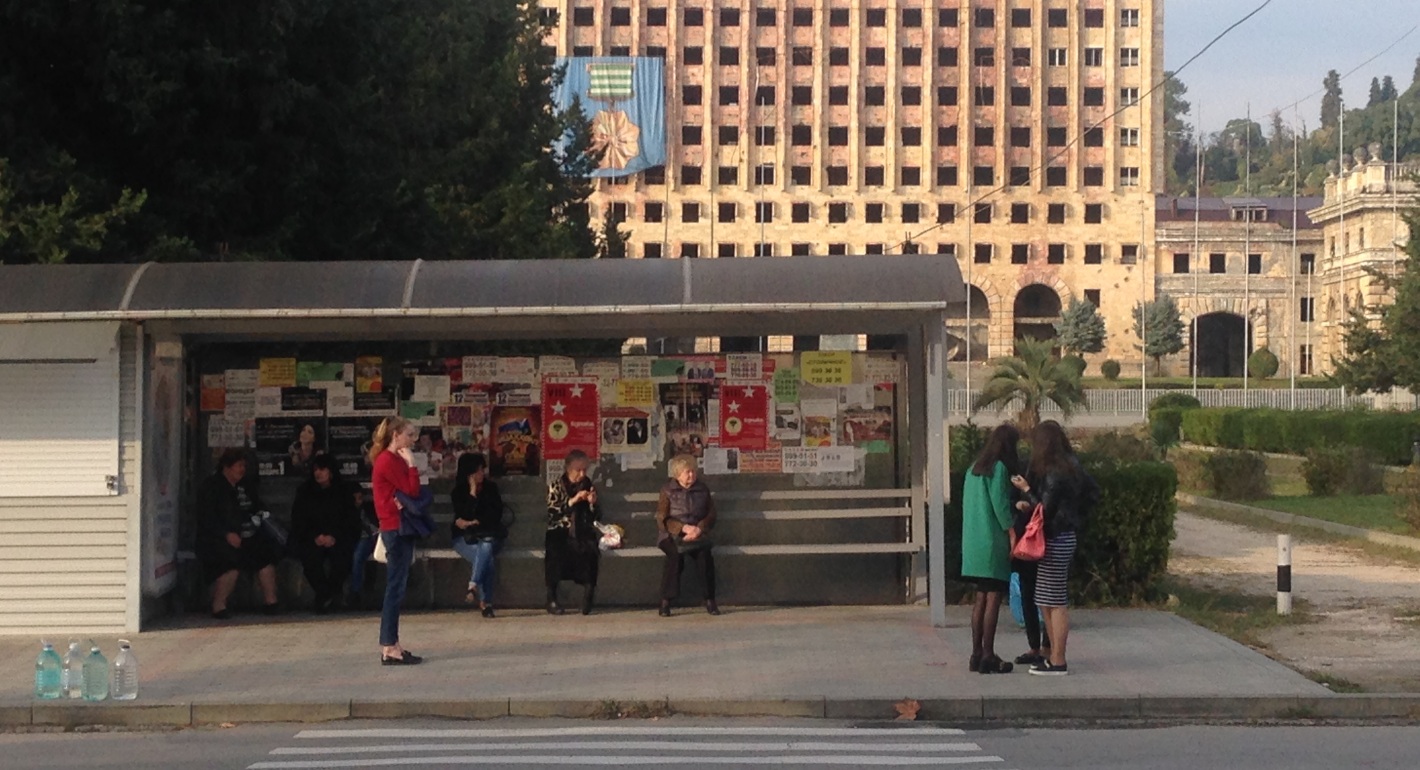
Abkhazia has grown more internationally isolated and dependent on Russia over the last decade, and the big political issues about its future remain unresolved.
Source: CENTRE FOR EUROPEAN POLICY STUDIES
Abkhazia today is in the peculiar state of having both entrenched its de facto separation from Georgia but also finding itself in almost complete international isolation. Recognition as an independent state in 2008 by Russia, (followed by Nauru, Nicaragua, Syria and Venezuela, four other countries with no close connections to the region), coincided with the closure of UNOMIG, the United Nations mission in the region, a reduced presence of international NGOs and humanitarian organizations there and a policy of unequivocal support for Georgia by its Western friends. Since then Abkhazia has become more secure and better off but also even more dependent on Russia, financially, militarily and politically. Yet the patron-client relationship is often strained. The two sides argue over several issues and Russian direct assistance has fallen in the last few years.This publication was prepared within the framework of the CEPS-led 3DCFTAs project, enabled by financial support from Sweden. To download the publication, please consult the following link.

Senior Fellow, Carnegie Europe
Thomas de Waal is a senior fellow at Carnegie Europe, specializing in Eastern Europe and the Caucasus.
Recent Work
Thomas de Waal
Thomas de Waal
Despite the agreement’s uncertainty, it’s still a significant development in regional and nuclear policy.


Andrew Leber, Jane Darby Menton

Trump is distracted and Ukraine wants Europe to step up. The continent’s leaders must find their voice and assert it in talks with Russia.

Alissa de Carbonnel

Mounting economic strain and battlefield losses will not necessarily make the Kremlin less dangerous. They could instead push Moscow toward a more aggressive hybrid campaign designed to test NATO’s Eastern flank, exploit allied hesitation, and fracture European resolve.

Maksym Beznosiuk
Official discussions about mini oil refineries are unlikely to come to anything—but the mere fact they’re happening reveals the regime is failing to deliver a functioning economy.

Sergey Vakulenko

Over the past ten years, NATO has held almost as many summits as it did during the entirety of the Cold War. Are they still useful, or is it time to stop holding annual meetings?

Rym Momtaz, ed.