

Commentary
Rubio’s recent visit brought welcome attention, but more capital requires governance changes that may be a hard sell for regional governments.
Jennifer B. Murtazashvili
{
  "authors": [
    "Aaron David Miller",
    "Daniel Kurtzer"
  ],
  "type": "legacyinthemedia",
  "centerAffiliationAll": "",
  "centers": [
    "Carnegie Endowment for International Peace",
    "Malcolm H. Kerr Carnegie Middle East Center"
  ],
  "collections": [],
  "englishNewsletterAll": "",
  "nonEnglishNewsletterAll": "",
  "primaryCenter": "Carnegie Endowment for International Peace",
  "programAffiliation": "",
  "programs": [],
  "projects": [],
  "regions": [
    "North America",
    "United States",
    "Middle East",
    "Israel",
    "Palestine",
    "Levant"
  ],
  "topics": [
    "Political Reform",
    "Democracy",
    "Foreign Policy"
  ]
}
Source: Getty
The United States and the current Israeli government are now outliers and isolated.
Source: The Hour
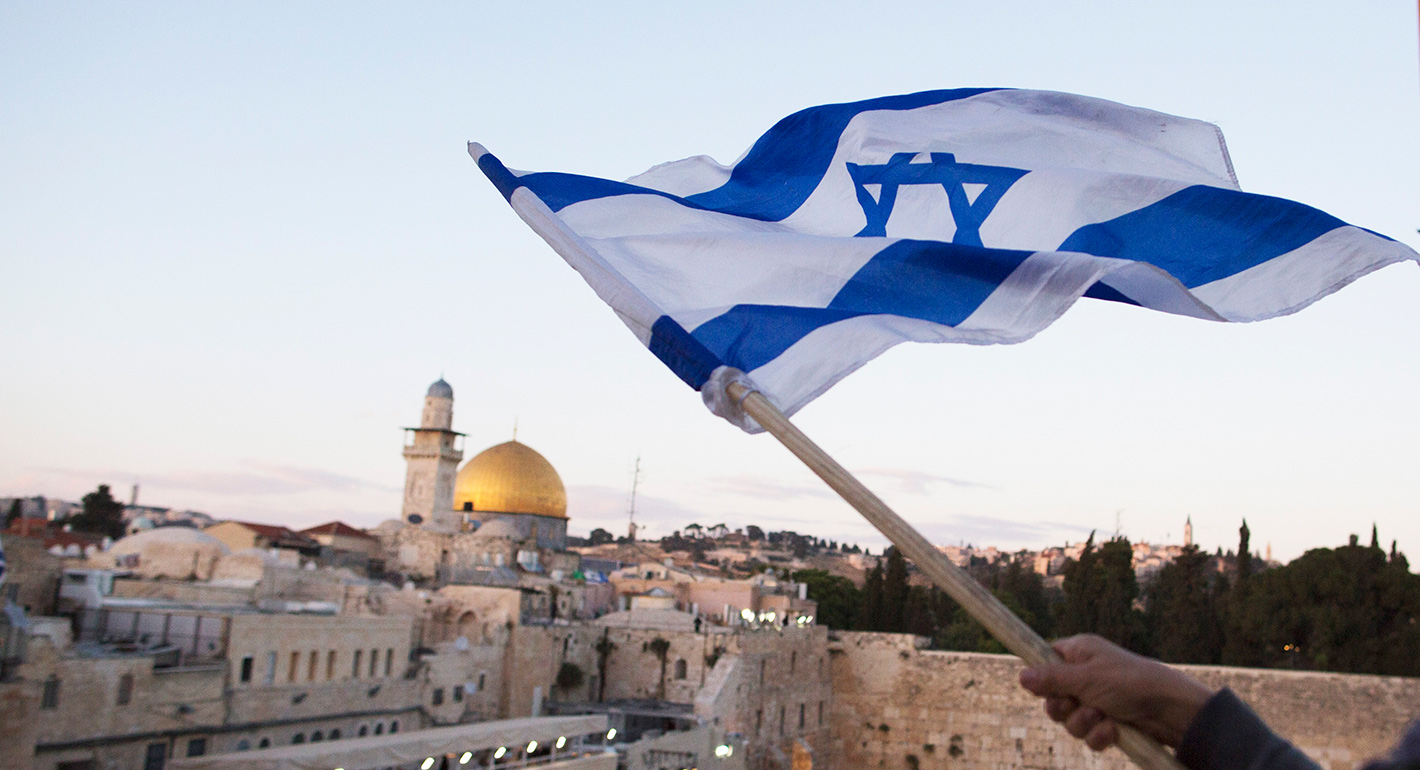
By most accounts, the Trump administration's decision to treat Israel's settlement enterprise as a legal endeavor is a retreat by the United States from an almost universally accepted norm of international law. The United States and the current Israeli government are now outliers and isolated. The decision - untethered as it is from any serious strategy to advance Israeli-Palestinian peace - has further compromised, if not killed, Washington's credibility and its role as an honest broker in any conceivable peace deal for the remainder of this presidency.
But that may not be the whole story, or certainly not the most important aspect of the story. Secretary of State Mike Pompeo's announcement this past week confirms, through legal acrobatics, the de facto approach of U.S. administrations over the course of four decades to acquiesce to, even enable, the Israeli settlement enterprise; to be silent on the issue of legality or illegality; and to fail to impose a penalty that could limit or discourage Israel's settlement policies. We watched this happen, up close, during our more than 50 combined years of service in U.S. diplomacy under both Republican and Democratic administrations.
The United States has known for decades how damaging settlement activity is in the search for peace - Palestinians cannot trade land for it if they don't possess the land - but with one major exception during the George H.W. Bush administration (when Washington refused for a year to extend $10 billion in housing loan guarantees for absorption of Soviet Jews because of Israeli settlement expansion), we have essentially turned a blind eye. At the first Camp David summit, in 1978, President Jimmy Carter tried to extract a commitment from Israeli Prime Minister Menachem Begin to freeze settlement activity during the negotiations over peace with Egypt, but the terms of that freeze were interpreted differently by both men and never agreed upon. Carter did not insist on a freeze as part of the subsequent negotiations, understanding that the prospect of an Israeli-Egyptian treaty outweighed settlement considerations.
President Ronald Reagan's 1982 "fresh start" peace initiative demanded a settlement freeze even though Reagan had, in 1981, described the settlements as "not illegal," distancing himself from the 1978 State Department determination that settlements contravened international law. Still, the Reagan administration did nothing to push the freeze on Israel's government.
During that decade, Israeli authorities undertook a painstaking effort to conform their settlement expansions with a 1979 Israeli Supreme Court decision (in the Elon Moreh case) that allowed the seizure of private Palestinian land in the occupied territories only for "essential and urgent military needs" - a formulation that kept Israeli policy in line with international law. But Israel's process during the 1980s and later for deciding what constituted "state land" - which then opened that land for settlement - was faulty, based on pro-settlement political priorities. An official Israeli database, disclosed by the Haaretz newspaper in 2009, revealed that extensive construction in more than 30 settlements had occurred on private Palestinian land that Israel had designated as "state land." This information contradicted the Foreign Ministry's own website, which, until then, claimed: "Israel's actions relating to the use and allocation of land under its administration are all taken with strict regard to the rules and norms of international law - Israel does not requisition private land for the establishment of settlements."
Throughout the 1990s, as settlement activity continued and expanded, even after the Madrid Peace Conference and the Oslo accords, Washington confined itself to rhetorical objections. It dropped the rather tepid criticism that settlements were an "obstacle to peace," aiming to placate Israel after the tensions between Bush and Prime Minister Yitzhak Shamir over settlements and loan guarantees. The United States similarly failed to act on the findings of the Mitchell report in 2001, which covered the causes of the second Palestinian uprising and recommended that Israel freeze all settlement activity, including the "natural growth" of existing settlements.
In a 2002 Rose Garden speech, President George W. Bush echoed the Mitchell recommendations, saying, "Israeli settlement activity in the occupied territories must stop." But his administration did nothing to curb that activity. The Obama administration, too, called for a freeze but settled for a 10-month moratorium on new housing starts, after which settlement activity resumed. It wasn't until December 2016, on its way out, that the Obama administration abstained on a successful U.N. Security Council resolution that described settlements as a violation of international law, instead of vetoing it.
Perhaps the major reason the United States failed to impose costs on Israel for its settlement activity - at least once serious Arab-Israeli negotiations began in the 1990s - was the compelling view that the only solution to the settlements challenge lay at the bargaining table. That was particularly the case during the tenure of Prime Minister Yitzhak Rabin, who unilaterally committed to stop building new settlements, a vow undercut by the blind eye turned to the creation of more than 100 "outposts" by renegade Israelis in the hills surrounding existing settlements. Domestic U.S. politics played a role, too. Few American presidents were interested in picking a fight with Israel's supporters in both parties. But the underlying concern shared by Democratic and Republican presidents was that fighting with Israel on settlements, untethered from a breakthrough in the peace process, would be self-defeating. The onset of Palestinian terrorist campaigns in the mid-'90s made toughening up U.S. policy against settlements, let alone sanctioning Israel, unimaginable.
Since successive presidents simply ignored settlements and questions about their legality, why didn't Trump? Why flaunt international law and further erode the ability of the United States to broker Israeli-Palestinian peace? Two reasons stand out.
First, the announcement paves the way for U.S. silence if, or when, the Israeli government starts to annex parts of the West Bank or to claim that its jurisdiction and laws extend there. No sooner had Pompeo concluded his remarks than Israeli Prime Minister Benjamin Netanyahuran to the West Bank to promise just that: immediate annexation moves. Now Trump can justify U.S. acquiescence by saying: We told you already that settlements - and by extension annexation - are not illegal.
Second, Pompeo's announcement appeals to Trump's base, usually the main factor in any policy decision by this administration. A large segment of the evangelical Christian community likes what Pompeo said, as does a large share of the Orthodox Jewish community.
Pompeo's announcement means little for the peace process - the Trump administration's self-described "ultimate deal" - because it wasn't going anywhere anyway. But our inability to act as a credible, honest, effective broker to resolve conflicts is gone, certainly for the rest of Trump's presidency, if not beyond.

Senior Fellow, American Statecraft Program
Aaron David Miller is a senior fellow at the Carnegie Endowment for International Peace, focusing on U.S. foreign policy.
Daniel Kurtzer
Daniel Kurtzer is a former U.S. ambassador to Egypt and Israel and current S. Daniel Abraham professor of Middle East policy studies at Princeton University’s School of Public and International Affairs. He also served as a speechwriter and member of secretary of state George P. Shultz’s Policy Planning Staff and served as deputy assistant secretary for near Eastern affairs and principal deputy assistant secretary for intelligence and research.
Carnegie does not take institutional positions on public policy issues; the views represented herein are those of the author(s) and do not necessarily reflect the views of Carnegie, its staff, or its trustees.
Rubio’s recent visit brought welcome attention, but more capital requires governance changes that may be a hard sell for regional governments.

Jennifer B. Murtazashvili

America’s foreign-policy objectives have grown more demanding while Americans have demanded greater focus on their own affairs.

Stephen Wertheim

Japan’s long-term security policy is driven by concerns about China, and there is little appetite for (or interest in) pursuing a confrontation with Moscow.

James D.J. Brown

Russia is testing the waters of NATO’s mutual defense clause. What do strikes in Romanian territorial waters mean for the alliance’s posture toward Moscow?

Dimitar Bechev
Why Pakistan, Saudi Arabia, and Turkey are joining forces on regional security.


Alper Coşkun, Amr Hamzawy