

Q&A
Dara Massicot, Aaron David Miller, Andrew S. Weiss
{
  "authors": [
    "Aaron David Miller"
  ],
  "type": "legacyinthemedia",
  "centerAffiliationAll": "",
  "centers": [
    "Carnegie Endowment for International Peace",
    "Malcolm H. Kerr Carnegie Middle East Center"
  ],
  "collections": [],
  "englishNewsletterAll": "",
  "nonEnglishNewsletterAll": "",
  "primaryCenter": "Carnegie Endowment for International Peace",
  "programAffiliation": "",
  "programs": [],
  "projects": [],
  "regions": [
    "North America",
    "United States",
    "Middle East",
    "Israel",
    "Palestine"
  ],
  "topics": [
    "Political Reform",
    "Democracy",
    "Foreign Policy"
  ]
}
Source: Getty
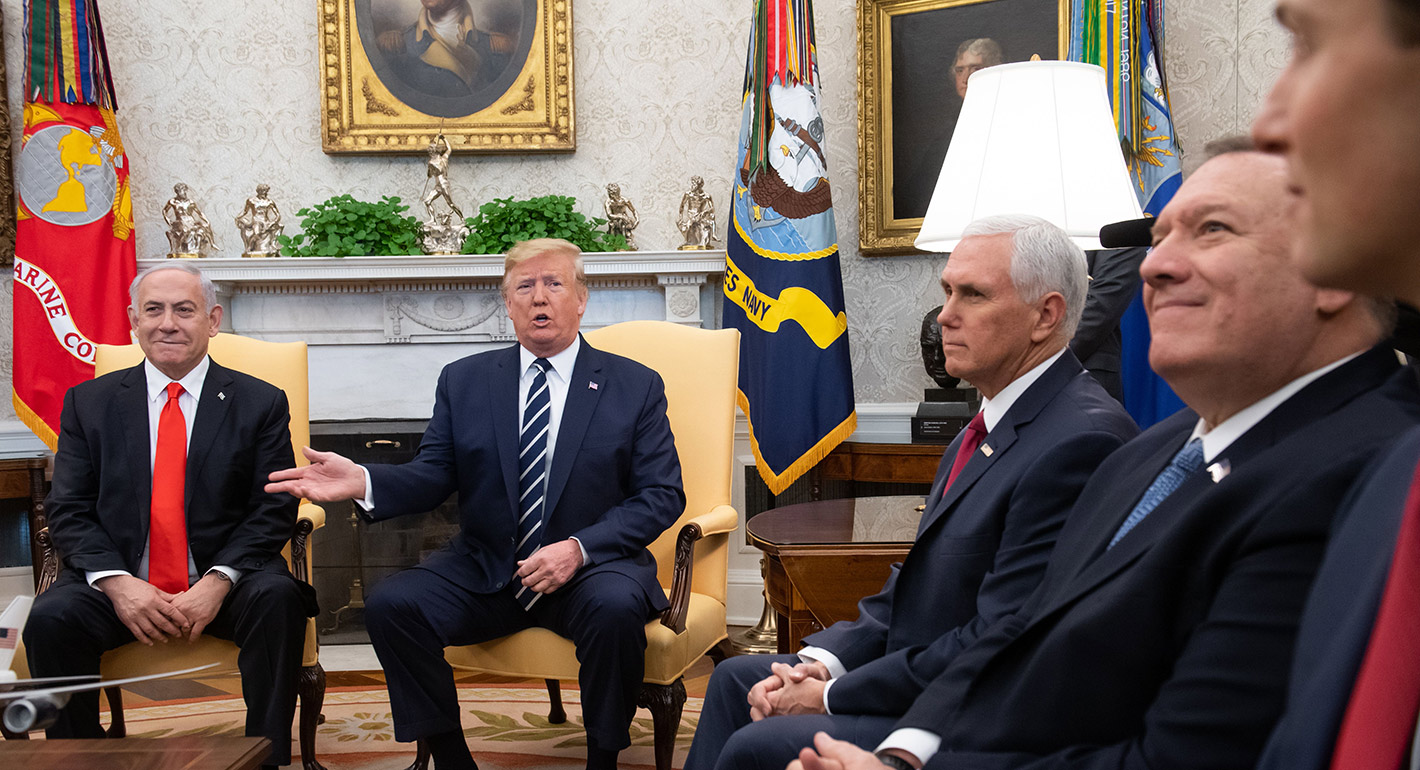
Animated by an extreme pro-Israeli bias and frustration with the Palestinians, the administration has now changed the game and fundamentally altered the U.S. approach of the past three administrations by aligning its view with Israel’s on the country’s final borders.
Source: CNN
Having helped to draft my fair share of Arab-Israeli peace plans many of which were unsuccessful — even half baked — the long-awaited Trump proposal leaves a universe of things to be desired. In one sense it represents a terminal case of diplomatic malpractice. But in another, it really isn't about diplomacy at all or peace between Israelis and Palestinians.
Indeed, the deal of the century reflects the triumph of presidential arrogance, domestic politics and pro-Israeli bias over any commitment to serious peacemaking, let alone an already fraught two-state solution which the administration seems determined to bury.
Most American peace initiatives over the years — from Kissinger's disengagement agreements between Israel, Egypt, and Syria (1973-1975) to Jimmy Carter's Egyptian-Israel peace process (1978-1979) to the Madrid peace conference (1991) to the US brokered interim accords under Oslo, (1997-1998) to various US initiatives on final peace deals with Israel, Syria and the Palestinians — were designed to launch talks, bridge gaps, create trust between the parties and ultimately reach comprehensive accords.
Indeed, these previous efforts were marked by hundreds of hours of US dialogue with each side, including direct talks between the two sides and in other cases three-way US-mediated discussions. The 80-plus page document released Tuesday by the White House appears to be just the opposite: a one-hand clapping exercise preternaturally tilted toward Israeli needs and requirements without the benefit of the due diligence required to produce a sustainable basis for negotiations on which both Israelis and Palestinians could engage.
There is no serious timeline or deadline and no operational component; Palestinians are given the arbitrary time of four years to decide on the plan. Lurking not so far beneath the surface is the administration's expectation that the Palestinians will not engage. In the words of its key architect, Jared Kushner, Palestinians "have a perfect track record of missing opportunities."
The US has a special relationship with Israel that it doesn't have with any of the Arab parties to the conflict. In many of its previous initiatives, Washington has clearly tilted toward Israel on security issues but also at times on many of the political issues as well.
But the tilt — better described as a full-scale endorsement of the Netanyahu government's position on the key issues — goes beyond anything any administration has done in the past. The plan adopts Netanyahu's view that a much-shrunken Palestinian entity, including (roughly) 70% of the West Bank, will be a state in name only. Israel will control its borders, air space, electro-magnetic spectrum, foreign policy and security.
On Jerusalem, the plan allows for a kind of Palestinian sub-capital in a few of the outer neighborhoods of East Jerusalem while maintaining that the city will remain the undivided capital of Israel. And the plan all but relegates the refugee issue to the back burner — ruling out the right of return or compensation.
At the same time, the administration has put the Palestinians on a kind of probation. If they disarm Hamas, Palestine and Islamic Jihad, establish good governance, recognize Israel as a Jewish state, among other things, then and only then is a faux state possible.
Trump's "deal of the century" is really the steal of the century — validating almost all Israeli claims and leaving Palestinians with the scraps Israel can afford to do without. The only peace here is Netanyahu's peace of mind that he's managed without a negotiation to get America to back the right's conception of what Israel's borders should be.
People were surprised when Donald Trump during his 2016 campaign talked about wanting to achieve the ultimate deal — Israeli-Palestinian peace. Trump's bravado, arrogance and bad analysis somehow brought him to the conclusion that as the world's greatest negotiator, he or his designated envoy, his son-in-law Jared Kushner, should take on and resolve one of the world's most intractable problems.
Instead, Trump failed to see that he had inherited an Israeli-Palestinian peace process that was comatose and a two-state solution that was on life support. The gaps between Netanyahu and Abbas on the core issues like territory and Jerusalem were enormous. There was no confidence nor trust between them and Israeli and Palestinian politics on the peace issue were both divided and dysfunctional. And instead of recognizing reality, the administration plunged ahead with only one north star to guide it: making sure that whatever it did, Israel and Trump's domestic pro-Israeli constituency wouldn't be alienated.
There's little doubt that domestic politics drove both the timing and the content of the peace plan. With little more than six weeks to go before Israeli elections, the desire to boost the political fortunes of the beleaguered Netanyahu played a key role. Waiting for the election results and for a new government might have taken until May or produced no government. And that would have gone deeper into 2020 and interfered with the President's electoral clock.
But there was something else, too. The Trump administration as with so many of its initiatives — withdrawing from the Iran nuclear agreement and the Paris climate accord — wanted to disrupt traditional approaches and put its own mark on the peace process too.
Animated by an extreme pro-Israeli bias and frustration with the Palestinians, the administration has now changed the game and fundamentally altered the US approach of the past three administrations by aligning its view with Israel's on the Jewish state's final borders.
And Netanyahu may not waste any time in taking advantage by extending Israeli law to West Bank settlements and the Jordan Valley. Once he does, Donald Trump may yet add another first to his collection: the first US President to watch the two-state solution expire on his watch.

Senior Fellow, American Statecraft Program
Aaron David Miller is a senior fellow at the Carnegie Endowment for International Peace, focusing on U.S. foreign policy.
Recent Work


Dara Massicot, Aaron David Miller, Andrew S. Weiss

Sophia Besch, Eric Ciaramella, Steve Feldstein, …
Carnegie does not take institutional positions on public policy issues; the views represented herein are those of the author(s) and do not necessarily reflect the views of Carnegie, its staff, or its trustees.

China’s political future will be shaped between now and next October. As the Communist Party enters its intense “campaign season” to prepare for a major political transition in 2027, reading Beijing's actions and responses may become more difficult as domestic politics weigh on its behavior more than usual.

Damien Ma

The EU can impose sanctions but struggles to enforce them without the United States. With Washington increasingly disinterested in backing European interests, the bloc must now fend for itself.


Nicu Popescu, Tiago Antunes
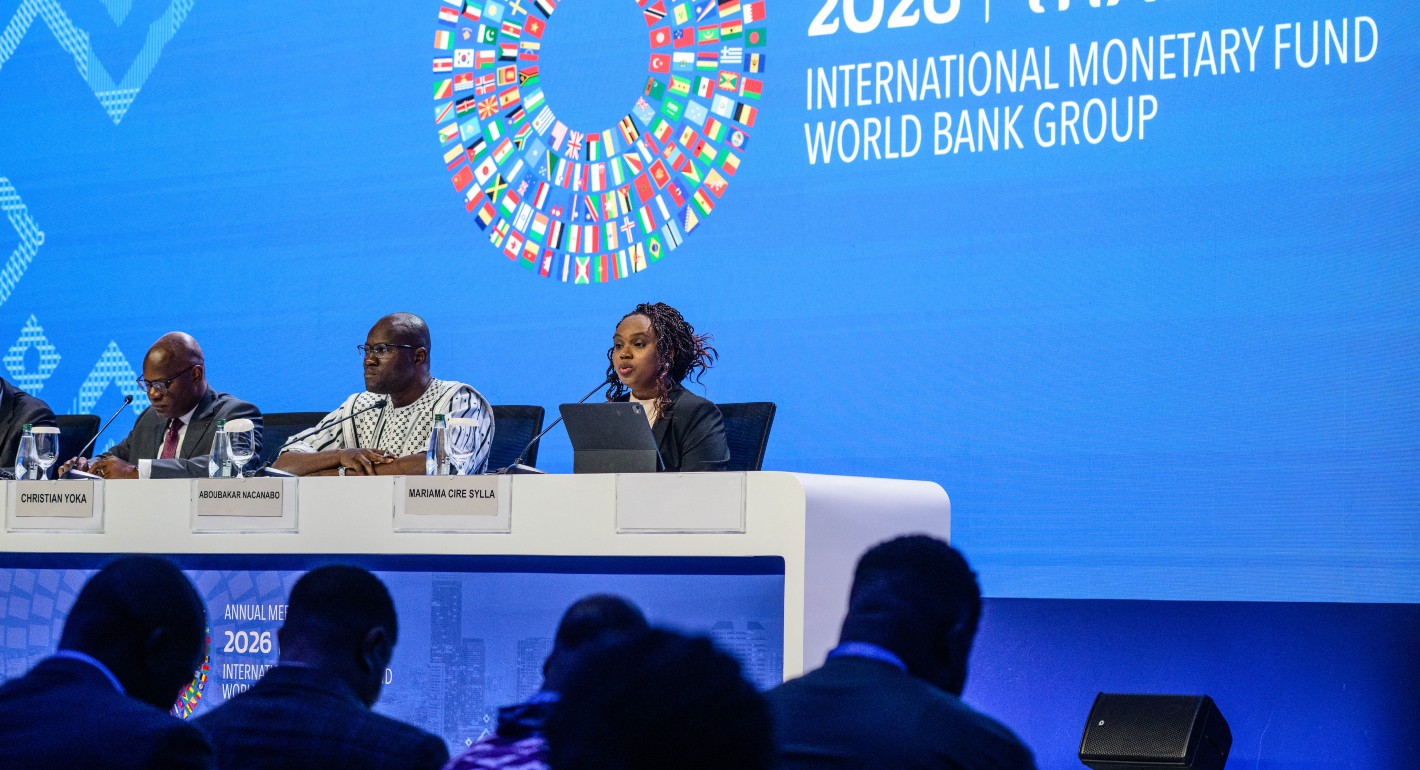
Global and rising powers will need to engage with Africa’s priorities and agency in order to secure the continent’s increasingly attractive partnerships.
Fonteh Akum

Rubio’s recent visit brought welcome attention, but more capital requires governance changes that may be a hard sell for regional governments.

Jennifer B. Murtazashvili

America’s foreign-policy objectives have grown more demanding while Americans have demanded greater focus on their own affairs.

Stephen Wertheim