

Commentary
Rubio’s recent visit brought welcome attention, but more capital requires governance changes that may be a hard sell for regional governments.
Jennifer B. Murtazashvili
{
  "authors": [
    "Philippe Le Corre",
    "John Ferguson"
  ],
  "type": "legacyinthemedia",
  "centerAffiliationAll": "dc",
  "centers": [
    "Carnegie Endowment for International Peace"
  ],
  "collections": [],
  "englishNewsletterAll": "ctw",
  "nonEnglishNewsletterAll": "",
  "primaryCenter": "Carnegie Endowment for International Peace",
  "programAffiliation": "EP",
  "programs": [
    "Europe"
  ],
  "projects": [],
  "regions": [
    "East Asia",
    "China",
    "Western Europe",
    "United Kingdom",
    "France",
    "Germany",
    "Iran"
  ],
  "topics": [
    "Economy",
    "Foreign Policy",
    "Technology"
  ]
}
Source: Getty
France has followed the U.K.’s lead, refusing to ratify an extradition treaty with Hong Kong and requiring local operators stop using Huawei by 2028. As for Germany, it finds itself as the last of the E3 and the ultimate decision maker on which way Europe could swing.
Source: Diplomat
At a time when U.S.-China relations seemingly plunge to new successive lows every day, with Washington and Beijing exchanging tit-for-tat responses in shuttering consulates and with President Donald Trump pursuing an all-out assault on Chinese tech, the European theater in the emerging Cold War is reaching an equally escalatory albeit quieter inflection point.
In recent weeks, the United Kingdom has made substantial moves to shift its China policy, first by inviting Hong Kong British Overseas passport holders to apply for permanent residency, and second by excluding Huawei from its 5G networks from 2027 onwards. France has followed the U.K.’s lead on both accounts, refusing to ratify an extradition treaty with Hong Kong and requiring local operators stop using Huawei by 2028. As for Germany, it finds itself as the last of the E3 and the ultimate decision maker on which way Europe could swing.
Former Nonresident Senior Fellow, Europe Program
Philippe Le Corre was a nonresident senior fellow in the Europe Program at the Carnegie Endowment for International Peace.
John Ferguson
John Ferguson is a research assistant at the Harvard Kennedy School’s M-RCBG.
Carnegie does not take institutional positions on public policy issues; the views represented herein are those of the author(s) and do not necessarily reflect the views of Carnegie, its staff, or its trustees.

Rubio’s recent visit brought welcome attention, but more capital requires governance changes that may be a hard sell for regional governments.

Jennifer B. Murtazashvili

America’s foreign-policy objectives have grown more demanding while Americans have demanded greater focus on their own affairs.

Stephen Wertheim

Japan’s long-term security policy is driven by concerns about China, and there is little appetite for (or interest in) pursuing a confrontation with Moscow.

James D.J. Brown

Russia is testing the waters of NATO’s mutual defense clause. What do strikes in Romanian territorial waters mean for the alliance’s posture toward Moscow?

Dimitar Bechev
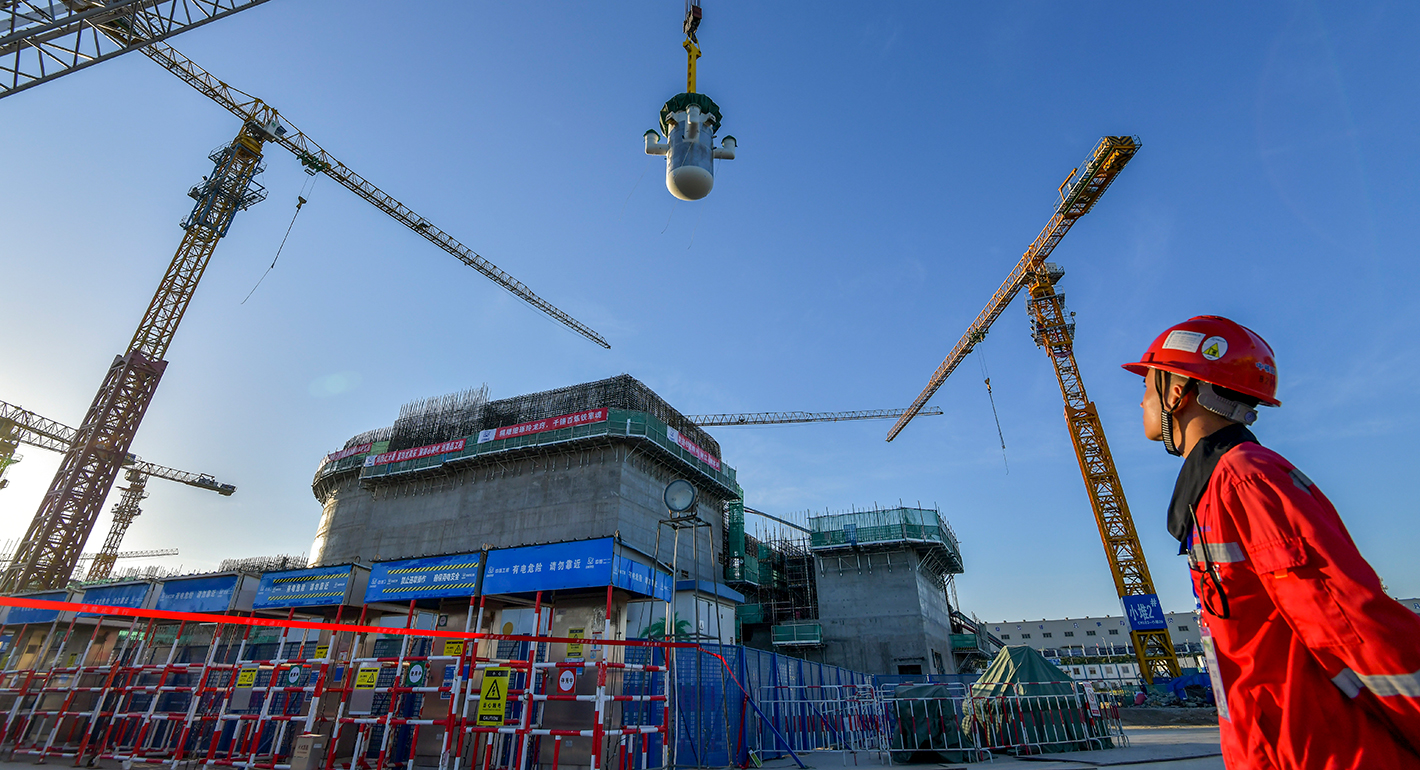
China has showcased its engineering prowess with small modular reactor demonstration projects. But turning these technological achievements into commercial success will be a greater challenge.

Tong Zhao