

Commentary
Yukon Huang, Isaac B. Kardon, Matt Sheehan
{
  "authors": [
    "Yukon Huang"
  ],
  "type": "commentary",
  "centerAffiliationAll": "dc",
  "centers": [
    "Carnegie Endowment for International Peace"
  ],
  "collections": [],
  "englishNewsletterAll": "asia",
  "nonEnglishNewsletterAll": "",
  "primaryCenter": "Carnegie Endowment for International Peace",
  "programAffiliation": "AP",
  "programs": [
    "Asia"
  ],
  "projects": [],
  "regions": [
    "United States",
    "South Asia",
    "India",
    "China",
    "Russia",
    "Western Europe",
    "United Kingdom",
    "France",
    "Germany"
  ],
  "topics": [
    "Economy",
    "Trade",
    "Climate Change",
    "Energy"
  ]
}
Source: Getty
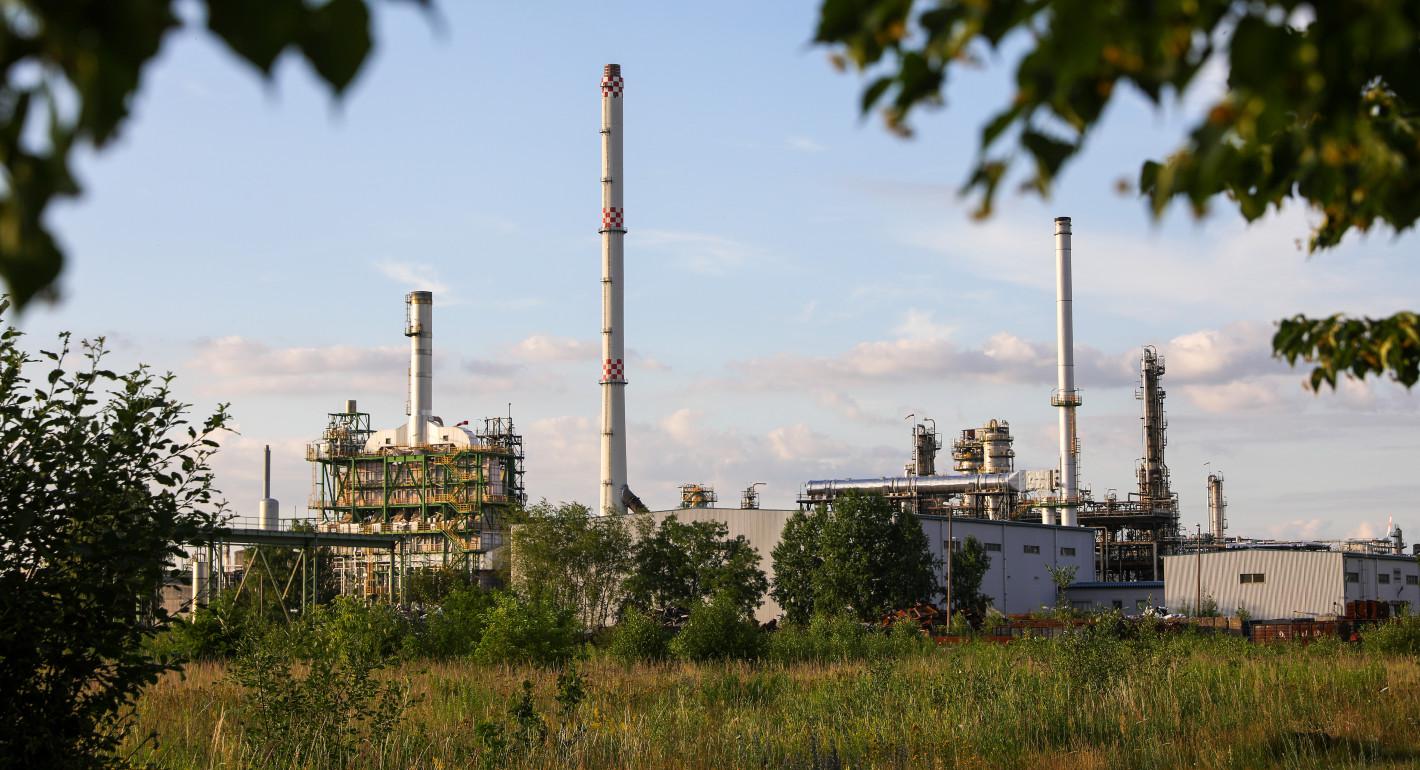
Pushing China and India to join the embargo would result in chaos in global energy markets.
As the United States and European Union broaden their sanctions on Russia to include fossil fuels, China is under increasing pressure to support their efforts. So far, China has been careful to adhere to Western sanctions, despite some recent citations relating to sales of military supplies to Russia. But the real test lies in Europe’s efforts to reduce its dependency on Russia’s energy resources while getting others to follow suit. The objective is to cripple Moscow’s ability to finance its war in Ukraine. Conventional wisdom backs this approach. However, the logic of this strategy is questionable, and the Western alliance should be careful in what it wishes for.
Energy markets and prices cannot be segmented geographically without triggering offsetting—and, in this case, self-defeating—global consequences. The effectiveness of the energy embargo is compromised by the unwillingness of major Asian buyers, notably China and India, to support such restrictions. But even if they did curtail their purchases from Russia in line with the European cutbacks, this massive embargo would lead to politically intolerable price increases globally.
The EU has yet to reach an agreement on the scope of the new restrictions due to variations among the members in their energy dependency on Russia. For crude oil, the EU strategy is to impose an immediate ban on Russian tanker shipments, supplemented by a phased program curbing flows via pipelines that are specific to countries such as Germany and Poland. For natural gas, reducing the EU’s dependence is not feasible in the short term, given the location of pipelines and limited alternative sources. Coal is less of an issue, since it accounts for small share of the EU’s energy needs, and there are mines that can be reopened at home and stocks available abroad.
In addition, rising energy prices were already a sensitive issue for many Western governments before the Ukraine invasion. Russia’s war accentuated the problem, with the decline in the availability of fossil fuels and disruptions in supply chains. The result is an ongoing restructuring of global energy markets.
Incentivized by discounts and seeking to diversify its sources, India went from a minor customer of Russian oil to a major buyer soon after the invasion. China did not immediately increase its purchases, but its oil imports from Russia soared 28 percent in May, and it’s now Russia’s largest buyer, after Germany cut back its imports. China is also a major customer of Saudi Arabia but strengthening links with Russia offers routes that are less vulnerable to U.S. interventions. Together, purchases by China and India have largely made up for Russia’s reduced sales to the EU. India is also refining Russian crude oil into diesel and other products for sales to the United States and Europe. (It is impossible to tell if oil, once refined, originally came from Russia.) Since they see India as a potential ally, Washington and Brussels have been cautious in contesting Delhi’s crude oil purchases from Moscow. China is subjected to more vociferous complaints, since it is seen as pro-Russia, despite declaring itself as neutral in the Ukraine crisis.
Moscow believes that Western dependence on its energy resources gives it exceptional leverage. But it is also vulnerable because it relies on energy exports to fund nearly half of its budget. Despite lower export volumes and price discounts, Russia still saw its oil revenues increase 50 percent this year, as the average export price is 60 percent higher than last year, even with significant discounts. Analysis by the Center for Research on Energy and Clean Air indicates that it earned a record 93 billion euros in the first 100 days of the war up to early June. In addition, Moscow has weaponized its control over gas supplies by cutting off access to Germany via the Nord Stream pipeline and to other sanction-supporting countries such as Austria and Italy. Revenues of Russia’s state-owned Gazprom doubled in the first four months this year due to higher prices and a 60 percent increase in sales to China.
Crude oil prices have retreated from their recent highs over concerns about a possible global economic slowdown. But if the two Asian giants actually stopped buying crude oil from Russia and relied more on Middle Eastern producers, the competing demand coming from Europe would result in soaring prices and chaos in global energy markets.
In recognition of these risks, the G7 recently proposed to cap the price paid for Russian oil by establishing a cartel-type buying arrangement. But its feasibility is highly questionable. It would require an agreement among Western buyers with diverse interests and support from major energy producers with little incentive to contain market prices.
Russian President Vladimir Putin is counting on rising energy prices putting pressure on Western leaders. In the United States, record high gasoline prices are increasing the likelihood that President Joe Biden’s congressional support will be decimated by Republican Party victories in the November midterm elections. Surging energy prices are also affecting prospects in several key Europeans elections, with French President Emmanuel Macron’s recent loss of a parliamentary majority seen as one example.
The Western alliance should not even try to persuade China and India to stop buying energy resources from Russia. By reducing its own energy dependency on Russia, the EU gains more flexibility in dealing with Putin. But the oil and gas that Europe is no longer buying needs to be made available to other major customers, or energy prices will ratchet up to politically destabilizing levels. The Western allies cannot have it both ways.

Senior Fellow, Asia Program
Huang is a senior fellow in the Carnegie Asia Program where his research focuses on China’s economy and its regional and global impact.
Recent Work

Yukon Huang, Isaac B. Kardon, Matt Sheehan
Yukon Huang, Genevieve Slosberg
Carnegie does not take institutional positions on public policy issues; the views represented herein are those of the author(s) and do not necessarily reflect the views of Carnegie, its staff, or its trustees.

The books, podcasts, and films that explain the world it made.

Andrew Leber
Blurring the line between humans and animals is a long-standing tradition in social utopian prose. In his latest novel, Leonid Bershidsky reminds us that in social experiments, people are often treated no differently than animals.

Alexander Baunov

U.S. trading partners in Asia are closely watching the dispute for signs of how it may affect their own interests.

Barbara Weisel
By abandoning past U.S. pro-democracy policies and adopting several lines of pro-autocratic action, the Trump administration has fundamentally repositioned the United States vis-à-vis democracy in the world.

Thomas Carothers
Chinese strategists are once again debating whether American power is declining and whether U.S. hegemony is experiencing irreversible decay.
Wu Xinbo