

In The Media
Jessica Tuchman Mathews

REQUIRED IMAGE
The number one problem in Iraq is not Saddam Hussein but his pursuit of weapons of mass destruction. Without them he is dangerous and despicable but not a threat remotely worthy of American intervention. This truth has a huge bearing on policy that has been largely ignored.
Source: Carnegie
The number one problem in Iraq is not Saddam Hussein but his pursuit of weapons of mass destruction. Without them he is dangerous and despicable but not a threat remotely worthy of American intervention. This truth has a huge bearing on policy that has been largely ignored. It means that rather than seeking to oust Saddam Hussein from power, the U.S. goal ought to be to thwart his continuing attempt to acquire these weapons. The inability to make a clear choice between these two aims was the Clinton administration's costliest foreign policy error. The Bush administration seems prepared to make a choice-but the wrong one.
The choice matters enormously because the two goals-regime change and nonproliferation-are not, as so many assume, complementary. In important respects they conflict. As a first course of action, only one carries any degree of legitimacy and at least the potential for wide international support. Only one might therefore strengthen, rather than undermine, the cooperation necessary for long-term success in the war again terrorism. Only one might help resolve, rather than exacerbate, the closely related threat posed by Iran. Only one has a legal basis for action (Iraq is in violation of U.N. Security Council resolutions requiring dismantlement of its nuclear, chemical and biological weapons program). For this last reason, only one serves the long-term U.S. interest in a world governed by the rule of law.
Proponents of getting rid of Saddam Hussein brush aside the "why" question as if the answers were either self-evident or immaterial. They are neither. There are many vicious, aggressive rulers in the world. Nor do we have the slightest interest in affirming the right of government to attack another it considers evil. The answer that we would be acting to rid the region of weapons of mass destruction raises the obvious question of why not Iran, not to mention Israel. Perhaps the least-sound justification is that the United States would be acting in "preventive self-defense." Supply your own nightmare result of that becoming an acceptable norm of international behavior. Mine is the invitation to India to attack Pakistan to end terrorist attacks on itself-a course likely to end in nuclear war.
Forcing a Choice
The most common response, however, is to assert that no choice exists; that it is impossible to control weapons of mass destruction in Iraq without deposing Saddam Hussein. This argument fails on two counts. First, we don't know it to be true. An armed inspection regime has not yet been tried. Saddam Hussein's record indicates that he will choose staying in power over maintaining g active weapons programs. So the real issue is not whether Saddam Hussein will continue to want these weapons-he will-but how tough the international community can be in forcing him to make the choice and for how long it can sustain its determination. Second, it is not clear that regime change can accomplish the nonproliferation goal. A successor regime in Iraq might be as committed to seeking nuclear weapons as Saddam Hussein. Only nuclear weapons, Iraqis might conclude, could prevent another foreign invasion. Iranians are likely to feel the same-how else to prevent the same thing happening to them?
Because Iran is so split between a pro-reform, pro-American, population and elected government on the one hand and irredeemably anti-American mullahs who hold the power, the United States can do almost nothing to promote constructive change in Tehran. Eventually (not soon) the mullahs' conservatism, venality and economic incompetence will undo them. Except for the country's weapons of mass destruction and missile programs, time is on our side. But something must be done about the weapons, which means doing something about Iraq's, because fear of its neighbor drives Iran's nuclear program. But in doing so we must avoid giving Iran an excuse to renounce the Nonproliferation Treaty (NPT). If the government were to openly seek, nuclear weapons to meet a perceived external threat, these weapons instantly would become the focus of Iranian nationalism, just as they did in Pakistan, and hopes for peace in the region would be set back immeasurably.
The Russian Key
The tight link between Iran's nuclear programs points to the right U.S. strategy. Washington's first goal should be to force Iraq's compliance with U.N. Security Council resolutions. Rebulding an international commitment to that end will take vigorous diplomacy to convince skeptical governments that that-and not regime change-is indeed our intent, and focused effort to engage global public opinion. This probably will require making public proof of what both countries are doing-as we did with pictures of Soviet missiles during the Cuban missile crisis. Only such a step would strip away the veil of hypocrisy behind which France and Russia, in particular, cloak their commercial interests while insisting that the United States exaggerates the threat. The inspectors in Iraq must be empowered to move without prior approval from New York and be accompanied by helicopter-borne troops to force immediate access to any site if Iraq balks.
Russian cooperation is key to success. To secure it, Washington should make clear to Moscow that Iraq's debts to Russia will be paid and drop its self-defeating opposition to Russian exports of conventional arms to Iran. But we need not, and should not, take this whole job on ourselves; 186 other nations have signed the NPT and share an interest in its integrity. U.S. policy should prod, not preempt, that interest. Influential countries could be pushed to build a global consensus that Iraq's and Iran's use of the NPT as cover for an illegal weapons program is an intolerable threat.
An American decision to keep weapons of mass destruction out of Saddam Hussein's hands for as long as he is in power could work if it is pursued with the intent to make it succeed. If that is done, it is the clear choice over a course that ignores the Iranian half of the problem and that risks political chaos in Iraq and the region, the need for peacekeeping forces the world has no appetite to supply and long-term damage to the kind of world order the United States wants to live in.
Jessica Mathews is the president of the Carnegie Endowment for International Peace. This is adapted from an op-ed in The Washington Post, March 4, 2002.

Distinguished Fellow
Mathews is a distinguished fellow at the Carnegie Endowment for International Peace. She served as Carnegie’s president for 18 years.
Recent Work
Jessica Tuchman Mathews
Jessica Tuchman Mathews
Carnegie does not take institutional positions on public policy issues; the views represented herein are those of the author(s) and do not necessarily reflect the views of Carnegie, its staff, or its trustees.
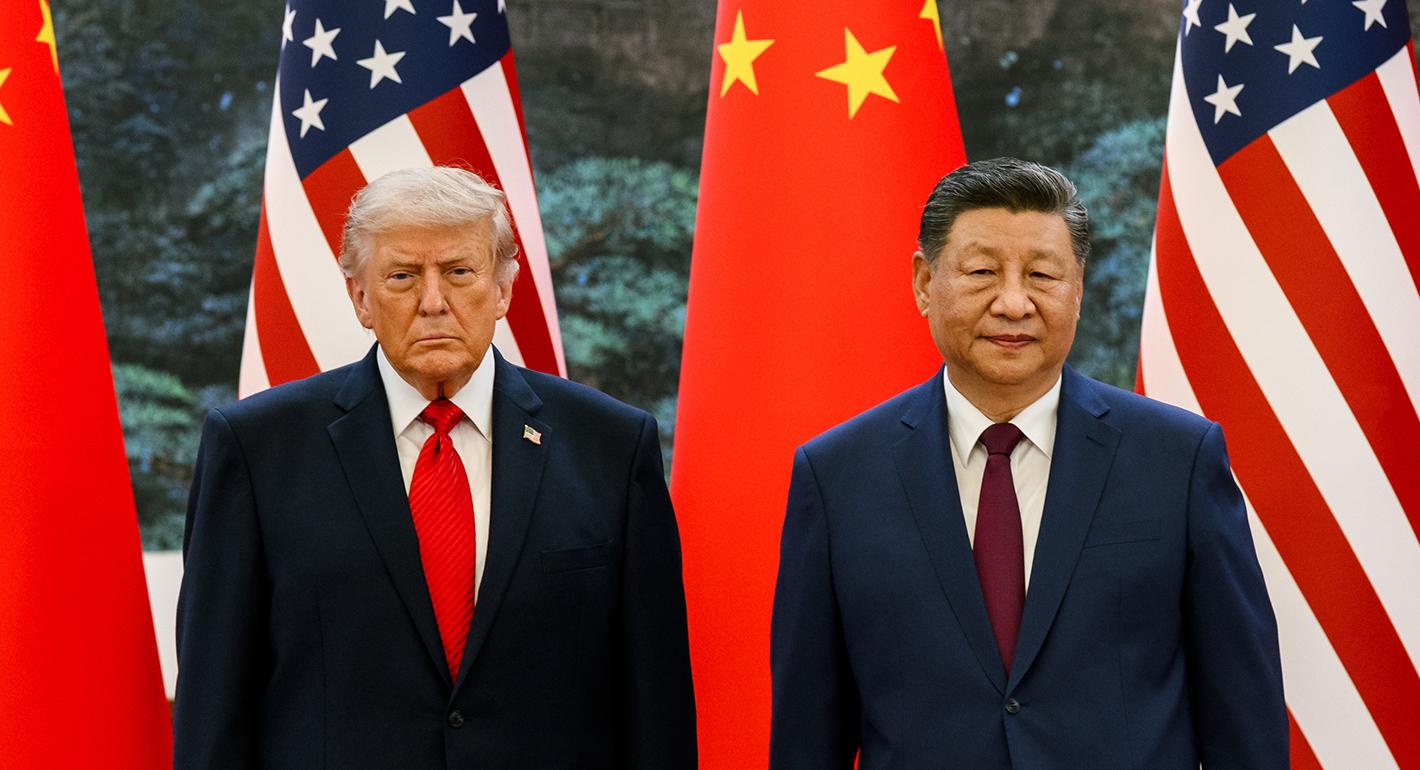
The real test may come after the leaders leave the room.



Sheena Chestnut Greitens, Oriana Skylar Mastro, Yukon Huang, …

The Horn of Africa countries are among those facing a new security calculus.


Andrew Leber, Lesley Anne Warner

The European far right might fail to steer EU policy in the direction Russia wants, but they will create enough chaos inside Europe to benefit the Kremlin.

Dimitar Bechev

The new U.S.–Denmark–Greenland agreement will help Washington exert political, economic, and financial dominance under the guise of security. Yet, it acknowledged Copenhagen’s and Nuuk’s sovereignty on the island.

Marc Pierini

The nuclear relationship between China and the United States is increasingly shaped by widening perception gaps rather than deliberate strategic design.

Tong Zhao