

Commentary
Sufyan Alissa

REQUIRED IMAGE
Recent economic growth and stabilization in Egypt has been largely fueled by external factors which may not be sustainable. During the same period, Egypt has failed to address pressing social and economic challenges, according to a new paper from the Carnegie Endowment.
Source: Carnegie Endowment
Recent economic growth and stabilization in Egypt has been largely fueled by external factors which may not be sustainable. During the same period, Egypt has failed to address pressing social and economic challenges, according to a new paper from the Carnegie Endowment.
In The Political Economy of Reform in Egypt: Understanding the Role of Institutions, Carnegie Middle East Center’s Sufyan Alissa finds that economic reform, considered a priority by the Egyptian government, has not been fully effective for three reasons: it lacks public support, Egypt has failed to foster a competitive business environment, and the lack of dynamic and transparent institutions.
Alissa argues that Egypt lacks the institutional capacity to implement better-coordinated reform programs that address its socioeconomic realities, including widespread poverty and unemployment, high inflation, and a soaring public debt. Reform is needed to improve the efficiency of Egypt’s bureaucracy, increase the accountability and transparency of politicians, and widen political participation for Egyptian citizens.
Key Findings:
• Egypt has failed to create a healthy and competitive environment for business development. Despite the passage of many laws to organize the business environment, the government has not developed an effective enforcement process for these new laws, and little progress has been made in the fight against corruption.
• Economic reform lacks popular support in Egypt as reforms are perceived to cause more harm than good as previous reforms have consistently failed to address socioeconomic problems. Furthermore, future reforms are predicted to increase the gap between the Egyptian rich and poor before the masses can feel the positive effects.
• The majority of the private sector and civil society is excluded from the debate over Egypt’s economic reform strategy. Public participation is crucial for advancing civil society institutions and promoting an effective role in designing and implementing comprehensive economic reform.
“Given the nature of the Egyptian state and the main actors in the market and civil society, developing the necessary institutions and, most important, making them function properly within a short period of time seems unrealistic. Hence, Egypt should make the choice: Either start developing these institutions soon or lag behind. Building these institutions is the responsibility not only of the Egyptian state but also of the private sector and civil society,” contends Alissa.
Click on icon above for the full text of this Carnegie Paper.
A limited number of print copies of this Carnegie Paper are available.
Request a copy
About the Author
Sufyan Alissa is an associate at the Carnegie Endowment's Middle East Center. An economist and specialist on Middle Eastern affairs, he previously served at Nuffield College-University of Oxford, the School of Oriental and African Studies-University of London, and City University in London. He worked as a consultant for many international institutions, including the International Labor Organization and United Nations Development Program. He received his PhD from SOAS, University of London.
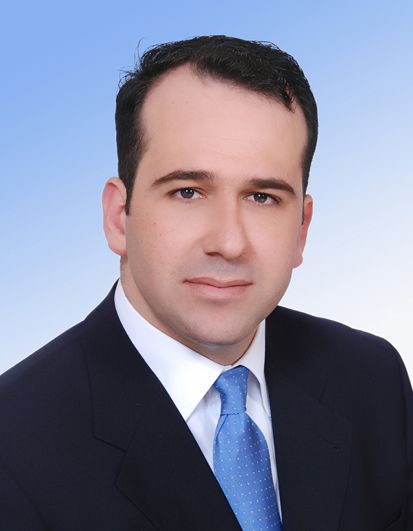
Former Associate, Middle East Center
Recent Work
Sufyan Alissa
Carnegie does not take institutional positions on public policy issues; the views represented herein are those of the author(s) and do not necessarily reflect the views of Carnegie, its staff, or its trustees.

Russian strikes are weakening the economy sustaining Ukraine’s war effort. Closing the growing funding gap will require more European support and politically contentious reforms in Kyiv.

Balázs Jarábik

Ex-president Gurbanguly Berdimuhamedov remains interested in politics, but his son Serdar, Turkmenistan’s current president, is becoming increasingly independent and willing to break with his father’s legacy. If their covert rivalry goes too far, both risk losing power.

Galiya Ibragimova

A notable degree of participative democracy has firmly arrived in Europe. But to have more far-reaching impact, democratic deliberation needs to move into a radically new phase.

Richard Youngs

Much has been said of the changes Brussels is trying to make to the EU enlargement process. Here’s why gradual integration might—or might not—be the answer.

Dimitar Bechev

Economic recovery has brought Sri Lanka a modicum of stability, but domestic strains and great-power rivalry could test how long it lasts.
Avinash Paliwal