• Research
  • Emissary
  • About
  • Experts
Carnegie Global logoCarnegie lettermark logo
DemocracyIran
  • Donate
The Egyptian Muslim Brotherhood: Islamist Participation in a Closing Political Environment

Source: Getty

Paper
Malcolm H. Kerr Carnegie Middle East Center

The Egyptian Muslim Brotherhood: Islamist Participation in a Closing Political Environment

By scaling back its political engagement to focus on a traditional religious, educational, and social agenda, the Egyptian Muslim Brotherhood is leaving behind an even greater lack of political competition in the country.

Link Copied
By Amr Hamzawy and Nathan J. Brown
Published on Mar 9, 2010

Additional Links

Full Text
Program mobile hero image

Program

Middle East

The Middle East Program in Washington combines in-depth regional knowledge with incisive comparative analysis to provide deeply informed recommendations. With expertise in the Gulf, North Africa, Iran, and Israel/Palestine, we examine crosscutting themes of political, economic, and social change in both English and Arabic.

Learn More

The Egyptian Muslim Brotherhood has begun to scale back its political engagement because the results have been few, government repression continues, and other opposition groups mistrust the movement. Instead it will focus on a traditional religious, educational, and social agenda. The result will be an even greater lack of political competition.

In a detailed profile of the Muslim Brotherhood’s activities over the last decade, this paper examines the Brotherhood’s relations with the Mubarak regime and other opposition groups, its legislative priorities and accomplishments, and its internal debate over the value of political participation.

Key Conclusions:

  • For the last ten years, the Brotherhood focused on political reforms and socioeconomic legislation, largely at the expense of its moral and religious agenda—a strategy now under criticism as the movement suffers increased suppression and has few legislative accomplishments.
     
  • While the Brotherhood is unlikely to renounce political activity altogether, recent internal party elections saw advocates for political participation ousted. The newly-elected head of the movement, Muhammad Badi, is known for emphasizing the movement’s moral and religious activities.
     
  • The Brotherhood has had limited success building ties with other opposition movements, despite its de-emphasis on its moral and religious agenda. Lingering mistrust between Islamists and non-Islamist parties, plus the Brotherhood’s reluctance to join protests (for fear of incurring further crackdowns), has left the movement isolated.
     
  • The international community is unlikely to protest the restrictions placed upon the Brotherhood by the government. While enjoying increased international acceptance and respect—a result of concerted outreach effort following the September 11 attacks—the Brotherhood is aligned with political forces (like Hamas) deemed counter to Western interests.


“With the Brotherhood’s retreat, a fleeting opportunity that seemed to arise in the middle of the decade for building a more pluralistic political system and for an open political contest between competing visions for Egypt’s future appears to have been lost,” the authors conclude.

About the Authors

Amr Hamzawy

Director, Middle East Program

Amr Hamzawy is a senior fellow and the director of the Carnegie Middle East Program. His research and writings focus on Egypt’s and other middle powers’ involvement in regional security in the Middle East, particularly through collective diplomacy and multilateral conflict resolution

Nathan J. Brown

Nonresident Senior Fellow, Middle East Program

Nathan J. Brown, a professor of political science and international affairs at George Washington University, is a distinguished scholar and author of nine books on Arab politics and governance, as well as editor of five books.

Authors

Amr Hamzawy
Director, Middle East Program
Amr Hamzawy
Nathan J. Brown
Nonresident Senior Fellow, Middle East Program
Nathan J. Brown

Additional Links

Full Text
North AfricaEgyptMiddle EastPolitical Reform

Carnegie does not take institutional positions on public policy issues; the views represented herein are those of the author(s) and do not necessarily reflect the views of Carnegie, its staff, or its trustees.

More Work from Carnegie Endowment for International Peace

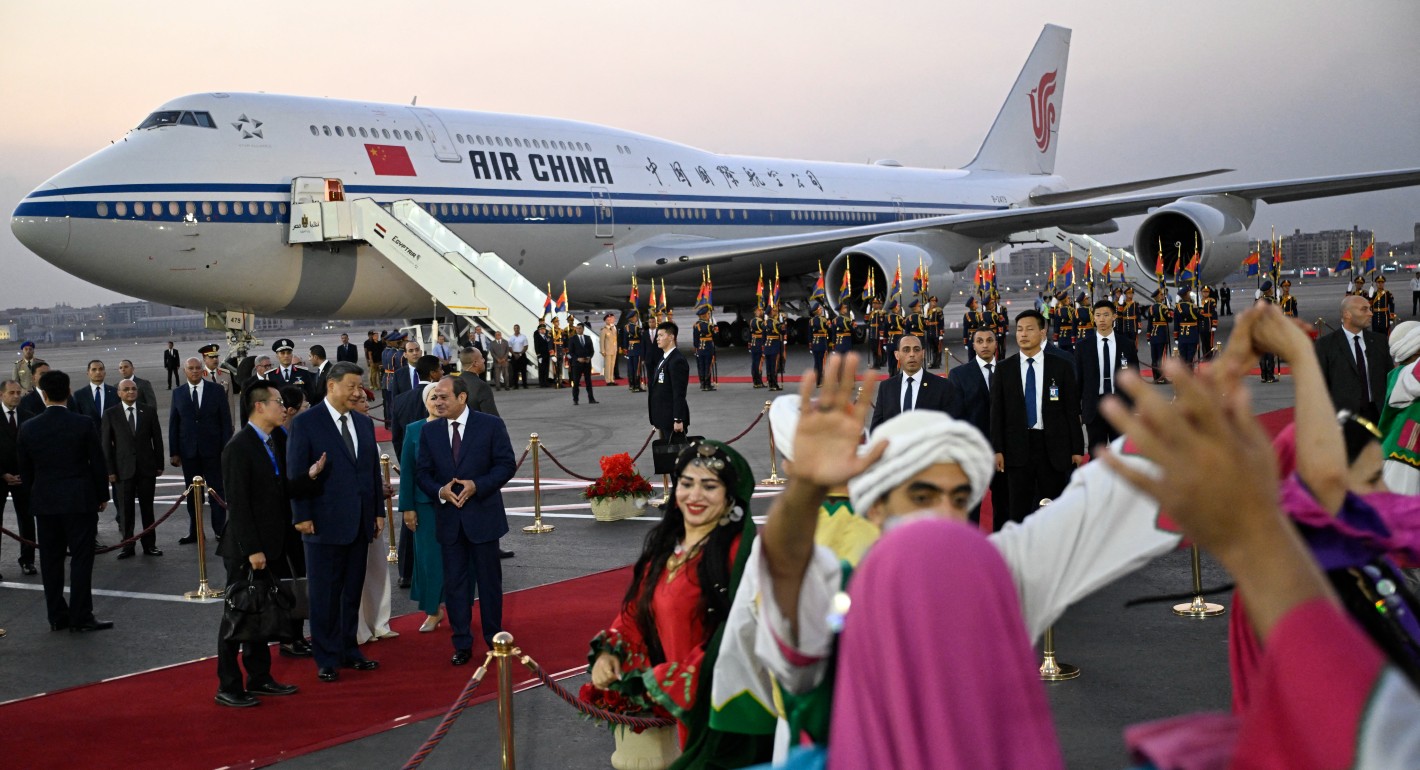
  • People dancing in the foreground, with a group of people in suites watching and an Air China plane in the background
    Commentary
    Emissary
    The Two Key Takeaways From Xi’s Egypt Visit

    Amid celebrations of bilateral ties was a deeper focus on stability in the Middle East.

      Amr Hamzawy
  • Commentary
    Sada
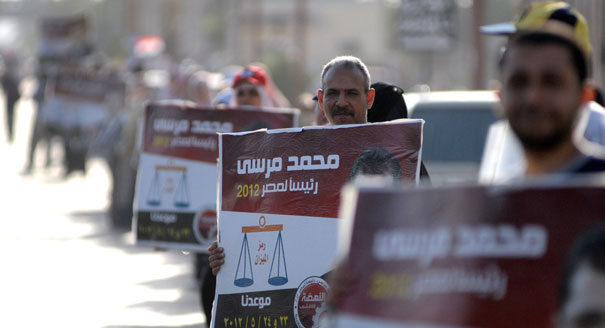
    Gas and Peace: Can Energy Trade Contain Egypt-Israel Conflict?

    Can economic ties help contain conflict between Egypt and Israel, or do they simply postpone confrontation? Drawing on the German-Russian experience, the article examines how the gas deal creates mutual dependence, keeps channels of cooperation open, and raises the cost of conflict, without necessarily delivering lasting peace.
      Nourhan Hefzy

  • Commentary
    Carnegie Politika
    As a Former Defense Minister Revolts in Ukraine, Is Zelensky’s System Fracturing?

    The greater threat to Zelensky comes not from Fedorov alone, but from the convergence between the former defense minister’s political campaign and the anti-corruption investigations moving ever closer to the presidential administration.

      Balázs Jarábik

  • Commentary
    Carnegie Politika
    Fedorov’s Challenge to Zelensky Could Upend Ukrainian Politics

    With his public call for new elections in Ukraine, ex-defense minister Mykhailo Fedorov has opened Pandora’s box.

      Konstantin Skorkin

  • Commentary
    Carnegie Politika
    Russia’s Rubber-Stamp Duma Elections Are Exposing Schisms in Putin's Regime

    In the discussions made possible by the State Duma election campaign, one question is being asked more and more loudly. “What next?”

      Andrey Pertsev

Get more news and analysis from
Carnegie Endowment for International Peace
Carnegie global logo, stacked
1779 Massachusetts Avenue NWWashington, DC, 20036-2103Phone: 202 483 7600
  • Research
  • Emissary
  • About
  • Experts
  • Donate
  • Programs
  • Events
  • Blogs
  • Podcasts
  • Contact
  • Annual Reports
  • Careers
  • Privacy
  • For Media
  • Government Resources
Get more news and analysis from
Carnegie Endowment for International Peace
© 2026 Carnegie Endowment for International Peace. All rights reserved.