

Commentary
Sufyan Alissa
{
  "authors": [
    "Sufyan Alissa"
  ],
  "type": "legacyinthemedia",
  "centerAffiliationAll": "dc",
  "centers": [
    "Carnegie Endowment for International Peace",
    "Malcolm H. Kerr Carnegie Middle East Center"
  ],
  "collections": [],
  "englishNewsletterAll": "democracy",
  "nonEnglishNewsletterAll": "",
  "primaryCenter": "Malcolm H. Kerr Carnegie Middle East Center",
  "programAffiliation": "DCG",
  "programs": [
    "Democracy, Conflict, and Governance",
    "Middle East"
  ],
  "projects": [],
  "regions": [
    "Middle East",
    "North Africa"
  ],
  "topics": [
    "Economy"
  ]
}
Source: Getty
The unemployment problem is considered one of the most important challenges facing the Middle East and North Africa, where the rate of unemployment is the highest in the world. The time has come for the unemployment problem in the Arab World to become the focus of attention, both on the national and official levels.
Source: Dar Al-Hayat

According to the International Labor Organization, unemployment rates hit 12.2% in 2006 compared to 5.2% in South Asia, 8% in Latin America, 9.8% in Africa. Nearly 47.3% of the population in the area is employed, having the lowest percentage in the world. It also has the lowest percentage of contribution to the workforce in the world, where contribution is only at 53.9%.
The low rate of contribution to the workforce is a reflection of the low contribution of women in the work market, where only one in three women is considered active in the work market. This information reveals the severity of the problem, which is expected to worsen in the near future.
The region's population growth rate is the fastest in the world, which makes the creation of 100 million new job opportunities in the next two decades a more pressing urgency.
The most important questions posed with regards to this issue revolve around the reasons that led to the spread of the unemployment problem and its spiraling to alarming levels in many of the region's countries, as well as the measures that could be taken to deal with it, as well as with future challenges.
There are three main reasons that aggravated the unemployment problem in the region. The first reason is related to the public sector's limited capacity to employ Arab workforce, especially the fresh graduates. The public sector currently employs nearly a third of the region's workforce, and is suffering from its large size and low productivity rate. Therefore, a drop in this sector's contribution in the creation of job opportunities is expected, in light of the privatization projects being carried out in many Arab countries.
The second reason is the limited size of the private sector and its inability to create a sufficient number of work opportunities for the region's workforce. This is because the direct and indirect restrictions on investments, the absence of a favorable economic and political environment, and the State's control over the economy represent a fundamental problem in the face of the efforts made to expand this sector, and its essential role in pushing development forward and providing job opportunities for the workforce, which is growing in the region.
The third reason is related to the quality and nature of education in the region, as a number of countries are suffering from the fact that the majority of their youth are have turned to education in conventional fields in pursuit of jobs in the public sector.
Education in several Arab countries lacks the focus on technical and occupational aspects, which are currently in high demand in the work market. This result of this is that the education is not compatible with the needs and priorities of the work market.
Many young men and women also find it difficult to gain access to education, especially higher education, due to limited financial resources and the increased costs of university education.
The lack of effective institutes and policies in the Arab work markets, and the lack of social security networks, are additional factors that further complicate the unemployment problem in the Arab World.
While migration to the Gulf countries played a significant role in curbing unemployment in countries such as Jordan, Palestine, Egypt, Syria, Lebanon and Morocco; the prospects of migration to the Gulf countries have begun to recede with these countries' adoption of programs to nationalize job opportunities, as well as the fierce competition with the Western workforce in the Gulf work markets. It is pointed out that those who are eligible for migration are the ones with university degrees and exceptional skills in the Arab countries. As for the low-skilled workforce, its chances of migration for work are becoming increasingly narrow, and it is limited to the cleaning and construction sectors, where there is high competition with the vast Asian workforce.
In order to find radical solutions to the unemployment problem and create work opportunities for the growing workforce population, creative solutions, standardization and coordinated efforts among all concerned bodies, whether governmental, privately-owned institutions, labor unions or international organizations are needed.
The time has come for the unemployment problem in the Arab World to become the focus of attention, both on the national and official levels. In this framework, much thought is needed in many of the factors that contribute to curbing this problem.
First, there is a need to create a new economic driver that would create the needed work opportunities and reduce the dependency on the public sector. This would be achieved through strengthening the capabilities of the private sector and directing investments toward high workforce projects and more focus on small and medium-sized businesses and independent employment as a means of creating more employment opportunities, especially for young men and women and those who have just entered the market.
Second, there is a need to reform the education and employment systems and guide the students regarding the demands of the work market in the Arab countries and the priorities of these markets.
Third, there is a need to improve the occupational and technical education to boost the skills and capabilities of the workforce.
Fourth, there is a need to reform the institutions of the work market and their policies, and improve the effectiveness of these policies.
Finally, it should be noted that failing to respond to the unemployment problem in the Arab region could lead to social and political repercussions, which the Arab governments might not be able to control.
On the one hand, the repeated failure of the Arab governments to find radical solutions to this problem could lead to public pressure to topple these governments. On the other hand, this failure could lead to an increase in social problems, particularly among young men and women, and higher crimes rates and social instability on the regional level.
* Sufyan Alissa is an economic expert an associate at the Carnegie Middle East Center - Carnegie Endowment for International Peace
Former Associate, Middle East Center
Recent Work
Sufyan Alissa
Carnegie does not take institutional positions on public policy issues; the views represented herein are those of the author(s) and do not necessarily reflect the views of Carnegie, its staff, or its trustees.

Russian strikes are weakening the economy sustaining Ukraine’s war effort. Closing the growing funding gap will require more European support and politically contentious reforms in Kyiv.

Balázs Jarábik

Economic recovery has brought Sri Lanka a modicum of stability, but domestic strains and great-power rivalry could test how long it lasts.

Avinash Paliwal

Policy proposals on sovereign debt must both match the scale of the challenge and be implementable within existing political constraints.
David McNair

For every ruble allocated to social policy, health, and education in 2027, double that amount is earmarked for the army, the police, and the security services.

Alexandra Prokopenko
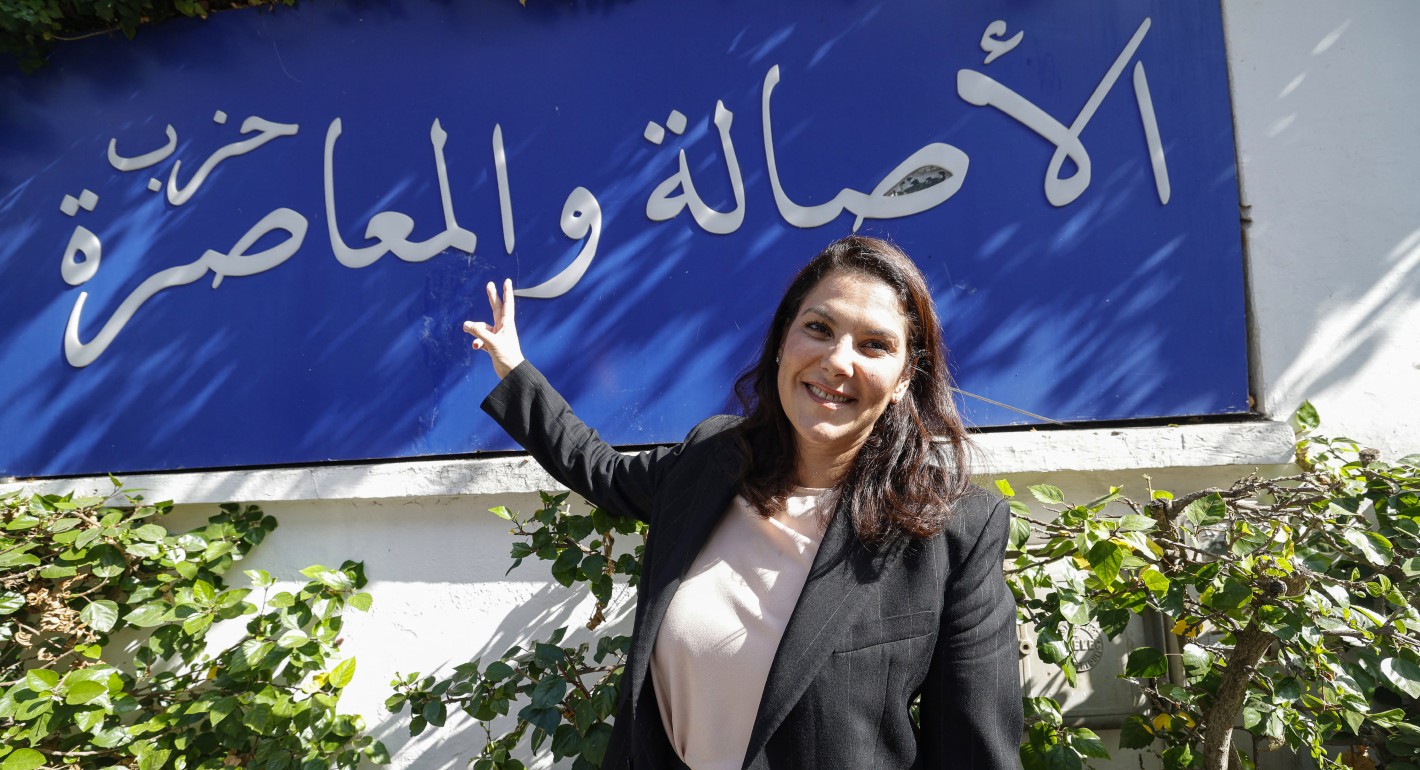
Fatima El Mansouri is the country’s first female prime minister. She’s also a privileged insider in a largely ceremonial position.

Sarah Yerkes