

Other
Michael D. Swaine
{
  "authors": [
    "Michael D. Swaine"
  ],
  "type": "legacyinthemedia",
  "centerAffiliationAll": "dc",
  "centers": [
    "Carnegie Endowment for International Peace",
    "Carnegie Europe",
    "Carnegie China"
  ],
  "collections": [],
  "englishNewsletterAll": "asia",
  "nonEnglishNewsletterAll": "",
  "primaryCenter": "Carnegie China",
  "programAffiliation": "AP",
  "programs": [
    "Asia"
  ],
  "projects": [],
  "regions": [
    "North America",
    "United States",
    "East Asia",
    "China",
    "Asia"
  ],
  "topics": [
    "Political Reform",
    "Economy",
    "Security",
    "Military",
    "Foreign Policy",
    "Domestic Politics"
  ]
}
Source: Getty
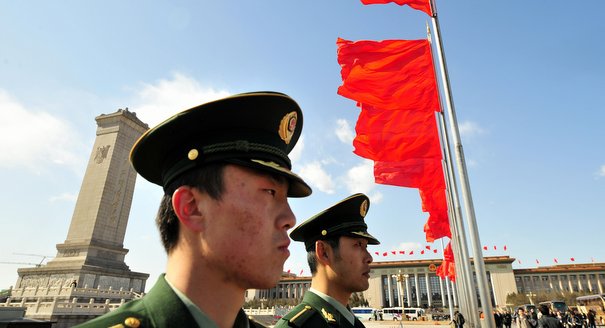
The widely-held belief among both Chinese and Western observers that China is growing increasingly assertive has the potential to create significant challenges for Sino-U.S. relations.
Source: China Leadership Monitor

Such observations are causing some U.S. politicians, military officials, and members of the business community to question whether China remains committed to the two elements that have together stood for over three decades as the hallmarks of the reform era: maintenance of cooperative relations with the West and a basic reliance on the open, freemarket system. If they conclude that China is transitioning to a less cooperative, more assertive, fundamentally revisionist, and in many ways anti-Western approach to vital global and bilateral issues, the repercussions for the international system, and Sino-U.S. relations in particular, could be enormous.
This essay examines the features of the discussion in the West, and among many Chinese, regarding the notion of a more assertive China. It attempts to answer several questions: How is assertiveness defined or understood among Western and Chinese observers? What are the main manifestations or expressions of Chinese assertiveness? What is driving such assertiveness, in the views of both Western and Chinese observers? What are the lines of debate over this issue in China and the West, if any? What are the perceived implications of Chinese assertiveness for the future of the international system and Sino-Western relations? The conclusion provides some general observations regarding the significance of this issue for the future.

Former Senior Fellow, Asia Program
Swaine was a senior fellow at the Carnegie Endowment for International Peace and one of the most prominent American analysts in Chinese security studies.
Recent Work
Michael D. Swaine
Michael D. Swaine
Carnegie does not take institutional positions on public policy issues; the views represented herein are those of the author(s) and do not necessarily reflect the views of Carnegie, its staff, or its trustees.

It should address the shortcomings of previous crisis communication efforts and adapt to the demands of frontier AI.

Lucy Luo

If the Russian-speaking community in Latvia cannot articulate their interests without being seen as disloyal, they could end up embracing a pro-Kremlin agenda.

Sergejs Potapkins
Washington’s decision to support some UN functions while letting others wither is pulling the organization apart at the seams.

Stewart Patrick, Theodore Zaritsky

While there are notable demographic, economic, and geographic divides over AI, there is also substantial alignment between Republicans and Democrats.



Ian Klaus, Mark Baldassare, Rachel George, …

Are Germany’s economic, industrial, and political struggles becoming a liability for the EU’s ability to rise to the geopolitical moment?

Rym Momtaz, ed.