

Research
- +5
Alper Coşkun, Fatih Ceylan, Tacan İldem, …
{
  "authors": [
    "Sinan Ülgen"
  ],
  "type": "legacyinthemedia",
  "centerAffiliationAll": "",
  "centers": [
    "Carnegie Endowment for International Peace",
    "Carnegie Europe"
  ],
  "collections": [
    "EU Integration and Enlargement",
    "Brexit and UK Politics"
  ],
  "englishNewsletterAll": "",
  "nonEnglishNewsletterAll": "",
  "primaryCenter": "Carnegie Europe",
  "programAffiliation": "",
  "programs": [],
  "projects": [],
  "regions": [
    "Middle East",
    "Asia",
    "Russia",
    "Europe",
    "Türkiye",
    "North Africa",
    "Egypt",
    "Libya",
    "Tunisia",
    "East Asia",
    "China",
    "Western Europe",
    "United Kingdom",
    "France",
    "Germany"
  ],
  "topics": [
    "EU",
    "Economy",
    "Foreign Policy"
  ]
}
Source: Getty
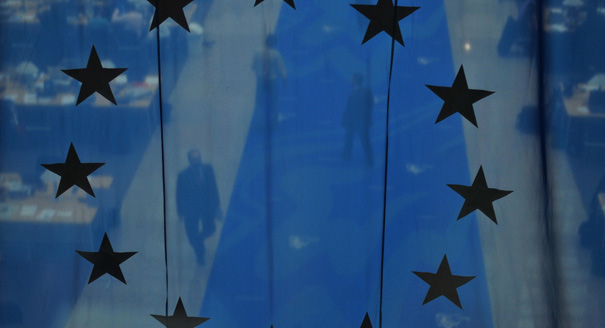
The EU’s tarnished image as a community of nations is alarming. It is therefore essential to create the conditions for a better future in a postcrisis world.
Source: Euractiv
All Europeans are, by now, well aware of the costs of the euro crisis. It has fractured national economies, stagnated economic growth and taken a large human toll in terms of widespread unemployment. It has also created widespread political tensions in the EU and threatens to ruin the grand experiment of European unification.
Equally alarming but less well known, however, are the consequences of the EU’s tarnished image as a community of nations. The crisis, which has dragged on for years and is by no means over, has greatly diminished Europe’s ability to provide the regional leadership that is needed to drive the momentum of democratic reforms among its neighbours. This is likely to give rise to longer term effects that will shape the destiny of a number of nations.
In many North African countries, the recent collective action for greater dignity and better governance was successful in toppling authoritarian regimes. The next step requires the setting in motion of a new social contract for a more democratic, inclusive and accountable system of governance – exactly the type of environment, where in the case of Central and Eastern Europe, the EU has played an invaluable role.The EU’s engagement helped those countries to steer their post-authoritarian transitions towards the goal of a better society. In short, the EU has been an important actor in democratic reconstruction. In the same vein, Europe had the vocation to play a scaled back, but nonetheless important role in facilitating the transitions in the Arab world. Indeed, Europe today is conspicuously absent in the debates within Arab societies on areas ranging from the independence of the judiciary to civil military relations. A more confident Europe can only result in more effective engagement with Arab nations at this crucial juncture.
In Turkey, for example, the EU was instrumental as the main external anchor for the wave of democratic reforms introduced by the AKP government, which took place mostly in the pre-euro crisis period. But today, the EU has lost its leverage on Turkey and side-lined itself from the country’s domestic dynamics. One reason is the ongoing ambivalence among EU member states about prospects of an eventual accession to the Union by Turkey. But the other reason is certainly the growing perception that the EU is in fact a declining power.
As a result, over the past few years, there has been a remarkable shift in Turkey’s priorities. The objective of EU membership has for all practical purposes disappeared from the official discourse. At the same time, Turkish support for EU membership declined from its peak of 74 % in 2004 to a historic low of 33 % in 2012. In its stead, Turkey is looking to become a regional power and is much more inclined to invest its diplomatic resources in the turbulent Middle East. But the loss of traction has had detrimental consequences for Turkey’s reform agenda. The perceived weakness of the European project makes it almost impossible today to champion an alternative narrative of Europeanization for the future of Turkey.
Finally, and on a more universal scale, the EU was set to represent the liberal democratic answer to the challenge of globalization. The EU’s model of supranationalism was viewed as the most developed inter-state construct in human history designed to pool the capabilities of the member states to tackle global challenges. The EU’s continued progress was particularly important at a time when competing models of governance – such as state capitalism of China or the illiberal and shallow democracy of Russia – started to gain increased visibility on account of the economic performance of these nations.
The failure of the European project is therefore the failure of the liberal democratic order to protect its blueprint, nurtured for so many years, for the improved management of the many forces of globalization. Such an outcome can only increase the attractiveness of the competing models, not only for Arab states, but also for other developing countries in the midst of regime transitions.
It is understandable that at times of economic hardship, European leaders’ attention is necessarily focused on the domestic aspects of the crisis. But true leadership requires a wider perspective. Europe’s leaders should look beyond the continent’s short-term predicament. This is absolutely essential to create the conditions for a better future in a post-crisis world, not only for Europeans but also for many other global citizens.

Senior Fellow, Carnegie Europe
Sinan Ülgen is a senior fellow at Carnegie Europe in Brussels, where his research focuses on Turkish foreign policy, transatlantic relations, international trade, economic security, and digital policy.
Recent Work

Alper Coşkun, Fatih Ceylan, Tacan İldem, …
Carnegie does not take institutional positions on public policy issues; the views represented herein are those of the author(s) and do not necessarily reflect the views of Carnegie, its staff, or its trustees.
Spot analysis from Carnegie scholars on events relating to the Middle East and North Africa.

Yezid Sayigh
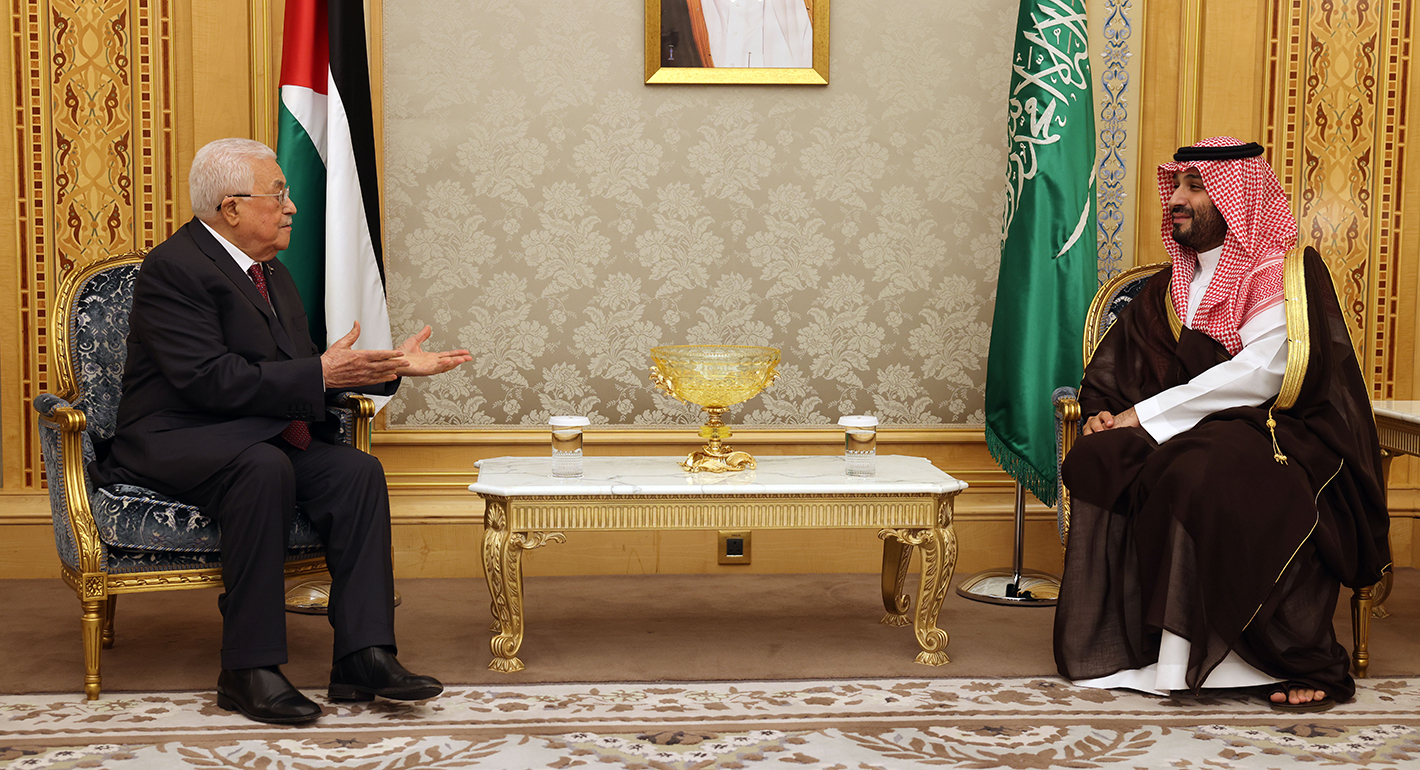
The U.S. midterm elections signal the opening of a narrow window for bold Saudi diplomacy on Palestine.

Andrew Leber, Zaha Hassan
A leak of Russian gas price data helps establish that China is paying Russia far less than Central Asian countries and Gazprom’s former European customers.

Sergey Vakulenko

China’s political future will be shaped between now and next October. As the Communist Party enters its intense “campaign season” to prepare for a major political transition in 2027, reading Beijing's actions and responses may become more difficult as domestic politics weigh on its behavior more than usual.

Damien Ma

The EU can impose sanctions but struggles to enforce them without the United States. With Washington increasingly disinterested in backing European interests, the bloc must now fend for itself.


Nicu Popescu, Tiago Antunes