

Commentary
Yezid Sayigh
{
  "authors": [
    "Yezid Sayigh"
  ],
  "type": "legacyinthemedia",
  "centerAffiliationAll": "dc",
  "centers": [
    "Carnegie Endowment for International Peace",
    "Malcolm H. Kerr Carnegie Middle East Center"
  ],
  "collections": [],
  "englishNewsletterAll": "menaTransitions",
  "nonEnglishNewsletterAll": "",
  "primaryCenter": "Malcolm H. Kerr Carnegie Middle East Center",
  "programAffiliation": "MEP",
  "programs": [
    "Middle East"
  ],
  "projects": [],
  "regions": [
    "Gulf",
    "Levant",
    "Syria",
    "Iraq",
    "Middle East"
  ],
  "topics": [
    "Political Reform",
    "Security",
    "Foreign Policy"
  ]
}
Source: Getty
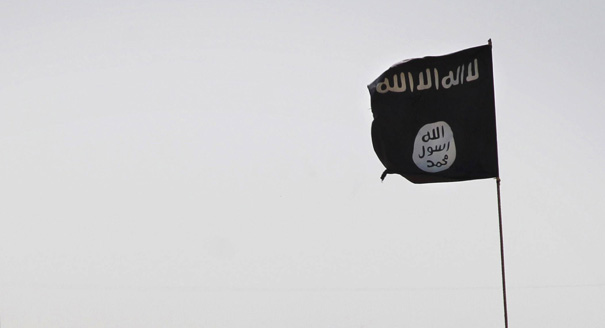
Airstrikes targeting the Islamic State, as well as regional involvement with the United States, could produce an extra surge of recruits and provide more momentum and grist to the jihadist group.
Source: ABC’s Lateline
STEVE CANNANE, PRESENTER: Let's go live now to Beirut to discuss the military action in Syria.
And we're joined by Dr. Yezid Sayigh, a senior associate at the Carnegie Middle East Center, where his work focuses on the Syrian crisis and the political role of Arab armies.
Yezid Sayigh, thanks very much for joining us.
YEZID SAYIGH, CARNEGIE MIDDLE EAST CENTER: Hi.
STEVE CANNANE: These air strikes by the United States with support from several Arab Gulf states have come as a surprise to most people, particularly that they struck Islamic State in Syria with Sunni Gulf states actively taking part. How significant is this?
YEZID SAYIGH: Well, I think it is very significant, primarily because this is action in the territory or on the territory of a state that hadn't invited that action. It's a sovereign member of the United Nations and, although most of the coalition governments represented in this military action have withdrawn their recognition of the Damascus government, nonetheless there is a legal grey area about whether this action is in fact legitimate under international law. So the fact that they've gone ahead anyway is significant.
And, of course, I think that is why the U.S. made sure that there were five Arab contingents taking part in the overall military action as a form of political and diplomatic cover.
STEVE CANNANE: And do we know what role those Gulf states played in the strikes?
YEZID SAYIGH: Well, as far as I can make out so far, no one has done anything beyond conduct air strikes of one form or another, whether through cruise missiles as the U.S.—the U.S. is the only government who possess those—but others, like the Jordanians and so on, are known or have announced that they have used their air force.
Of course, this does rather emphasize the somewhat symbolic and token nature both of Arab participation and of the military effort as a whole. I think this is geared much more towards sort of demonstrative action: the show of resolve and will, rather than tied to very clear and significant military outcome.
STEVE CANNANE: What can you tell us about the targets themselves? Do we know what the targets were and how damaging any strikes may have been?
YEZID SAYIGH: Well, opposition sources in Syria say that the targets in and around Raqqa city, which has been held since last year by the Islamic State, consist of things like the sort of municipal or the governate headquarters, which is the sort of local government authority; the equestrian club and some parts of the Tabqa air base, which was overrun by Islamic State and taken from the regime in August.
The military significance of any of these targets is extremely low. And we also know that, at least since last week if not before, Islamic State militants had already disappeared and hidden their armor and generally I doubt would be in a sort of a sitting duck situation. They've anticipated this and I think therefore the military impact, psychologically as well as physically, is going to be very limited.
STEVE CANNANE: Is the involvement, though, of Sunni governments a bit of a game changer here? And what might it mean for the Islamic State's quest for a caliphate?
YEZID SAYIGH: Well, I mean, clearly the involvement of Arab states and of Sunni Arab states that have led the charge against the so-called Shia threat represented by Iran and its local allies in the area of the Baghdad government, the Damascus regime, Hezbollah and Lebanon: their participation is meant to sort of provide that kind of ideological cover for any U.S. military action.
John Kerry, after all, did also visit Cairo, where he invited the Egyptians to back the effort against the Islamic State which is not going to be military, it's going to be an ideological backing by senior religious figures in Egypt.
However, how much real impact this has on the Arab street, so to speak: on the large numbers of people, the underclass around the big cities of these Arab countries who basically resent the privileged, the affluent. They've been left behind: massively wide income disparities. These have provided a lot of the recruiting pool for the Islamic State and other jihadist organizations.
And it may well be that at this stage the strikes will simply produce an extra surge of recruits for the Islamic State, not a drop in public support. And the fact that the Saudis and others are involved on the side of the Americans in directly targeting yet another Arab country, whether legitimately or not, at this stage may actually give more momentum and more grist to the Islamic State mill than the reverse.
STEVE CANNANE: And could there not be some form of backlash in those Gulf states: that they are seen to be backing U.S. military intervention in the Middle East?
YEZID SAYIGH: There will be a backlash. Whether there's going to be much of a domestic backlash is unclear, even in Saudi Arabia, where there are a lot of deep problems: the situation of the Shia who are basically in second-class status in the east of the kingdom. There is a massive amount of poverty and unemployment that's invisible to most of us.
There are tensions with the western regions, such as Asir province—from which most of the 9/11 bombers came, incidentally. And this has a lot to do with domestic grievances and resentment that go back decades to the formation of the Saudi kingdom.
I think what will be most worrying for these governments and even more for a government like Jordan, which has a massive underclass—maybe 40 percent of the population live at or below the poverty line and who have a deep resentment—the trouble, I think, will be: OK, we've had this sort of dramatic opening phase of cruise missiles, B-52 bombers, Arab aircraft. What happens tomorrow? The week after? The week after?
If the Islamic State doesn't buckle or withdraw or collapse, either they're going to have to go in on the ground, which is a whole different ball game, or do they maintain the air campaign which at that stage will evidently not be sufficient?
The point is that the domestic opposition to the whole operation might then really start building up and cause trouble, in particular in Jordan and in Lebanon, maybe in Turkey as well.
STEVE CANNANE: To what degree have these U.S.-led air strikes helped the Assad regime in Syria, whose government is both a target of Islamic State and a regime that America wants to overthrow?
YEZID SAYIGH: It's a mixed bag for the Assad regime. It can't really draw all that much comfort from what's happening. It's relieved that it isn't, you know, in the crosshairs. It's not being targeted right now. There is very serious concern in the regime in Damascus about the possibility of mission creep and that they eventually could be targeted as well, although I don't think that is at all likely in reality.
However, their ability to take advantage of any weakening of the Islamic State, should that happen—and I frankly don't think that is yet on the cards—the regime's ability to take advantage is extremely limited. They're badly stretched. They've been suffering heavily in the manpower, combat manpower. Their ability to take advantage and cross hundreds of kilometers of steppe, of basically open desert to the east of Damascus and send troops into areas held now by Islamic State is almost nonexistent.
So there may instead emerge a vacuum in which several different local players—clans in the eastern provinces, here and there the regime, here and there the Syrian opposition—will try and take advantage—although that all assumes that the Islamic State will actually back out from some of these areas and I don't yet think that that is where we are.
Right now, in fact, over the weekend they launched an offensive against the Kurdish enclave in the north and as a result of which there are 130,000 new Kurdish refugees trying to stream into Turkey.
STEVE CANNANE: Yezid Sayigh, we've run out of time, unfortunately, but thanks so much for talking to us tonight.
YEZID SAYIGH: Thank you.

Senior Fellow, Malcolm H. Kerr Carnegie Middle East Center
Yezid Sayigh is a senior fellow at the Malcolm H. Kerr Carnegie Middle East Center in Beirut, where he leads the program on Civil-Military Relations in Arab States (CMRAS). His work focuses on the comparative political and economic roles of Arab armed forces, the impact of war on states and societies, the politics of postconflict reconstruction and security sector transformation in Arab transitions, and authoritarian resurgence.
Recent Work
Yezid Sayigh
Yezid Sayigh
Carnegie does not take institutional positions on public policy issues; the views represented herein are those of the author(s) and do not necessarily reflect the views of Carnegie, its staff, or its trustees.
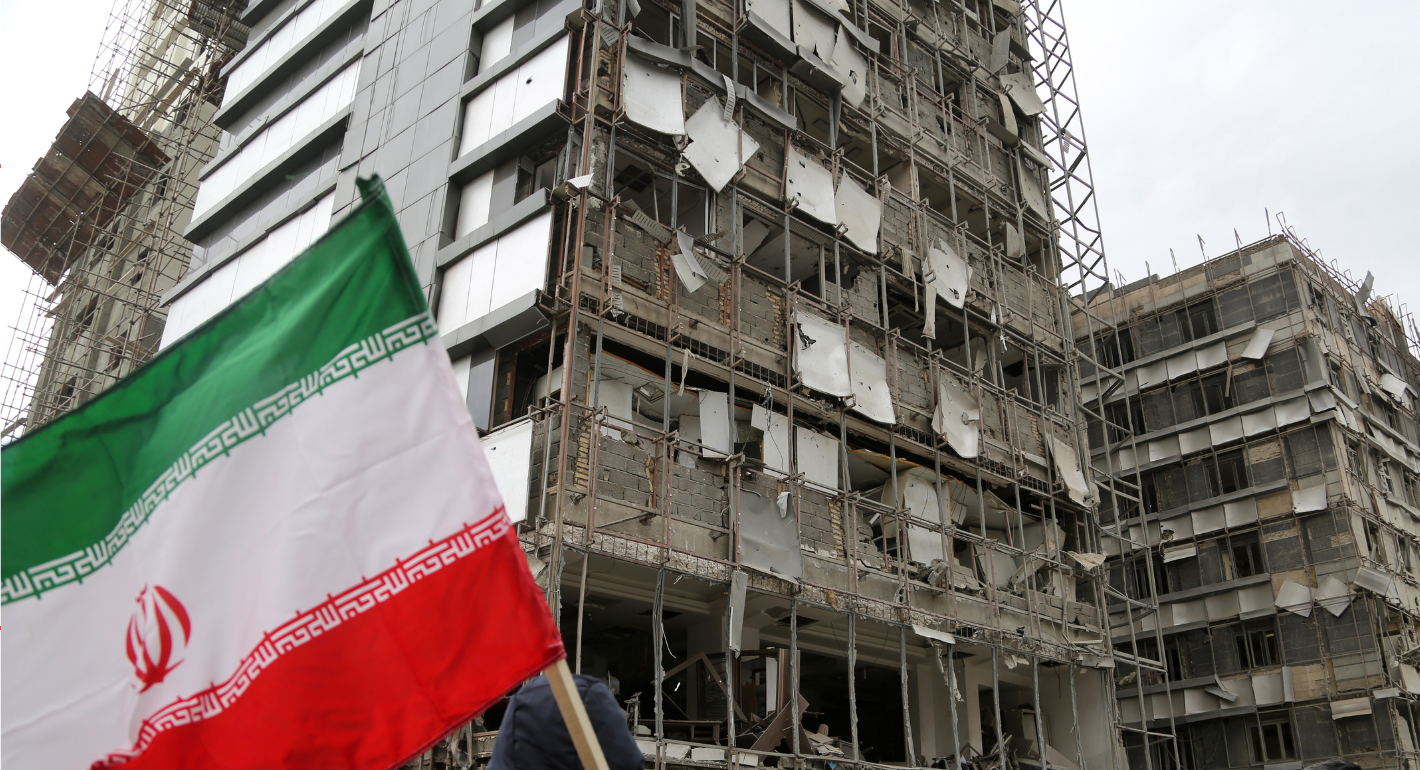
Europe’s reaction to the war in Iran has been disunited and meek, a far cry from its previously leading role in diplomacy with Tehran. To avoid being condemned to the sidelines while escalation continues, Brussels needs to stand up for international law.

Pierre Vimont
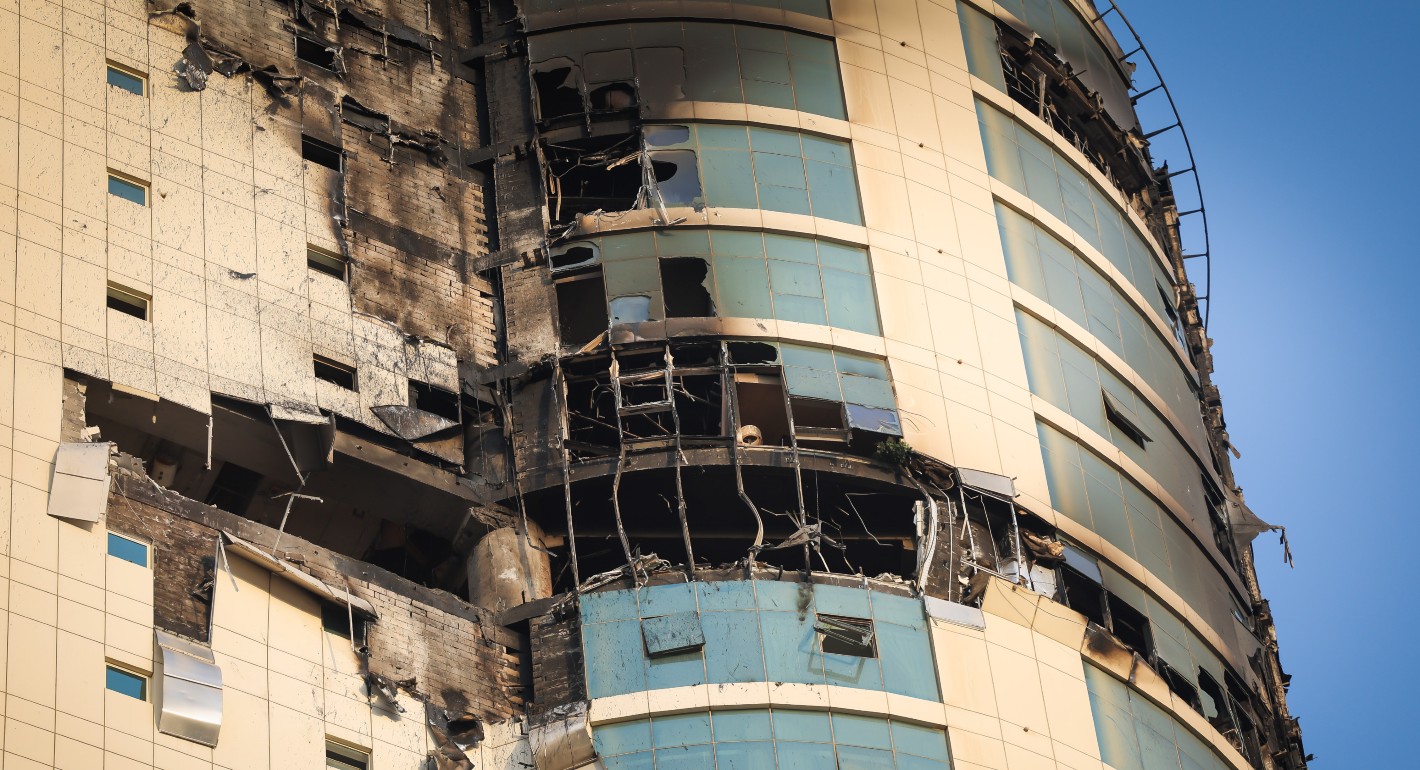
Two experts discuss how drone technology is shaping yet another conflict and what the United States can learn from Ukraine.

Steve Feldstein, Dara Massicot
Arguing that Chinese policy is hung on alliances—with imputations of obligation—misses the point.

Evan A. Feigenbaum
As Iran defends its interests in the region and its regime’s survival, it may push Hezbollah into the abyss.

Michael Young
Arms supplies from Russia to Iran will not only continue, but could grow significantly if Russia gets the opportunity.

Nikita Smagin