

Commentary
Joseph Bahout
{
  "authors": [
    "Joseph Bahout"
  ],
  "type": "legacyinthemedia",
  "centerAffiliationAll": "dc",
  "centers": [
    "Carnegie Endowment for International Peace",
    "Carnegie Europe",
    "Malcolm H. Kerr Carnegie Middle East Center"
  ],
  "collections": [],
  "englishNewsletterAll": "menaTransitions",
  "nonEnglishNewsletterAll": "",
  "primaryCenter": "Carnegie Endowment for International Peace",
  "programAffiliation": "MEP",
  "programs": [
    "Middle East",
    "Europe"
  ],
  "projects": [],
  "regions": [
    "Middle East",
    "Israel",
    "Palestine",
    "Western Europe",
    "France",
    "Levant",
    "Iran"
  ],
  "topics": [
    "Security",
    "Foreign Policy"
  ]
}
Source: Getty
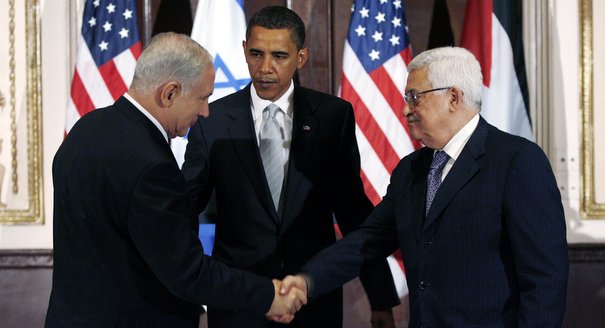
A new French initiative at the United Nations aims to break the deadlock and accelerate progress toward a lasting solution of the Israeli-Palestinian conflict.
Source: Mark News
Of all contemporary conflicts, the Israeli–Palestinian one is probably the most enduring and resistant to any resolution attempt. The conflict, more than a century old, started well before World War I and weighed heavily on international relations in a heated and dangerous manner several times after World War II and during the Cold War. It has remained a thorn in the side of international diplomatic life to this day.
All diplomatic formats have been tried, from public bilateral talks under brokerage, to secret direct negotiations between the two parties, to multilateral conferences with a strong United Nations input. More than 12 international resolutions have been passed, providing the legal framework for a solution. An exhaustive list of creative ideas has been put forward to bring about solutions to an ever-complicated equation – one that is growing more entangled with the passing of time.
Specialists and practitioners of what has become known as a “peace processing business” acknowledge that they now know what it will take to terminate the conflict: the right of both the Jewish and Palestinian peoples to live in dignity and security side by side in two states; a land-for-peace deal, which will require inventive quid pro quo negotiations to square off the difficult question of territory and space; and reparation and mutual recognition.While it’s clear what the contours of a satisfactory, realistic, and lasting solution are, what is lacking is a true political will from both parties to jump into a deal, display the required leadership, and pay the price needed for achieving and implementing the solution.
It is in this context of incredible stagnation, where further regression threatens to ignite new fires in the Middle East, that France – an important yet so far lateral partner in the permanent “peace processing industry” – has put forward a bold initiative that aims to break the deadlock and accelerate progress towards the acknowledged solution.
A draft of a French UN Security Council resolution was published in a French newspaper on May 20. In it, France proposes formally recognizing an independent and definitive Palestinian State. The proposal sets an 18-month deadline for a bargained settlement that establishes a Palestinian state based on the 1967 borders, with required land swaps, and recognizes Jerusalem as the common capital of both states. France’s plan also suggests holding an international peace conference that would crown the process before it begins.
France is trying to reverse the entire game and place the result ahead of the process. French diplomats are using classic negotiation techniques, putting players under time constraints by imposing a deadline on a process that could otherwise drag on with endless bickering.
Paris aims to break the cycle of unsuccessful face-to-face negotiations between Palestinians and Israelis, as well as remove the tired and ideas-dried American broker from the equation. It also seeks to place the ball in the UN Security Council’s court in hopes that “imposed peace” will be a game changer.
Other European countries, such as the U.K., Germany, Spain, and Italy, will likely follow France’s lead, which would create a new international momentum. The United States, however, does not yet appear to be on board.
France submitted a similar draft to the UN Security Council in December, and the United States opposed it, arguing that it was bad timing as it was just before the Israeli elections.
It is understandable that the United States might be reluctant to accept France’s proposal: With this move, France appears to be stripping the United States of its longstanding role as the conflict’s main broker. However, Paris knows that U.S. acceptance is more than necessary. It seeks to provide exhausted U.S. diplomacy with a tool for division of labor: The proposed process could help the American broker convince Israel to take a bold step towards full-fledged peace, while Europe can do the same on the side of the Palestinian party.
This initiative also comes at a time when Washington, striving to conclude a nuclear deal with Iran, is eager to reassure Israel of its security. American diplomats perceive France’s move as an additional and dispensable fear factor for an already paranoid Israeli government. France may, however, be well aware of this risk: Perhaps it’s attempting to draw the world’s attention away from the current conflicts with Iran, the Gulf, and the Islamic State, using its Palestine initiative to nudge attention again towards a conflict that many still consider the mother of all others.
Former Nonresident Fellow, Middle East Program
Joseph Bahout was a nonresident fellow in Carnegie’s Middle East Program. His research focuses on political developments in Lebanon and Syria, regional spillover from the Syrian crisis, and identity politics across the region.
Recent Work
Joseph Bahout
Joseph Bahout
Carnegie does not take institutional positions on public policy issues; the views represented herein are those of the author(s) and do not necessarily reflect the views of Carnegie, its staff, or its trustees.

The acknowledgment has sparked fears of a new arms race with China and Russia.

Chris O’Meara

Smaller powers cannot go it alone, but Canadian history shows that integration with the United States will not always be benign.
Paul Samson

The European Commissioner for Trade is headed to China. But after President Xi’s bridge-building visit to Washington, can a more isolated EU overcome Beijing’s stranglehold on critical raw materials? Who will blink first?

Rym Momtaz, ed.

The summit may be remembered as a fatal blunder, when Washington, Beijing, and the AI industry collectively chose ceremony over action.

Jeffrey Prescott

European NATO countries are wrestling with the possibility of U.S. disengagement from the alliance. With the continent’s security increasingly uncertain, governments must restore the credibility of their collective defense.



Hans-Dieter Lucas, Adam Thomson, Pierre Vimont