
Arms supplies from Russia to Iran will not only continue, but could grow significantly if Russia gets the opportunity.
Nikita Smagin
{
"authors": [
"Ukraine Reform Monitor Team"
],
"type": "other",
"centerAffiliationAll": "dc",
"centers": [
"Carnegie Endowment for International Peace",
"Carnegie Europe"
],
"collections": [
"Europe’s Eastern Neighborhood",
"Ukraine Reform Monitor"
],
"englishNewsletterAll": "",
"nonEnglishNewsletterAll": "",
"primaryCenter": "Carnegie Endowment for International Peace",
"programAffiliation": "russia",
"programs": [
"Russia and Eurasia"
],
"projects": [
"Reforming Ukraine"
],
"regions": [
"Eastern Europe",
"Ukraine",
"Europe"
],
"topics": [
"Political Reform",
"Economy",
"Security",
"Foreign Policy"
]
}Source: Getty
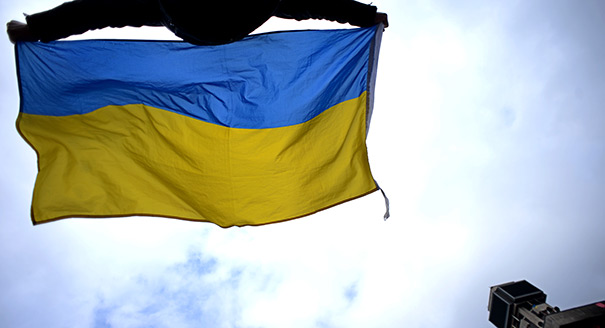
Ukraine held local elections and made modest reform progress, while the economy improved slowly. But there are renewed concerns about the ceasefire in the east.
The Ukraine Reform Monitor provides an independent, rigorous assessment of the extent and quality of reforms in Ukraine. The Carnegie Endowment has assembled an independent team of Ukraine-based scholars to analyze reforms in four key areas. This third memo covers October and November 2015. The monitor is supported in part by a grant from the Open Society Foundations.
The main political event in Ukraine during the October–November period was the October 25 local elections. These much-anticipated elections did not fundamentally change the balance of political power in the country. However, they renewed concerns about the enduring power of oligarchs in some regions and demonstrated the residual strength of former president Viktor Yanukovych’s Party of Regions in others. The economic situation improved slowly, and the government approved a number of sectoral liberalization measures. In late November, violations of the ceasefire in Donbas in eastern Ukraine became more frequent, leading to fresh worries about the future of the Minsk agreement aimed at ending the fighting. Despite modest progress on the issue of decentralization, fundamental differences about the form this should take remained unresolved.
| Table 1. Results of Ukraine’s October 25 Local Elections | ||
| Party Name | Result (Number of Representatives) | Expected Position |
| Petro Poroshenko Bloc | Over 9,000 | Pro-presidential |
| Fatherland | Over 8,000 | Pro-Tymoshenko |
| Our Country | Over 4,500 | Pro-presidential |
| Opposition Bloc | Over 4,000 | Opposition, residual Party of Regions |
| Agrarian Party | Over 3,000 | Pro-presidential |
| Radical Party | Over 2,500 | Opposition, supports oligarch Ihor Kolomoyskyi |
| Ukrainian Association of Patriots | Over 2,000 | Opposition, pro-Kolomoyskyi |
| Revival | Over 1,500 | Opposition, pro-Kolomoyskyi |
| Freedom | Over 1,500 | Far-right opposition |
| Self-Reliance | Over 900 | Nominally a member of the ruling coalition |
| Source: Committee of Voters of Ukraine. | ||
The long-awaited local elections represented a notable step forward in democratization, helping improve the legitimacy of local government. In the aftermath of the elections, there was much debate about the strength of the ruling coalition in Kyiv. Overall, the elections provided a boost to Poroshenko and the ruling coalition. At the same time, the results also revealed the enduring power of oligarchs in local politics in some parts of the country.
There has been some modest progress on the thorny aspects of judicial reform and anti-corruption mechanisms. Economic performance has stabilized, and the steady pace of regulatory reform has been sustained. The Ukrainian government continues to strengthen the capacity and transparency of security-sector institutions, albeit in an uneven and fragmented fashion. There are renewed concerns about the resilience of the Donbas ceasefire.
The relatively technical aspects of decentralization have advanced. As in previous periods, the more systemic and political dimensions of decentralization remain unresolved and will be conditioned by the broader dynamics of the conflict in Donbas.
Ukraine Reform Monitor Team
Carnegie does not take institutional positions on public policy issues; the views represented herein are those of the author(s) and do not necessarily reflect the views of Carnegie, its staff, or its trustees.
Arms supplies from Russia to Iran will not only continue, but could grow significantly if Russia gets the opportunity.
Nikita Smagin
On the fourth anniversary of Russia’s full-scale invasion, Carnegie experts discuss the war’s impacts and what might come next.
Eric Ciaramella, Aaron David Miller, Alexandra Prokopenko, …
The use of technology to mobilize Russians to vote—a system tied to the relative material well-being of the electorate, its high dependence on the state, and a far-reaching system of digital control—is breaking down.
Andrey Pertsev
New data from the 2026 Indian American Attitudes Survey show that Democratic support has not fully rebounded from 2020.
Sumitra Badrinathan, Devesh Kapur, Andy Robaina, …
France and Germany’s failure to agree on the Future Combat Air System (FCAS) raises questions about European defense. Amid industrial rivalries and competing strategic cultures, what does the future of European military industrial projects look like?
Rym Momtaz, ed.