

Q&A
Darshana M. Baruah, Satyendra Prasad, Denghua Zhang
{
  "authors": [
    "Satyendra Prasad"
  ],
  "type": "questionAnswer",
  "centerAffiliationAll": "dc",
  "centers": [
    "Carnegie Endowment for International Peace"
  ],
  "collections": [
    "Climate Mobility"
  ],
  "englishNewsletterAll": "ctw",
  "nonEnglishNewsletterAll": "",
  "primaryCenter": "Carnegie Endowment for International Peace",
  "programAffiliation": "SAP",
  "programs": [
    "South Asia",
    "Sustainability, Climate, and Geopolitics"
  ],
  "projects": [
    "Indian Ocean Initiative"
  ],
  "regions": [
    "North America",
    "United States",
    "South Asia",
    "East Asia",
    "China",
    "Oceania"
  ],
  "topics": [
    "Economy",
    "Climate Change"
  ]
}
Source: Getty
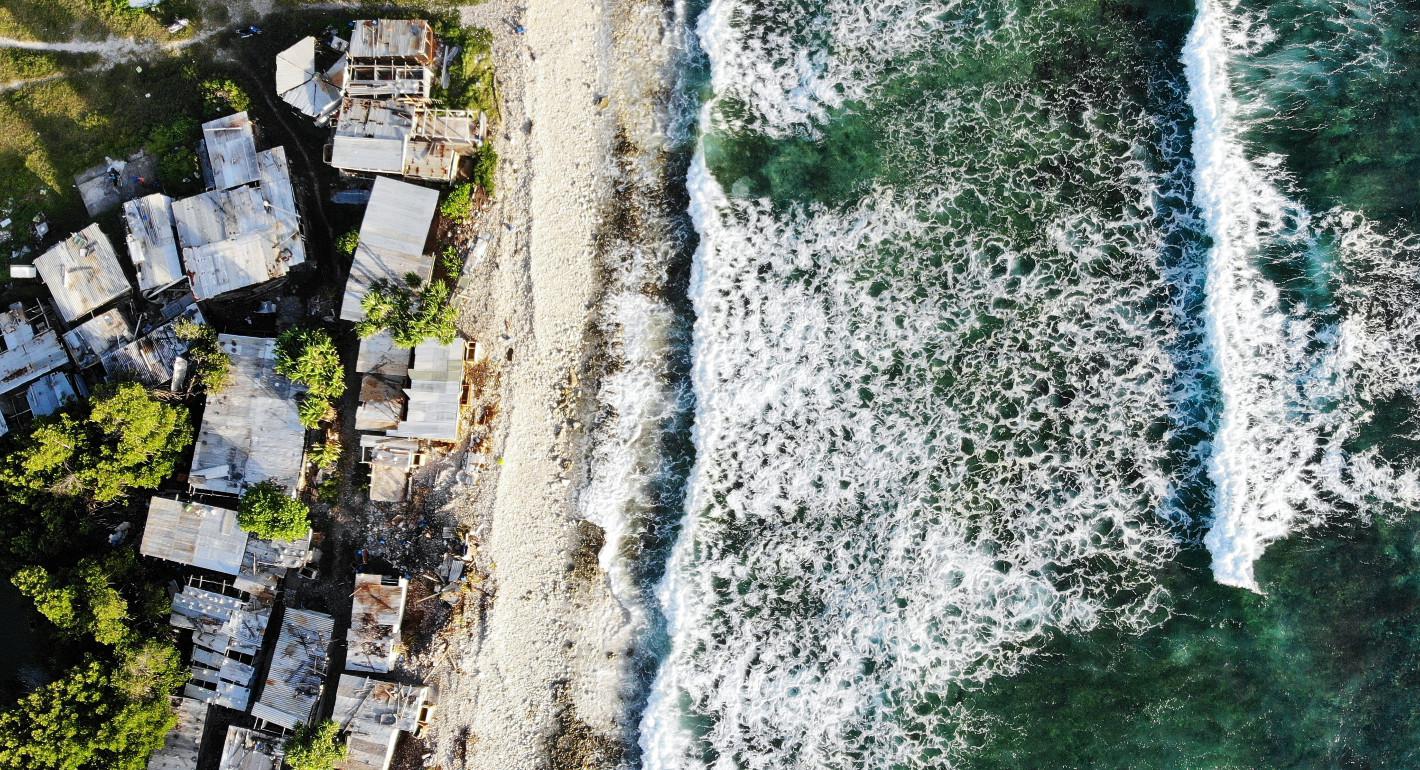
How small island states in the Pacific are banding together to navigate climate change and other pressing issues.
On Sept. 18–19, former Fijian ambassador to the UN and Carnegie nonresident senior fellow Satyendra Prasad will joining the Indo-Pacific Islands Dialogue in New York. Click here to view the agenda, register, or learn more.
What is the most pressing issue for small island developing states (SIDS) in the Pacific today?
Climate change. The Pacific has been experiencing cyclones, droughts, and storms for centuries. What is new about these is that they are now supercharged by climate change. This has been so for several decades now. The persistent and long recoveries that followed major catastrophes have often been painful and lonely national journeys, mainly out of sight of international media. These have shaped the Pacific SIDS’ perspectives.
In this context, the SIDS find that their own determination to secure the UN’s Sustainable Development Goals (SDGs) has become more challenging. Often, the progress made by Pacific SIDS toward these goals gets pushed back or delayed following each climate catastrophe. They feel that the world does not understand their plight. They are right.
When a major cyclone hits Australia or a hurricane strikes the United States, its impact on the country’s overall economy may be a minute drop in overall GDP—at worst. When disasters strike islands, as Cyclone Pam in Vanuatu in 2015, their impacts are substantial and across the whole of the economy. Cyclone Pam wiped out approximately 70 percent of Vanuatu’s GDP—the equivalent of eliminating $16 trillion from the $23 trillion of current U.S. GDP.
What is the relationship between SIDS and power players of the Pacific? How have those relationships changed in recent years?
The Pacific region as a whole has a diverse set of trade, economic, and political relationships. These relationships have become even more diverse in recent years.
The southern Pacific states in Melanesia and Polynesia have especially done well as a result. Their traditional dependence on the Australian, New Zealand, and European markets has been gradually declining. The spectacular rise of China, India, Indonesia, Malaysia, and Singapore has been a blessing for the SIDS, allowing them to diversify their economies and trade and develop new markets for their tuna, timber, and other natural resources.
The Pacific islands feel more secure in their sovereignty—more capable of having frank and tough conversations with their partners. They are more forthright when their partners fail them. This is positive and healthy, but there are many, many challenges ahead.
The Pacific region is also acutely aware of its place in the modern world as a zone of peace. The region is a significant source of the world’s protein, and it is the planet’s largest carbon sink. Much of the trade between China and the United States happens through the Blue Pacific. The great powers of our age find that their prosperity depends on a peaceful and a stable Blue Pacific.
In this new era, Pacific island states are more confident of what they desire from their partners. The most important of these by a mile is respect for their sovereignty as individual states and their shared sovereignty through their regional settings. These states do not have nor do they desire large navies. They know the limits of their statecraft. To compensate for this, they desire long-term development partnerships. They seek respect for international law. These desires may seem trivial to large states, but they are fundamentally important for Pacific SIDS. Countries that misread these sentiments do so at their peril.
Island nations such as Fiji have long stated that they feel excluded from conversations surrounding issues like maritime security and climate action. If you were leading these conversations, how would you shift the narrative to be more inclusive?
For too long, decisions have been made for the Pacific region in distant capitals and in faraway conference rooms where the Pacific SIDS were not represented. This is changing.
Acting as one, the Pacific states have begun to get their voices heard in the global climate discussions. At the UN, their representatives are clear and persistent. In their collective discussions with development partners, they are clear about their priorities and their plans. There are many more steps ahead, but this is changing—I believe for the better.
How did your position as Fiji’s ambassador to the United Nations impact how you approach coalition building?
The island states of the Blue Pacific operate in a difficult environment internationally. The most important thing that they have is their solidarity and unity. This was severely tested during my term, but the region has come out stronger, more determined, and far more focused on what and where the countries need to work.
During my five-year term, I had the honor of being the chair of the Pacific islands developing states at the Pacific Islands Forum (which includes Australia and New Zealand). Whether it is having focused and cohesive dialogue with the United States through the first ever U.S.–Pacific Island Country Summit or reaching consensus on a loss-and-damage facility to bring significant changes to a financial architecture that does not work for the Pacific—across all this, the Pacific’s solidarity is what makes us unique. But getting to that point is not easy. It means many hours of quiet conversation. It means framing challenges and forging solutions together.
It has been an absolute honor to work with my colleagues across so many tough questions. The hours may be long. Small states depend on their diplomats in such an outsize way that has no parallel in that universe of middle- or large-sized countries.
Consensus is the DNA of the Pacific region. When we are united, few things can stop this region. The absence of consensus benefits those who seek to keep things as they are. The region’s leaders and diplomats will need to continue to skillfully navigate the fault lines on which this consensus sits.
Much of the conversation around SIDS in the Western media is framed around competition with China. What’s your point of view on this narrative?
It’s quite surreal. To read analysis of the Blue Pacific as solely being a theater, an arena, a place for geopolitical contestation is dehumanizing. Much of such writings and analysis parallel the way in which commentators wrote about the world in the seventeenth through the nineteenth centuries.
The Blue Pacific is about people, communities, states, and colonies that make up this region. It is their story. It is about their anxieties and their challenges. They alone are the subjects; they alone will decide how their stories will be shaped. I know this is an uphill task in a world programmed to see and define things in terms of a geostrategic competition. That is precisely what we at Carnegie intend to address through the Islands Dialogue. Conversations and analysis on the Blue Pacific must be about Pacific islanders, their societies, and their states. Conversations about the Blue Pacific must be about their worldviews, not about how the world views them. The people and countries across the vast Blue Pacific are not lifeless objects. I hope we can contribute in a small way to reshaping this narrative.
Former Nonresident Senior Fellow, South Asia Program, Sustainability, Climate and Geopolitics Program
Dr. Satyendra Prasad was a nonresident senior fellow in the South Asia and Sustainability, Climate, and Geopolitics Programs at the Carnegie Endowment for International Peace.
Recent Work


Darshana M. Baruah, Satyendra Prasad, Denghua Zhang
Satyendra Prasad
Carnegie does not take institutional positions on public policy issues; the views represented herein are those of the author(s) and do not necessarily reflect the views of Carnegie, its staff, or its trustees.

Despite its flop at the box office, the film raises important questions for the climate community to answer.
Leonardo Martinez-Diaz

Russian strikes are weakening the economy sustaining Ukraine’s war effort. Closing the growing funding gap will require more European support and politically contentious reforms in Kyiv.

Balázs Jarábik

In an interview, Rozina Ali discusses her new book on the rise and manifestations of Islamophobia in the United States.

Michael Young

While the EU and European governments are embracing the much-lauded middle-power moment, this entails three difficult conundrums.

Richard Youngs

Europe is facing rising populism internally as well as external pressures from Russia, China, Turkey, and the United States.

Dimitar Bechev