

Paper
Ashley J. Tellis
{
  "authors": [
    "Ashley J. Tellis"
  ],
  "type": "other",
  "centerAffiliationAll": "dc",
  "centers": [
    "Carnegie Endowment for International Peace"
  ],
  "collections": [
    "Iranian Proliferation",
    "Japan's Nuclear Crisis"
  ],
  "englishNewsletterAll": "ctw",
  "nonEnglishNewsletterAll": "",
  "primaryCenter": "Carnegie Endowment for International Peace",
  "programAffiliation": "SAP",
  "programs": [
    "South Asia"
  ],
  "projects": [],
  "regions": [
    "North America",
    "United States",
    "Middle East",
    "South Asia",
    "India",
    "Pakistan",
    "East Asia",
    "South Korea",
    "China",
    "Russia",
    "North Korea"
  ],
  "topics": [
    "Security",
    "Military",
    "Foreign Policy",
    "Nuclear Policy",
    "Arms Control",
    "Nuclear Energy"
  ]
}
Source: Getty
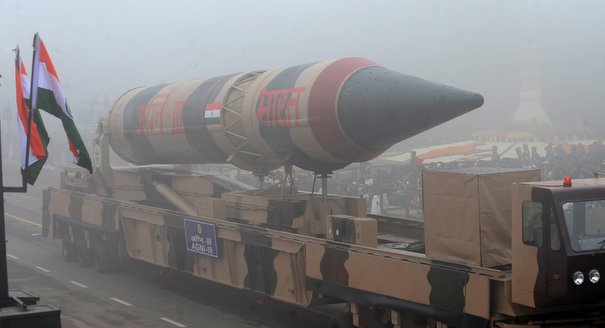
Although the emergence of new nuclear powers in the post–Cold War era has triggered fears of widespread nuclear proliferation and renewed calls for nuclear abolition, the pursuit and development of nuclear weapons in Asia are likely to only increase in the years ahead.
Source: National Bureau of Asian Research
This chapter examines the logic of nuclear weapons abolitionism, surveys the contemporary nuclear developments in Asia that are described in this volume, and highlights implications for the U.S. and its ambitions regarding comprehensive nuclear disarmament.Although the emergence of new nuclear powers in the post–Cold War era has triggered fears of widespread nuclear proliferation and renewed calls for nuclear abolition, the pursuit and development of nuclear weapons in Asia are likely to only increase in the years ahead. Continuing interstate competition, along with the expectations of many states that nuclear weapons will enhance their security and offer deterrence value, ensures that regional arsenals will grow. The U.S., therefore, must prepare for a reality that is quite different from the vision offered by nuclear abolitionism: an Asia that hosts many nuclear powers whose arsenals vary in capacity, architecture, and doctrine.
This chapter is the introduction to Strategic Asia 2013-14: Asia in the Second Nuclear Age. Read more about Strategic Asia, including information on how to order the complete book, here.
Former Senior Fellow
Ashley J. Tellis was a senior fellow at the Carnegie Endowment for International Peace.
Recent Work
Ashley J. Tellis
Ashley J. Tellis
Carnegie does not take institutional positions on public policy issues; the views represented herein are those of the author(s) and do not necessarily reflect the views of Carnegie, its staff, or its trustees.

A deep dive into the policy ecosystems behind battery development in China, South Korea, Japan, the European Union (including some of its member states), the United States, Canada, and India.



Milo McBride, Herbert Crowther, Darcie Draudt-Véjares, …

In an interview, Ian Lustick and Eli Clifton discuss their new book on why a prominent ally has so much influence in America.

Michael Young

Germany, India, and other middle powers can’t build frontier AI alone, and they risk being cut off if they depend on the United States or China. The way through is to build the capacity for a frontier sprint while hoping never to use it.


Anton Leicht, Sam Winter-Levy

Sergei Kiriyenko used Russia’s parliamentary vote to further hone his strategy of corporate mobilization that is designed to maximize votes for United Russia.

Andrey Pertsev

The Plaza Accord was not an externally imposed punishment of Japan but part of a broader restructuring that Japanese economists and policymakers themselves recognized was necessary. Its effects were undermined, however, when Tokyo responded to the resulting slowdown with policies that exacerbated investment, credit expansion, and the very imbalances the adjustment was intended to resolve.

Michael Pettis