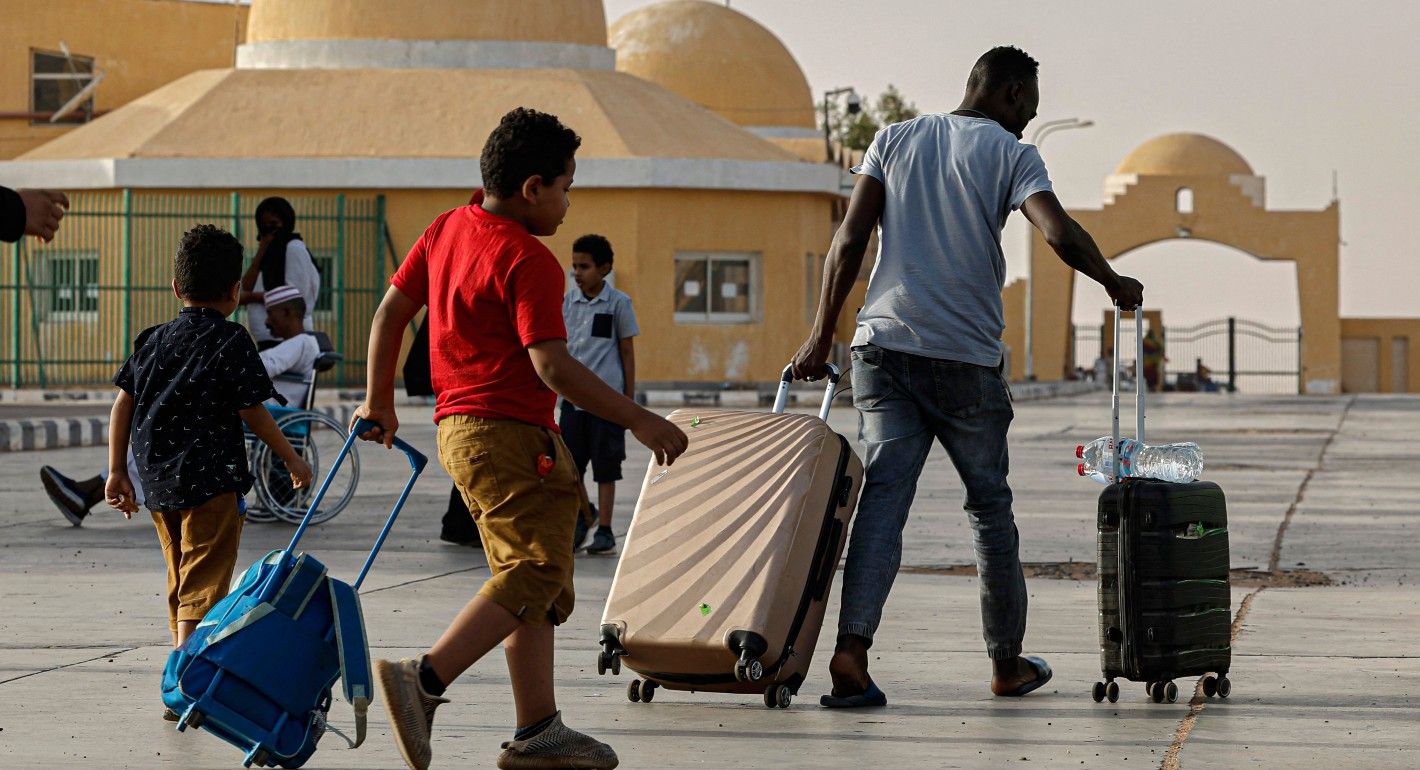
In January 2024, during a meeting convened by the Egyptian cabinet to address the refugee situation, Prime Minister Mostafa Madbouly revealed that Egypt has taken in 40 precent of the people fleeing Sudan, hosted one and a half million Syrian refugees since 2012, and is expected to receive more Palestinians displaced from Gaza amid ongoing conflict.
Madbouly emphasized the importance of auditing these numbers and meticulously documenting the state’s expenditures on services provided to these "guests," with the goal of seeking international aid to ease the mounting burden. However, the cabinet meeting, which included several key ministers, conflated refugees, migrants, and temporary residents into a single category, failing to clarify the specific support and distinct challenges each group faces.
This confusion and the subsequent media coverage sparked widespread controversy, fueling hate speech and bullying against these vulnerable groups who were wrongly portrayed as the root cause of Egypt's severe economic crisis, marked by deteriorating living conditions, soaring costs of services, and acute shortages of essential goods. In light of this, it is imperative to address pressing questions about the impact of hosting over 9 million "guests" on Egypt's already strained economy.
Refugees or immigrants?
According to official statistics, the smallest group among the nine millions are the refugees and asylum seekers, who represent about 600,000 people registered with the United Nations High Commissioner for Refugees (UNHCR) in Egypt. The UNHCR works with the Government of Egypt to provide protection and legal services to these groups, especially those who were forcibly displaced. The UNHCR also tries to ensure the inclusion of refugees in Egypt’s public health and education systems by providing support in the form of medical supplies and equipment, and financial assistance to schools that have registered to receive refugees.
Apart from this number, the remaining individuals are visitors and temporary residents, as well as migrants who try to regularize their status through various legal means to obtain long-term residency and subsequently integrate into society. According to official statements, 60 percent of foreigners living in Egypt have been residing in the country for about ten years, and 37 percent of them work in permanent jobs in stable companies. These groups do not receive any form of support.
An economic challenge or opportunity?
According to these statistics, refugees represent the smallest bloc of the total number of foreigners residing in Egypt, and the Egyptian government does not bear their burden. As for the other categories of residents, they are committed to paying their taxes and covering all their living expenses, and they follow the stipulations of the Foreigners Law and other relevant laws and regulations.
In fact, foreign students pay enrollment fees in Egyptian universities, as well as residency expenses, in U.S. Dollars and other foreign currencies. Also, U.S. Dollar payments are not limited to obtaining government registration documents but often extend to paying rent and other expenses related to buying and selling real estate.
This trend is driven by the growing confidence in and reliance on foreign currencies among property owners, who often prefer renting to expatriates, as they are perceived to have more access to foreign currency than their Egyptian counterparts. This has led to an increased demand for services catering to the influx of foreigners, which, in turn, has caused rent prices to rise, with rates increasingly influenced by the exchange rate of foreign currencies.
Egyptian columnist Akram Alfi, who is keenly interested in demography, believes that most Sudanese and Syrian refugees and residents who came to Egypt belong to the upper and middle classes. These individuals have significant capital and can rely on their savings to live comfortably and integrate easily into the community. Therefore, these groups do not represent an economic burden but rather an economic opportunity for several reasons.
First, as the Egyptian government is publicly and openly reducing subsidies for goods and services, these residents are not taking advantage of subsidized resources that could strain the budget and public expenditures. Second, these refugees pay for services such as health, education, and housing in U.S, Dollars, contributing to the national economy rather than depleting it. Third, their presence in Egypt has revitalized economic sectors in which they have invested, such as real estate and hotels, some of which were on the verge of decline.
Looking deeper into the details, Alfi notes that among the Syrian immigrants now residing in Egypt many were living in Aleppo, a city that is predominantly Sunni Muslim. These Syrian refugees fled their hometown due to conflict and settled in Egypt and Turkey. Given Aleppo's history as a center of industry and commerce, they came with industrial, commercial, and educational affluence. Of the one and a half million Syrians residing in Egypt, approximately 200,000 are venture capitalists, while 600,000 to 700,000 work in family businesses.
The same applies to the Sudanese community, which Alfi believes has revitalized the real estate economy. Most of the Sudanese who came to Egypt belong to the upper and upper-middle classes, similar to their Syrian counterparts. Over the past forty years, Sudanese who settled in Cairo have preferred specific neighborhoods such as Mohandessin and Faisal. These areas have become magnets for newcomers who either rented properties in U.S. Dollars or invested their money in purchasing real estate, leading to a boom in the local real estate market.
Therefore, it is possible to consider foreign residents in Egypt, across all categories, as an important addition that positively impacts the Egyptian economy without affecting opportunities available to Egyptians. Their presence does not strain the service sector, as U.S. Dollar payments for these services are expected to foster growth to accommodate the increasing number of users. Additionally, the influx of these guests during the economic crisis means that they may help share the burden.
Note:
The author interviewed Egyptian journalist Akram Alfi on 22 and 28 April, 2024.