

Commentary
Ultimately, Zelensky sided neither with the reform camp nor with the military establishment as such, but with political control.
Balázs Jarábik
{
  "authors": [
    "Michael McFaul",
    "James Goldgeier"
  ],
  "type": "legacyinthemedia",
  "centerAffiliationAll": "dc",
  "centers": [
    "Carnegie Endowment for International Peace"
  ],
  "collections": [],
  "englishNewsletterAll": "ctw",
  "nonEnglishNewsletterAll": "",
  "primaryCenter": "Carnegie Endowment for International Peace",
  "programAffiliation": "russia",
  "programs": [
    "Russia and Eurasia"
  ],
  "projects": [],
  "regions": [
    "Caucasus",
    "Russia",
    "Eastern Europe",
    "Belarus"
  ],
  "topics": [
    "Political Reform",
    "Economy",
    "Security",
    "Foreign Policy"
  ]
}
Source: Getty
Russia is not a democracy. The international community should stop pretending that Russia's deteriorating domestic politics are unrelated to Russia's increasingly antagonistic and anti-American foreign policies. The same autocratic regime is responsible for both.
Source: Washington Post

Even the Bush administration's newly released National Security Strategy finally acknowledges this, concluding that "recent trends regrettably point toward a diminishing commitment to democratic freedoms and institutions" in Russia.
And yet the president still holds out unwarranted hope. "I haven't given up on Russia," Bush said in a speech last month at Freedom House, a pro-democracy organization. "I still think Russia understands that it's in her interests to be West, to work with the West and to act in concert with the West."
Unfortunately, an authoritarian Russia is less inclined to act in concert with the West. The bad news emanating from Russia just over the past month proves that Moscow's increasingly autocratic leadership will clash often with Washington in world affairs.
Of course, no two countries will ever have identical interests. Even some of America's oldest democratic allies in Europe have crossed the Bush administration on foreign policy. Overall, though, democracies cooperate in ways that advance mutual interests. By contrast, current Russian foreign policy -- and Russia's policy toward the United States in particular -- reveals that Moscow views global politics as a zero-sum game: What's good for the United States is bad for Russia, and vice versa.
Consider the events of the past month. In mid-March, Alexander Lukashenko -- the "last dictator in Europe" -- orchestrated another fraudulent election in Belarus, and then sent his police to arrest and beat hundreds of peaceful demonstrators. Putin was one of the few world leaders to praise this election victory. That same week, William F. Browder, the largest Western investor in Russia, with about $4 billion invested in Russia's major companies, revealed that Russian authorities had denied him a visa. (The official reason: Browder posed a national security threat.) A few days later, the Pentagon published a study asserting that Russian intelligence officials had informed Saddam Hussein about U.S. troop movements during the invasion of Iraq in 2003. And just a few days after that, State Department officials expressed dismay with Russia's foot-dragging over a U.N. Security Council statement censuring Iran and its nuclear weapons program.
Would some of this be taking place even if Russia were a democracy? Perhaps. But most of it would not.
In Belarus, Putin continues to prop up Lukashenko's regime, at considerable cost to Russian taxpayers, because Putin and his advisers regard the advance of democracy in the former Soviet space as a U.S. gain and a Russian loss. In the Kremlin's eyes, Washington scored points in Georgia's 2003 Rose Revolution and Ukraine's 2004 Orange Revolution, while Moscow chalked up victories in Uzbekistan last summer -- when it supported Uzbek President Islam Karimov's slaughter of unarmed civilian protesters -- and now in Belarus. (The Tulip Revolution that led to the overthrow of President Askar Akayev in Kyrgyzstan in March 2005 is counted in Moscow as a draw.)
Democracies do not see the world in such terms. Few Western democracies have strategic interests in Belarus, but they still regard the advance of liberty there as good both for Belarus and for global stability. If Russian leaders sought to integrate Russia into the community of democratic states, they would have denounced Lukashenko's thuggish ways.
Browder's saga is equally revealing. The denial of his visa is an obvious attempt to obstruct his business in Russia. All countries, of course, can regulate foreign investment as they see fit; the recent Dubai Ports World fiasco in the United States showed that democracies are hardly immune from xenophobic investment decisions. But although a democratic Russia would pass legislation defining what foreigners can and cannot own, a corrupt and autocratic Russia makes it easy for a local business competitor to deploy special state ties to keep Browder out. Moreover, Browder has pushed for minority shareholder rights in Russia's major companies, including the gas giant Gazprom. Given Gazprom's mammoth share of the world gas market, the United States has a clear interest in making the company more responsive to shareholders and less beholden to politicians.
A less open Russia also increases the potential damage to the United States and its allies from new global threats. With the 20th anniversary of the Chernobyl disaster approaching, does anyone concerned with environmental hazards believe U.S. interests are unaffected when Russia clamps down on a free press that could broadcast critical information if a new transnational health threat emerged?
Finally, if true, the revelations about Russian intelligence-sharing with Saddam Hussein before the war would be the most disturbing indication of how regime type affects foreign policy. Not all the world's democracies supported Bush's invasion of Iraq, but no democracy went so far as to aid Hussein in the war. In 2003, German Chancellor Gerhard Schroeder denounced the U.S.-led invasion, but his government shared intelligence on Iraq with its democratic allies. Putin appears to have done the opposite, possibly costing American lives. Also, before the war, Russian companies with ties to the state sold antitank missiles, night-vision goggles and equipment that jams global-positioning systems to the Iraqi armed forces. No European democracies did the same.
There will always be so-called realists who argue that democracy is a secondary priority for American foreign policy in dealing with major powers such as Russia. Forget about the internal politics, they say, and just engage these countries on major strategic interests, such as nonproliferation or energy security. But how a country defines "strategic interest" depends on its regime; democracies have one set of definitions, autocracies another.
The democratization begun under Soviet President Mikhail Gorbachev and continued by Russian President Boris Yeltsin ended the Cold War and established new possibilities for cooperation on everything from German unification to joint peacekeeping in the Balkans. A return to a more democratic path in Russia would serve U.S. interests by reducing dangers to democracy throughout Eurasia, enhancing property rights for American investors, providing a more reliable energy supply to the West, and producing a more cooperative partner in addressing threats from terrorist groups or rogue regimes.
But during the same week that the Kremlin backed Lukashenko, denied Browder his visa and was accused of sharing intelligence with Iraq, the Putin government also froze the bank accounts of Open Russia, the first major Russian foundation to support the development of genuine civil society. At the same time, Kremlin loyalists in the parliament introduced legislation to give appointed governors broad powers over popularly elected mayors. And Marina Litvinovich -- a spokeswoman for democratic activist Garry Kasparov -- was brutally beaten, in what Russian human rights groups consider a grim warning to those who would challenge the Russian government.
Let's stop pretending that Russia's deteriorating domestic politics are unrelated to Russia's increasingly antagonistic and anti-American foreign policies. The same autocratic regime is responsible for both.
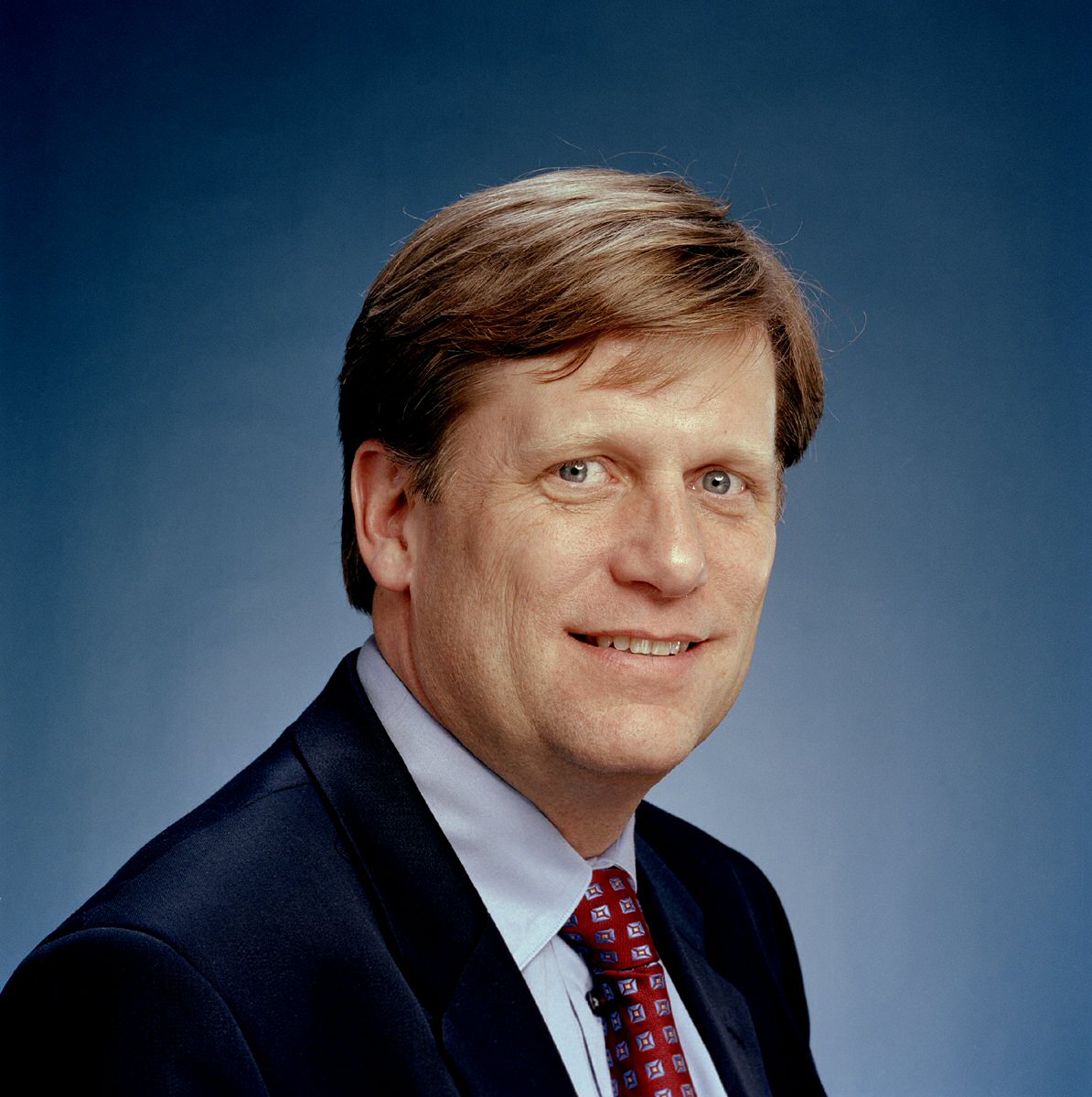
Former Senior Associate
In addition to his role at Carnegie, McFaul is Peter and Helen Bing Senior Fellow at the Hoover Institution and associate professor of political science at Stanford University.
James Goldgeier
James Goldgeier is a visiting scholar at Stanford University’s Center for International Security and Cooperation, a visiting fellow at the Brookings Institution, and a professor of international relations at American University.
Carnegie does not take institutional positions on public policy issues; the views represented herein are those of the author(s) and do not necessarily reflect the views of Carnegie, its staff, or its trustees.
Ultimately, Zelensky sided neither with the reform camp nor with the military establishment as such, but with political control.

Balázs Jarábik
Despite the agreement’s uncertainty, it’s still a significant development in regional and nuclear policy.


Andrew Leber, Jane Darby Menton
“AI safety in parallel” is modest and pragmatic but vital.

Matt Sheehan

Trump is distracted and Ukraine wants Europe to step up. The continent’s leaders must find their voice and assert it in talks with Russia.

Alissa de Carbonnel
Unresolved tensions within the AfD may ultimately constrain the its potential as a leader among European and global populist forces.
Jeremy Cliffe