• Research
  • Emissary
  • About
  • Experts
Carnegie Global logoCarnegie lettermark logo
DemocracyIran
  • Donate
{
  "authors": [
    "Thomas Carothers"
  ],
  "type": "other",
  "centerAffiliationAll": "dc",
  "centers": [
    "Carnegie Endowment for International Peace"
  ],
  "collections": [
    "Democracy and Governance"
  ],
  "englishNewsletterAll": "democracy",
  "nonEnglishNewsletterAll": "",
  "primaryCenter": "Carnegie Endowment for International Peace",
  "programAffiliation": "DCG",
  "programs": [
    "Democracy, Conflict, and Governance",
    "Middle East"
  ],
  "projects": [],
  "regions": [
    "North America",
    "Middle East",
    "China"
  ],
  "topics": [
    "Political Reform",
    "Democracy",
    "Security",
    "Foreign Policy"
  ]
}
Source: Getty

Other

The Debate on “Sequencing”

The July 2007 issue of Journal of Democracy showcases a debate on Thomas Carothers’ “The ‘Sequencing’ Fallacy” featuring Edward Mansfield, Jack Snyder, Francis Fukuyama, Sheri Berman, and Carothers. Mansfield and Snyder reassert their view that rapid democratization can be a dangerous recipe for civil or interstate violence. Carothers responds by explaining that Mansfield and Snyder mischaracterize his analysis while failing to address his central assertions.

Link Copied
By Thomas Carothers
Published on Jul 17, 2007
Program mobile hero image

Program

Democracy, Conflict, and Governance

The Democracy, Conflict, and Governance Program is a leading source of independent policy research, writing, and outreach on global democracy, conflict, and governance. It analyzes and seeks to improve international efforts to reduce democratic backsliding, mitigate conflict and violence, overcome political polarization, promote gender equality, and advance pro-democratic uses of new technologies.

Learn More
Program mobile hero image

Program

Middle East

The Middle East Program in Washington combines in-depth regional knowledge with incisive comparative analysis to provide deeply informed recommendations. With expertise in the Gulf, North Africa, Iran, and Israel/Palestine, we examine crosscutting themes of political, economic, and social change in both English and Arabic.

Learn More

Source: Journal of Democracy

The July 2007 issue of Journal of Democracy showcases a debate on Thomas Carothers’ “The ‘Sequencing’ Fallacy” featuring Edward Mansfield, Jack Snyder, Francis Fukuyama, Sheri Berman, and Carothers. Mansfield and Snyder reassert their view that rapid democratization can be a dangerous recipe for civil or interstate violence. Carothers responds by explaining that Mansfield and Snyder mischaracterize his analysis while failing to address his central assertions: authoritarianism is inherently at odds with democratic state-building and gradually introducing democratic reforms shows greater promise than putting off democracy indefinitely. Fukuyama highlights the tension between violent state-building and the creation of liberal institutions. Rejecting the notion that democratization must follow any particular sequence, Berman emphasizes that today’s successful democracies each followed a unique –and often tumultuous– path. 

Click on PDF icon above to read full debate.

About the Author

Thomas Carothers

Harvey V. Fineberg Chair for Democracy Studies; Director, Democracy, Conflict, and Governance Program

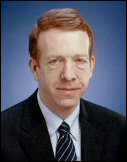
Thomas Carothers, director of the Carnegie Endowment for International Peace’s Democracy, Conflict, and Governance Program, is a leading expert on comparative democratization and international support for democracy.

    Recent Work

  • Commentary
    When Do Mass Protests Topple Autocrats?
      • McKenzie Carrier

      Thomas Carothers, McKenzie Carrier

  • Article
    The Trump Administration’s Tangled Talk About Democracy Abroad
      • McKenzie Carrier

      Thomas Carothers, McKenzie Carrier

Thomas Carothers
Harvey V. Fineberg Chair for Democracy Studies; Director, Democracy, Conflict, and Governance Program
Thomas Carothers
Political ReformDemocracySecurityForeign PolicyNorth AmericaMiddle EastChina

Carnegie does not take institutional positions on public policy issues; the views represented herein are those of the author(s) and do not necessarily reflect the views of Carnegie, its staff, or its trustees.

More Work from Carnegie Endowment for International Peace

  • Commentary
    Strategic Europe
    Russia’s Imperial Retreat Is Europe’s Strategic Opportunity

    The war in Ukraine is costing Russia its leverage overseas. Across the South Caucasus and Middle East, this presents an opportunity for Europe to pick up the pieces and claim its own sphere of influence.

      William Dixon, Maksym Beznosiuk

  • Commentary
    Is the Radical-Right Threat Existential or Overstated?

    Amid increased polarization and the influence of disinformation, radical-right parties are once again gaining traction across Europe. With landmark elections on the horizon in several countries, are the EU’s geostrategic vision and fundamental values under existential threat?

      Catherine Fieschi, Cas Mudde

  • Mourners hold up their phones showing images of Ali Khamenei during a memorial vigil after Iranian state media confirmed the death of Ayatollah Ali Khamenei on March 1, 2026 in Tehran, Iran.
    Article
    Iran Wields Wartime Internet Access as a Political Tool

    In an effort to disseminate its preferred message, the Iranian regime is offering a simple transaction: connectivity for amplification.

      Mahsa Alimardani

  • Dried tree branches are seen next to the Qaraoun Lake which has fallen to its lowest water level in history due to last year's insufficient rainfall and this year's increasing heat wave in Beqaa Valley, Lebanon on August 03, 2025
    Article
    Grassroots Climate Justice in Lebanon: Money, Power, and the Politics of Survival

    Lebanon is caught in a cycle of financial meltdown, political instability, and climate change.

      Ilda Nahas

  • Soldier looking at a drone on the ground
    Collection
    Conflict, Security, and Peacemaking

    Domestic and international conflicts present myriad challenges for leaders, militaries, and civilians, including the effects of new technological capabilities on the conduct of war, the effectiveness of security strategies, and the intricacies of post-conflict peacemaking. Carnegie scholars provide timely analyses to address these and other related questions.

Get more news and analysis from
Carnegie Endowment for International Peace
Carnegie global logo, stacked
1779 Massachusetts Avenue NWWashington, DC, 20036-2103Phone: 202 483 7600Fax: 202 483 1840
  • Research
  • Emissary
  • About
  • Experts
  • Donate
  • Programs
  • Events
  • Blogs
  • Podcasts
  • Contact
  • Annual Reports
  • Careers
  • Privacy
  • For Media
  • Government Resources
Get more news and analysis from
Carnegie Endowment for International Peace
© 2026 Carnegie Endowment for International Peace. All rights reserved.