

Article
- +1
Toby Dalton, Mark Hibbs, Nicole Grajewski, …
{
  "authors": [
    "Mark Hibbs"
  ],
  "type": "legacyinthemedia",
  "centerAffiliationAll": "dc",
  "centers": [
    "Carnegie Endowment for International Peace",
    "Malcolm H. Kerr Carnegie Middle East Center"
  ],
  "collections": [],
  "englishNewsletterAll": "ctw",
  "nonEnglishNewsletterAll": "",
  "primaryCenter": "Carnegie Endowment for International Peace",
  "programAffiliation": "NPP",
  "programs": [
    "Nuclear Policy"
  ],
  "projects": [],
  "regions": [
    "Middle East",
    "Saudi Arabia",
    "Gulf"
  ],
  "topics": [
    "Political Reform",
    "Nuclear Policy",
    "Arms Control"
  ]
}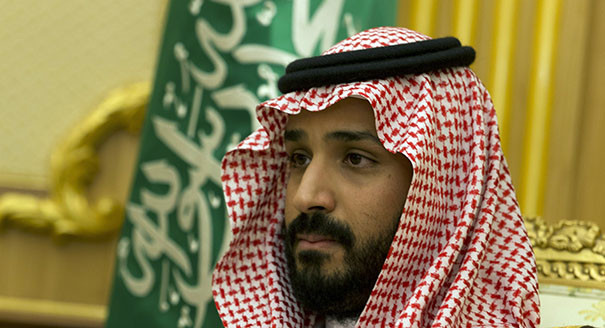
Source: Getty
The Kingdom of Saudi Arabia has recently taken a significant step in its nuclear research and development program that at the same time illuminates Riyadh’s best route for demonstrating transparency in nuclear safeguards.
Source: Arms Control Wonk
The Kingdom of Saudi Arabia (KSA) has recently taken a significant step in its nuclear research and development program that at the same time illuminates Riyadh’s best route for demonstrating transparency in nuclear safeguards.
On November 6, the KSA announced it has broken ground on the country’s first nuclear reactor, a research installation rated at 100 KW. According to KSA media, the reactor will be fueled with low-enriched uranium oxide and be ready to operate by the end of 2019.
The KSA is a party to the Treaty on the Non-Proliferation of Nuclear Weapons (NPT). Following from this, it has a bilateral Comprehensive Safeguards Agreement (CSA) in force with the International Atomic Energy Agency (IAEA). The KSA also has in force a so-called Small Quantities Protocol (SQP) that exempts the country from the obligation of hosting IAEA safeguards inspections, on the basis that the KSA has very little nuclear material and very few nuclear activities.In 2019, the most straightforward approach for the KSA to meet its future NPT safeguards obligations would be for Riyadh to rescind its SQP and negotiate subsidiary arrangements with the IAEA to permit the IAEA to safeguard the new reactor and its fuel.
Current KSA Obligations
The IAEA introduced the SQP during the early 1970s as a mechanism to incentivize states with little or no nuclear activities to join the NPT; the SQP permitted these states to meet their NPT safeguards obligations without burdensome reporting requirements while conserving IAEA inspection resources for use in states that had declared more nuclear material and infrastructure.
The fine print of the KSA’s SQP exempts the country from certain provisions of its CSA (specifically Part II provisions of the model protocol for NPT safeguards, INFCIRC/153, except paragraphs 33, 34, 39, 42, and 91). This means that the KSA’s safeguards obligations pertaining to its new research reactor will include: 1.) reporting to the IAEA the import of any nuclear material; 2.) providing design information for the facility to the IAEA; and 3.) notifying the IAEA of the reactor at the latest 180 days before it introduces nuclear material into the facility.
SQP Will No Longer Apply
In 2005, the IAEA updated its thirty-year-old model SQP and the IAEA Board of Governors limited the eligibility of states for the SQP. The modified version addresses certain verification deficits in the original text, including lack of IAEA inspector access and updated state declarations. Of 88 states with SQPs based on the original model, 46 have voluntarily adopted the modified protocol, and these are now obligated to submit annual updates of the state’s declaration, report imports and exports of additional nuclear material, and provide design information to the IAEA as soon as a decision is made to build a new nuclear installation.
In 2005 the KSA was the last IAEA member state to conclude an SQP on the basis of the original requirements and conditions. Since 2005, the IAEA has urged the KSA, as it has urged other SQP states, to modify its SQP. So far, the KSA has not amended its SQP.
In principle the KSA could update its SQP now or in 2019, but it would gain no benefit in doing that. Regardless of which SQP version would be current in the KSA in mid-2019, Riyadh will have to declare to the IAEA its new reactor and prepare to apply IAEA safeguards. In either case, the KSA will no longer be eligible for an SQP: The KSA’s current unamended SQP may remain in effect until the country has “nuclear material in quantities exceeding the limits stated” in Paragraph 37 of INFCIRC/153 or has “nuclear material in a facility.” INFCIRC/153’s definitions state without qualification that a nuclear reactor is a “facility.” Alternatively, were the KSA to amend its SQP, the modified SQP would become non-operational when the KSA “has taken the decision to construct or authorize construction of a facility.”
Subsidiary Arrangements
Because the KSA intends to set up infrastructure for nuclear research and nuclear power, the clearest path for Saudi Arabia would be to rescind its SQP, negotiate subsidiary arrangements, and permit the IAEA to safeguard the KSA’s nuclear materials and activities in a way that is consistent with other nuclear states that have nuclear power plants and modern nuclear R&D installations.
Without Riyadh having made provisions for routine IAEA safeguards inspections, none of the governments in countries that the KSA has shortlisted as possible nuclear power plant vendor partners—China, France, the Republic of Korea, Russia, and the United States—will supply nuclear power reactors to the Kingdom or to any other NPT non-nuclear-weapon state.
In theory, the KSA might declare its currently valid SQP indefinitely “non-operational” for as long as it is importing nuclear material for use as reactor fuel for future nuclear reactors including the reactor now under construction. In that case the SQP might once again become operational provided the KSA were at a later date to terminate all nuclear facility operations and remove all the nuclear fuel materials for these installations from the territory of Saudi Arabia. But beginning in 2019 the KSA will need to provide for safeguards measures, first for the 100 KW reactor and thereafter for future power reactors. For a country that is embarking on an industrial-scale nuclear power program, requiring a commitment for a hundred years or more, programmatic “temporary” suspension of its SQP is hardly a serious option as it would signal to its partners a lack of commitment to nuclear power technology.
Additional Protocol
The KSA is a leading regional power in the volatile Middle East. Foreign governments and firms pondering entering into supply agreements with Saudi Arabian counterparts for nuclear power equipment, material, and technology will therefore assess the risk that Riyadh might in the future embark on non-peaceful nuclear activities, as others have done, including Iraq, Iran, Israel, and Syria. The NPT expressly permits parties to withdraw from the treaty for national security reasons. That said, statements made this year by senior KSA officials, vowing that the KSA will obtain nuclear weapons should Iran do so first, have highlighted Riyadh’s residual proliferation risk by expressly drawing attention to the conditionality of the KSA’s NPT commitment.
KSA diplomats at the working level fully understand the link between safeguards and nuclear development and they know that in committing to a high standard of IAEA nuclear verification, the KSA will augment the confidence of partner governments and industry firms in Riyadh’s nonproliferation bona fides. Specifically, the leading organization responsible for implementation of the KSA’s nuclear power program, the King Abdulaziz City for Atomic and Renewable Energy (KA-CARE), expects to cooperate with the IAEA to enable it to carry out verification to assure that Saudi Arabia’s declarations to the IAEA are both correct and complete.
Beyond the requirements of its CSA, the KSA would go far in supporting verification by concluding an Additional Protocol with the IAEA. The Additional Protocol, a measure that states may voluntarily adopt, would provide the IAEA greater access to information about the KSA’s nuclear activities, in the interest of drawing IAEA safeguards conclusions that express high confidence that all nuclear materials and activities in the country are declared to the IAEA, understood, and dedicated to peaceful uses. Most of the world’s nuclear power countries have Additional Protocols.
In concluding and bringing into force an Additional Protocol with the IAEA, the KSA would also underscore that it is exceeding the scope of Iran’s cooperation with the IAEA concerning the completeness and correctness of nuclear declarations. Iran concluded an Additional Protocol in 2003 after the IAEA had confirmed that Tehran had not informed the IAEA of ongoing and sensitive nuclear activities; fifteen years later, Iran’s Additional Protocol is still not in force—casting a shadow over Iran’s long-term nonproliferation commitment. By concluding and bringing into force an Additional Protocol, the KSA would by comparison make a significant binding commitment that would raise its nonproliferation profile among its trading partners, its allies, and its neighbors.

Nonresident Senior Fellow, Nuclear Policy Program
Hibbs is a Germany-based nonresident senior fellow in Carnegie’s Nuclear Policy Program. His areas of expertise are nuclear verification and safeguards, multilateral nuclear trade policy, international nuclear cooperation, and nonproliferation arrangements.
Recent Work


Toby Dalton, Mark Hibbs, Nicole Grajewski, …
Mark Hibbs
Carnegie does not take institutional positions on public policy issues; the views represented herein are those of the author(s) and do not necessarily reflect the views of Carnegie, its staff, or its trustees.

China’s political future will be shaped between now and next October. As the Communist Party enters its intense “campaign season” to prepare for a major political transition in 2027, reading Beijing's actions and responses may become more difficult as domestic politics weigh on its behavior more than usual.

Damien Ma

China has showcased its engineering prowess with small modular reactor demonstration projects. But turning these technological achievements into commercial success will be a greater challenge.

Tong Zhao
Why Pakistan, Saudi Arabia, and Turkey are joining forces on regional security.


Alper Coşkun, Amr Hamzawy
Protests in Iran follow a similar pattern: Economic grievances turn into political protests that spread nationwide. But increased state repression has begun to shift the arrangement.

Eric Lob

Putin’s conservative staffing policies and search for ever greater control have cemented parliament’s transformation into a bureaucratic appendage of the executive branch.

Andrey Pertsev